Key Takeaways:
A survey reported that 26.8% of employees voluntarily left their jobs due to a toxic or negative work environment.
For business owners, incivility in the workplace comes with a hefty price—a collective daily loss of over $2 billion from reduced productivity and absenteeism.
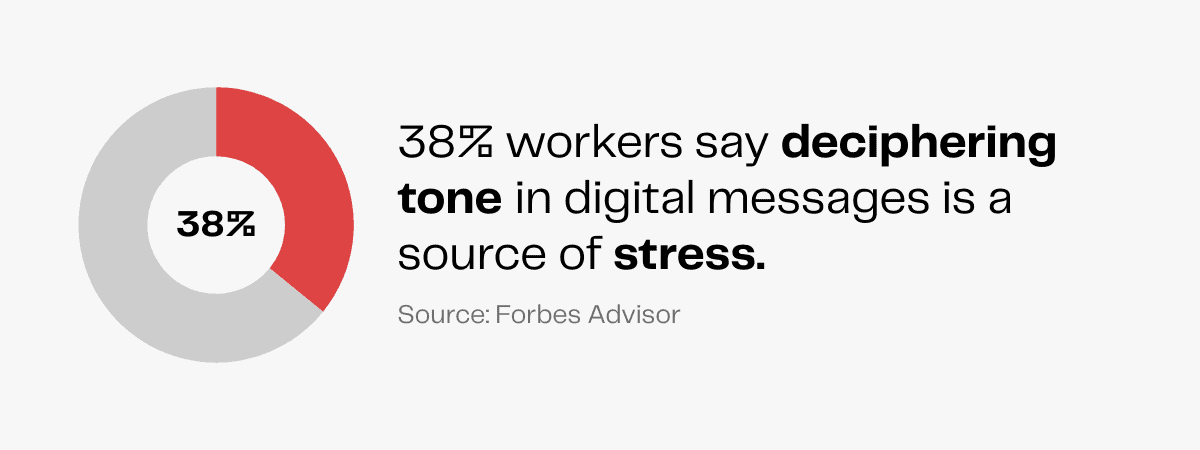
38% of remote employees say deciphering tone in digital messages is a source of stress, which is why setting clear communication guidelines is important.
Building a virtual team is great for business. You get global talent, specialized skills and cost efficiency.
But managing one? That’s where the challenge begins.
Picture this scenario: Employee A in the US calls Employee B in Tokyo outside work hours for help with a project, accidentally disrupting their sleep. Frustrated, Employee B wonders why Employee A isn’t handling the task themselves and starts resenting them for their lack of boundaries.
All of a sudden, tensions are rising, teamwork is in disarray and work keeps delaying.
Sounds like a nightmare? It is. Conflicts like these are common in virtual teams, where time zone differences, communication gaps and unclear expectations can quickly create friction.
Unless managed effectively, they derail productivity and team morale.
So how can you keep teammates aligned and prevent distance from causing conflict? Read on to learn all about effective conflict management in virtual teams!
Causes of Conflict in Virtual Teams
Leading a group of people means navigating different mindsets, values and expectations. When these clash, conflicts arise.
Since virtual team members come from various countries, have diverse cultures and spend little time together, the chances of a mismatch are higher.
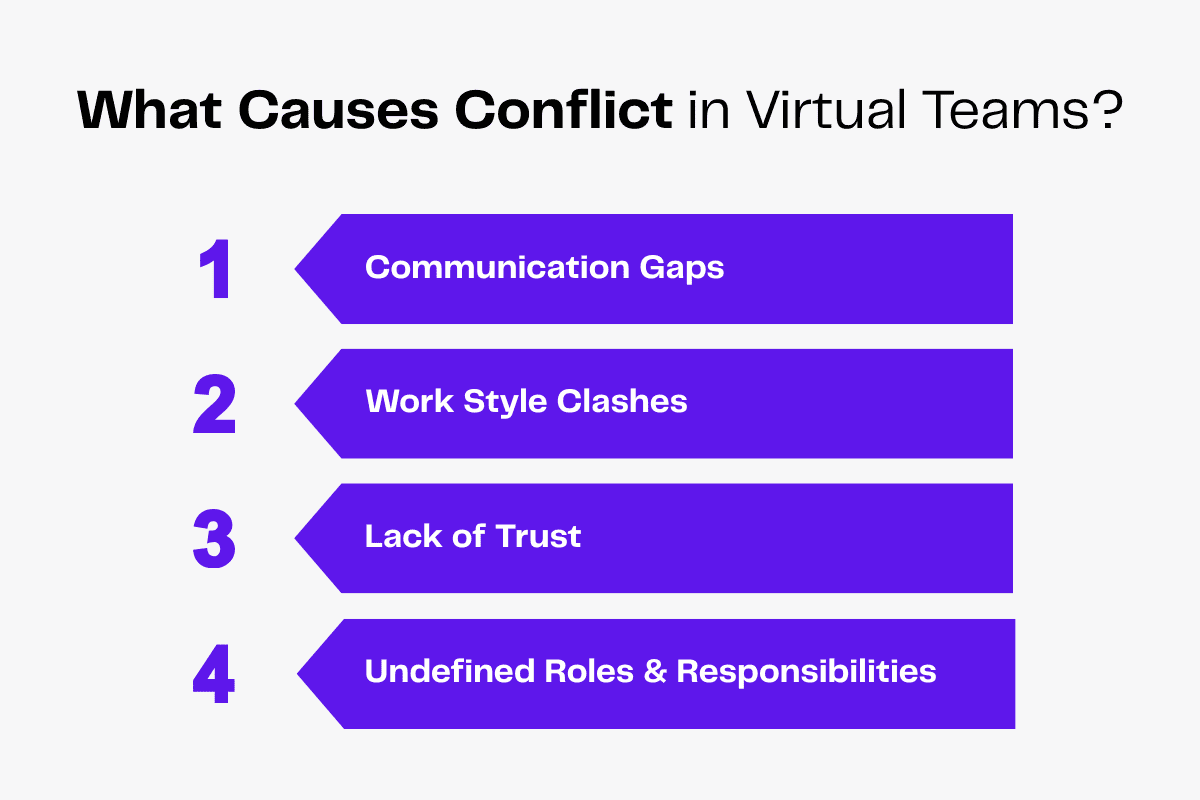
Without face-to-face interactions, communication is often ineffective. Meanwhile, different work styles, unclear roles and lack of trust among team members also make collaboration harder.
Communication Gaps
In face-to-face conversations, expressions and tone help us understand the speaker better.
But such cues are missing in digital communication, making even well-meaning messages feel crude. Conscious phrasing makes all the difference here!
For example, “Got it?” can come off as condescending even when you’re trying to help. But swapping it with “Let me know if you have any questions!” adds more warmth and avoids awkward misunderstandings.
Unfortunately, most remote workers fail to communicate effectively. 38% say deciphering tone in digital messages is a source of stress.
Many also struggle to find the middle ground between under-communicating and overcommunicating. While some provide vague responses and omit key details, others cause burnout by bombarding teammates with meetings and messages.
Beyond unintentional misunderstandings, the online disinhibition effect also kicks in.
In this psychological phenomenon, people behave differently online than they do in person—often becoming more unfiltered or hostile due to reduced consequences. In a virtual workplace, emotional detachment can increase uncivil behavior.
Additionally, time zone differences and technical issues worsen virtual team collaboration, derailing teamwork even more.
So what’s the solution? Educating your employees on online etiquette and setting clear communication guidelines, which we’ll explore soon.
Work Style Clashes
Everyone has their own way of working—some thrive independently while others need frequent check-ins. Some prefer thorough planning, while others like going with the flow.
Whether it’s time management, pace or productivity, work styles vary widely. But when you’re part of a team, personal preference takes a back seat.
Successful teamwork is all about finding a common rhythm that works for everyone, but this is easier said than done.
Most of the time, necessary compromises lead to conflict in virtual teams.
Let’s consider the classic call v/s chat dispute. Call lovers find text insufficient, while chat users feel calls are disruptive. If either party is forced to switch, communication suffers and productivity declines.
Similarly, methodical workers may struggle to keep up with fast-working colleagues, feeling like they’re constantly lagging. The faster workers, in turn, may see them as bottlenecks, creating a divide between both sides.
Plus, weaker personal connections mean virtual employees are less tolerant of each other’s mistakes, causing minor differences to escalate quickly.
Without clear instructions from leadership, such conflicts become commonplace, spreading resentment and toxicity between teams.
Lack of Trust
Casual chats and coffee breaks with coworkers may seem small, but they go a long way in building trust and connections.
In traditional offices, these happen organically, bringing teammates closer. But in virtual workplaces, you rarely see your coworkers, let alone bond with them! This makes trust tricky—how do you count on people you’ve never even met?
The lack of visible efforts, fuelled by missing personal connections, breeds doubt. Is everyone pulling their weight? Is work distributed evenly? Mistrust creates cracks in the team, leaving people feeling fragmented.
To prevent inefficiencies, remote managers often resort to strict supervision, but this too backfires. Far from improving their work, micromanaging makes employees disengage and lose motivation.
Additionally, remote teams are more susceptible to unconscious bias. Whether it’s proximity bias (favoring physically closer workers) or affinity bias (preferring those of similar backgrounds and cultures), such divisions lead to unequal treatment.
Besides damaging team spirit, such discrimination or favoritism is guaranteed to cause conflict in virtual teams.
For managers, the solution is plenty of team-building activities and cultivating an inclusive culture where everyone feels welcome.
Undefined Roles and Responsibilities
Teams work best when each member understands and fulfills their role. Without clear responsibilities, tasks turn into guesswork, causing delays and errors.
Confusion about their goals slows employees down—instead of working, they waste time figuring out what to do.
Some end up undertaking too much while others underperform, creating a workload imbalance and building frustration. On the other hand, too many people working on the same task leads to overlapping responsibilities, opinion mismatches and duplicate work.
Additionally, this lack of clarity makes accountability impossible. When no one is assigned to a task, whom do you hold responsible if something goes wrong? Mistakes get overlooked, problems remain unresolved and employees blame one another.
At worst, tasks get completely ignored because everyone assumes it’s “not their job.”
In remote teams where communication gaps are already rampant, unclear roles make everything harder. When employees don’t know what’s expected of them, collaboration suffers and morale takes a hit.
Setting clear guidelines, goals and KPIs is the only way to prevent these virtual team conflicts and keep your team productive.
Types of Conflict in Virtual Teams
When multiple people come together, conflict is inevitable. Differing opinions, backgrounds and personalities commonly lead to disagreements and divides. But in virtual teams, these conflicts become even more pronounced.
As Lindred Greer, a professor at the University of Michigan, explains,
Colleagues are more likely to take disagreements personally when challenges to their ideas arrive in their inbox from colleagues who are miles or even oceans apart instead of in the next cubicle.
Typically, virtual team conflicts stem from interpersonal differences or disagreements over tasks.
Interpersonal Clashes
Interpersonal clashes erupt from differences in attitude (introvert vs. extrovert), work habits (fast-paced vs. methodical) and communication styles (passive vs. aggressive).
Other causes include:
- Affinity bias: While our tendency to favor similar people strengthens social bonds, it creates an us vs. them mentality and divisions in the workplace. Subgroups based on culture, age or job roles leave others feeling excluded, lowering morale.
- Trust issues: Limited bonding in virtual teams amplifies trust issues. Without personal connections, colleagues are less tolerant of mistakes and more likely to assume negative intent.
- Lack of visible efforts: Without a shared physical space, individual efforts often go unnoticed, sparking doubts about contributions and fueling misunderstandings.
Task-Based Disputes
Task-based disputes occur when teammates argue over project responsibilities, processes or outcomes.
Some common causes are:
- Unclear roles: When responsibilities aren’t clear, employees clash over who does what, how to complete tasks and who gets the final say.
- Conflicting priorities: Without clear instructions, employees may prioritize tasks differently, leading to inefficiency and misalignment. Time zone differences create further delays, hindering collaboration.
- Unequal work distribution: Whether perceived or actual, unequal work distribution can fuel conflict. If someone feels they’re doing all the heavy lifting while others sit by, frustration is bound to build.
Warning Signs of Conflict in Virtual Teams
Conflict in virtual teams can throw your entire organization into disarray.
Missed deadlines and unfulfilled goals are just the tip of the iceberg—unresolved conflict drains motivation, erodes trust and creates a toxic work culture.
The result? High turnover as unsatisfied employees quit in search of better.
That’s why watching out for warning signs is crucial. Without body language cues in remote teams, managers must pick up on subtle shifts that could signal trouble. Regular check-ins and pulse surveys also help spot underlying tensions before they erupt.
Take a look at how unchecked conflict can damage your organization.
| Warning Signs of Conflict | Effect on Organization |
|---|---|
| Delayed responses | Slower decision-making and project delays |
| Frequent misunderstandings | Increased errors and double work |
| Reduced participation in meetings | Low engagement and innovation |
| Passive-aggressive messages | Resentment and employee dissatisfaction |
| Resistance to collaboration | Siloed workflows and longer turnaround time |
| Missed deadlines | Unfulfilled goals and financial losses |
| Increased absenteeism | High risk of resignation and talent loss |
Tips To Manage Conflict in Virtual Teams
Dealing with virtual team conflict is unpleasant, but ignoring it isn’t an option.
Unchecked conflict is far more damaging than most realize—the longer tensions brew, the more time employees spend arguing and backbiting instead of working.
Low productivity and morale eventually lead to poor performance, which impacts customer service, costing you your reputation, client relationships and even revenue.
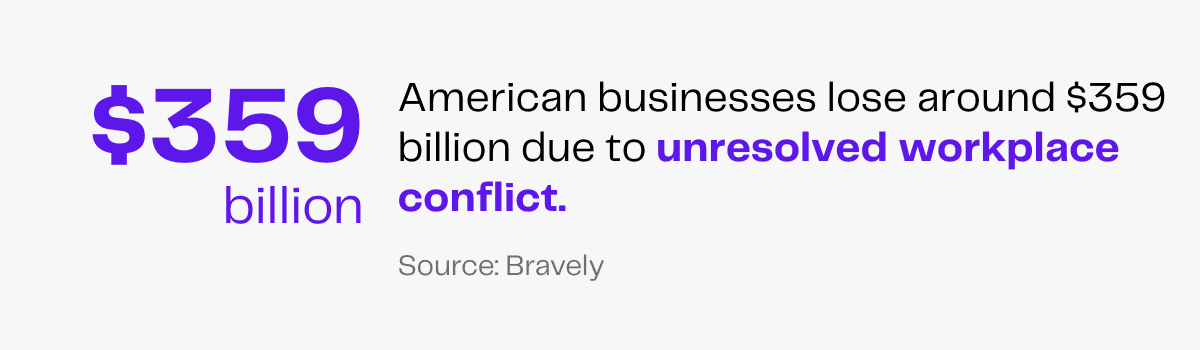
A study found that American businesses lose around $359 billion due to unresolved workplace conflict—an astounding price for an avoidable issue.
As with most problems, the best way out is through.
Take a proactive approach by encouraging open dialogue, building strong team bonds and equipping workers with conflict resolution skills to keep tensions from spiraling out of control.
Develop Precise Communication Guidelines
Everyone speaks, but not everybody knows how to communicate.
In remote workplaces, employees struggle with conveying the right tone, using clear language and delayed responses. Poorly worded messages can spark tension, while vague texts create confusion.
Communication guidelines can bridge these gaps—easing stress, boosting efficiency and reducing misunderstandings.
- Pick the right channel: Strategy discussions are impossible over chat, but constant meetings aren’t the answer either. Stick to Slack or Microsoft Teams for quick updates and switch to Zoom video calls for brainstorming sessions.
- Set response times: Streamline communication by setting response time expectations and scheduling messages for different time zones.
- Structure messages well: Set a template for message length, appropriate greetings and degree of formality to keep conversations to the point and use emojis to confirm positive intent.
- Make meetings efficient: Inform members about meeting frequency, duration and camera on/off protocols to keep teams aligned.
- Keep language inclusive: Skip abbreviations, idioms or vernacular jargon that might confuse teammates.
- Be mindful of tone: Emphasize the importance of proper tone to avoid sounding condescending or accusatory and illustrate by example!
Set Up Discussion Forums
Discussion forums create safe spaces for employees to interact and share ideas, enabling open communication and smooth decision-making.
Unlike real-time chat, discussion boards allow asynchronous communication, giving participants time to reflect before responding. This decreases the likelihood of emotionally charged responses or aggressive messages.
Some boards even allow anonymous posting, making it easier for employees to raise issues without fear.
Plus, messages often get buried in chats and quieter members struggle to get a word in. In contrast, conversations on forums are more structured and accessible, with separate threads for different topics. Members can join at their convenience without missing key information.
Additionally, discussion boards double as a knowledge base, storing discussions and solutions for future reference.
When setting up a discussion forum, establish clear communication rules and moderate messages to ensure conversations are on-topic, productive and respectful.
Prioritize Team Bonding
You know what’s better than resolving conflicts? Avoiding them.
By prioritizing team bonding, you connect with employees beyond surface-level interactions.
When members are closer, disagreements are less likely to blow out of proportion. Since teammates are more empathetic, resolving disputes through mutual understanding also becomes easier.
Some ways to keep your teams connected are:
- Casual conversations: Coworkers can’t bond if they only discuss projects and deadlines. Schedule icebreakers and virtual coffee breaks to chat about family, hobbies or shared interests and foster genuine connections.
- Team building activities: Host virtual activities like online trivia, escape rooms, karaoke and multiplayer games to have a blast and build camaraderie among coworkers. For conflict resolution in virtual teams, exercises like “you said, I heard”, where one person says a phrase and another states what they perceived, help improve communication.
- Peer recognition: A culture of mutual respect and appreciation between employees prevents disputes. Celebrating each other’s wins, expressing gratitude and acknowledging contributions go a long way in building trust and strengthening bonds.
Provide Conflict Resolution Training
The saying “prevention is better than cure” applies perfectly to conflict in virtual teams.
With proactive conflict resolution training, you equip employees to handle disagreements and nip problems in the bud before they start disrupting productivity and team morale.
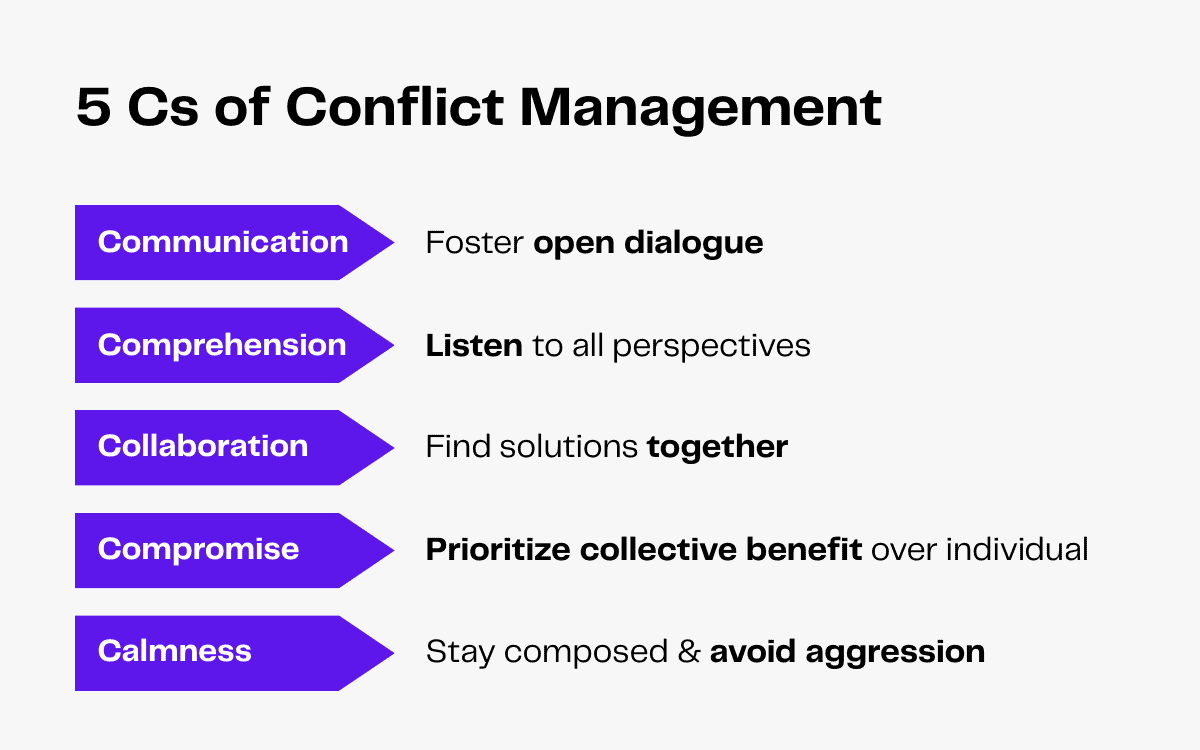
Strong conflict management skills cover the 5 Cs:
- Communication: Open dialogue to uncover underlying issues.
- Comprehension: Active listening and trying to understand all perspectives, even opposing ones.
- Collaboration: Working together to find mutually beneficial solutions rather than trying to “win.”
- Compromise: Making concessions and prioritizing collective benefit over individual gains.
- Calmness: Handling tense situations with composure instead of aggression.
Some ways to train your team on effective conflict management are:
- Role-playing: Simulate real-life conflict scenarios to test employees’ communication and problem-solving skills. Encourage wording like “I feel…” rather than accusatory statements like “You did…”
- Online workshops: Invite expert mediators or facilitators to lead workshops on conflict management strategies, de-escalation training and effective communication.
- Online courses: Provide self-paced learning modules with situational judgment tests for conflict resolution techniques and communication best practices.
- Conflict management SOPs: Assess common causes of disputes in your organization and create structured SOPs for de-escalation and resolution.
Implement the RAPID Decision-Making Framework
Many virtual team conflicts erupt from unclear roles and responsibilities.
When no one knows who gets the final call, subjective disagreements drag on. As a result, decisions get delayed, deadlines slip away and friction builds.
RAPID (Recommend, Agree, Perform, Input, Decide) eliminates such ambiguity. Assigning clear decision-making roles to each team member prevents unnecessary power struggles or endless back-and-forth arguments.
Each role in RAPID has a specific function:
- Recommend: Gathers information, analyzes options and proposes a solution.
- Agree: Approves the recommendation before it moves forward but doesn’t make the final call.
- Perform: Executes the chosen solution once the decision is finalized.
- Input: Provides expert opinions to support or contradict the proposed solution.
- Decide: Considers all opinions and insights to make the final decision.
With a structured process, decisions are made without confusion or conflict.
Even though the ‘Decider’ makes the final call, they don’t act in isolation. Every perspective is considered, leading to collective decisions and fewer disagreements.
Leverage Digital Tools
Digital tools keep virtual employees connected, organized and productive.
Used effectively, they improve communication and collaboration, preventing missteps that often lead to conflict in virtual teams.
- Messaging apps: Use Slack or Microsoft Teams for casual chats, announcements and quick updates. Since tone is harder to interpret in text, avoid having critical discussions over chat to reduce misunderstandings.
- Video conferencing tools: Unlike chat, face-to-face calls help members read body language, clarify intent and prevent miscommunication. While they’re helpful for brainstorming sessions or presentations, too many can be draining. To avoid exhaustion, set no-meeting days, cap meeting durations and schedule breaks for longer calls.
- Project management platforms: Tools like Asana and Trello keep tasks and deadlines in one place, eliminating confusion over responsibilities. They also offer live progress tracking, reducing the need for constant updates.
- Automation software: Utilize tools like Zapier to automate repetitive tasks like sending reminders or creating calendar events. With fewer manual errors, there’s less frustration and miscommunication.
- Employee engagement platform: Platforms like CultureAmp and Officevibe help you check team morale through employee performance analytics, pulse surveys and anonymous feedback. With space for two-way communication, concerns are addressed effectively before they escalate into bigger issues.
Promote a Culture of Respect and Inclusivity
Remote teams connect people from all around the world. But with diversity comes cultural differences and the potential for conflict.
Without inclusivity measures, some members may feel marginalized, leading to disengagement, low morale and frustration.
On the contrary, fostering a culture of respect and empathy strengthens collaboration and improves team dynamics. When every member feels valued and heard, communication improves and disputes are resolved more constructively.
A strong DEI (Diversity, Equity, Inclusion) initiative can create a supportive environment by:
- Educating employees on cultural sensitivity.
- Establishing strict anti-discrimination policies.
- Recognizing and celebrating diverse cultural festivals and holidays.
- Creating virtual Employee Resource Groups (ERGs) for support, networking and resource-sharing.
- Enforcing inclusive language and communication practices.
- Providing DEI training to raise awareness and address unconscious bias.
- Offering flexible working hours to accommodate different time zones.
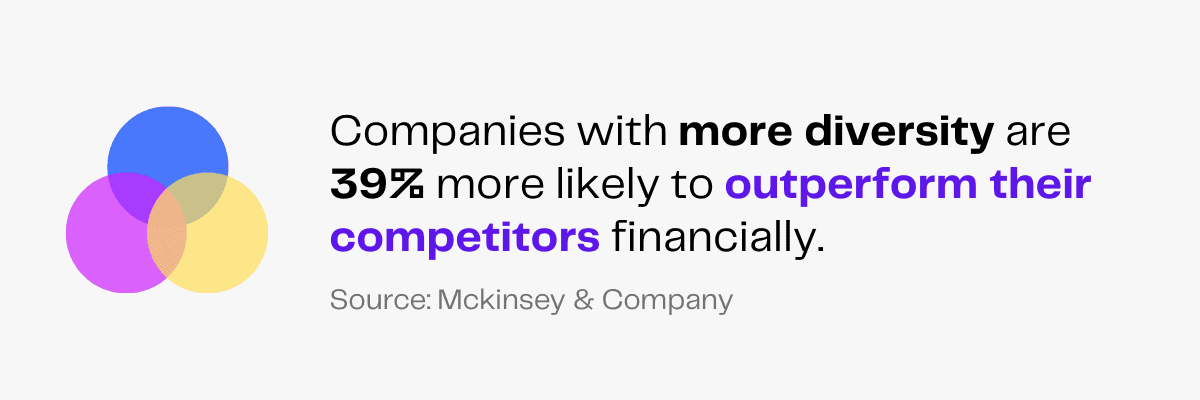
According to McKinsey reports, companies with higher diversity are 39% more likely to outperform their competitors financially.
By prioritizing inclusivity, you not only reduce conflict but also drive innovation, engagement and overall business success.
Hire a Mediator
Sometimes, despite your best efforts, conflict can be hard to manage.
If you notice frequent arguments, communication breakdowns and rising tensions among your team members, a mediator can help diffuse the situation.
Mediators are trained professionals who create a safe space for open communication and help teams find a solution.
They bring an unbiased perspective, keeping conversations solution-oriented and constructive while thwarting emotional reactions, blame games and us vs. them statements.
By ensuring all members have a chance to say their piece, mediators prevent power dynamics from hampering open communication. Since they’re neutral parties, employees feel assured knowing everyone is treated fairly, without favoritism or bias.
While mediators don’t provide outright solutions, they guide disputing parties to communicate, listen actively and resolve issues collaboratively. This approach equips teams with long-term conflict resolution skills while strengthening teamwork and trust.
Read more: Discover the Best Leadership Style for Your Virtual Team
Methods of Conflict Resolution in Virtual Teams
Although conflict is inevitable, how you handle it matters.
Since every team functions differently, there is no universal approach to managing conflict in virtual teams.
However, research-backed methods like the Thomas-Kilmann Conflict Mode Instrument (TKI) and the Interest-Based Relational Approach (IBR) offer practical strategies to help navigate disputes.
By using the right framework, you can reduce damage and bounce back stronger as a team.
| Frameworks of Conflict Resolution | Easy Breakdown |
|---|---|
| Thomas-Kilmann Conflict Model | Helps teams recognize their default responses |
| Interest-Based Relational Approach | Focuses on finding mutually beneficial solutions. |
| Crucial Conversations | Advises creating a safe space, listening actively and taking time-outs. |
| Alternative Dispute Resolution | Ensures swift and fair resolutions through Mediation, Arbitration & Negotiation. |
| Collaborative Problem-Solving | Involves working as a team to identify issues and encourages collective decision-making. |
Thomas-Kilmann Conflict Model (TKI)
TKI outlines the five common responses to conflict—competing, collaborating, compromising, avoiding and accommodating.
The framework suggests that a person’s conflict response depends on their assertiveness or cooperativeness. Assertive individuals try to push their way (compete) while cooperative ones try to maintain harmony (accommodate).
Though TKI doesn’t directly resolve conflicts, it helps teams recognize their default responses and adopt more fruitful ways of resolution.
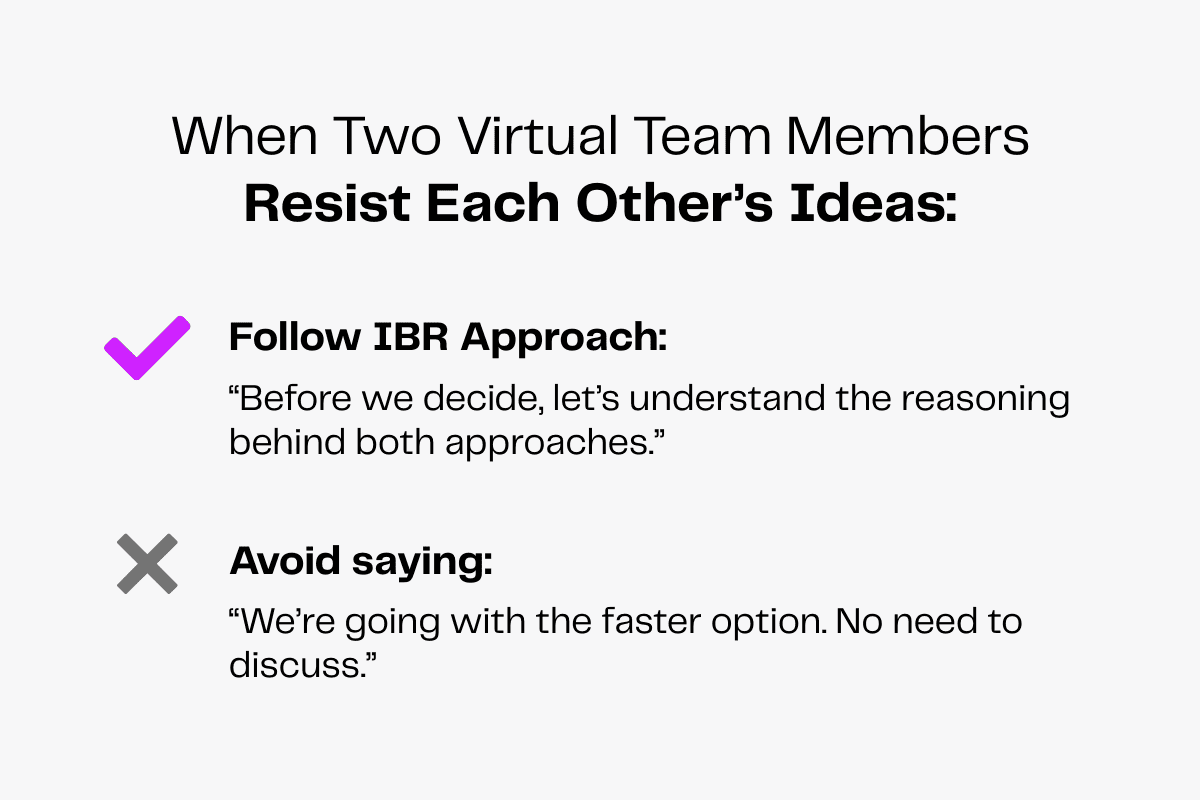
Interest-Based Relational Approach (IBR)
IBR focuses on maintaining healthy relationships while finding mutually beneficial solutions.
Rather than fixating on an individual’s stated demands, this approach recommends digging deeper into their needs and concerns.
Since it promotes active listening, shared understanding and win-win solutions, IBR is particularly effective in ensuring a positive, collaborative work environment.
Crucial Conversations
Developed by corporate training experts, the Crucial Conversations framework offers strategies for handling workplace tension with honesty and respect.
It advises creating a safe space, listening actively and taking time-outs to foster mutual understanding in high-stakes situations where opinions differ and emotions run high.
Alternative Dispute Resolution (ADR)
ADR is commonly used to resolve disputes outside of court, avoiding the need for litigation.
In virtual team conflict, ADR ensures swift and fair resolutions through methods like:
- Mediation: A neutral mediator guides discussions between disputing members to help them reach a voluntary agreement.
- Arbitration: A third party hears both sides and makes a final, binding decision.
- Negotiation: Conflicting members communicate directly to find a common solution.
Collaborative Problem-Solving (CPS)
CPS involves working together as a team to identify issues, brainstorm solutions and reach a decision.
Rather than seeking individual solutions, this approach encourages collective decision-making.
Through respectful communication, open discussions and diverse perspectives, teams can resolve conflicts while strengthening teamwork.
Steps for Successful Conflict Resolution in Virtual Teams
If your employees are clashing, missing deadlines regularly and struggling to collaborate, you might be scrambling for an immediate fix.
But don’t panic—conflict is a natural part of teamwork. Instead of letting tensions fester, tackle the problem head-on with a clear strategy.
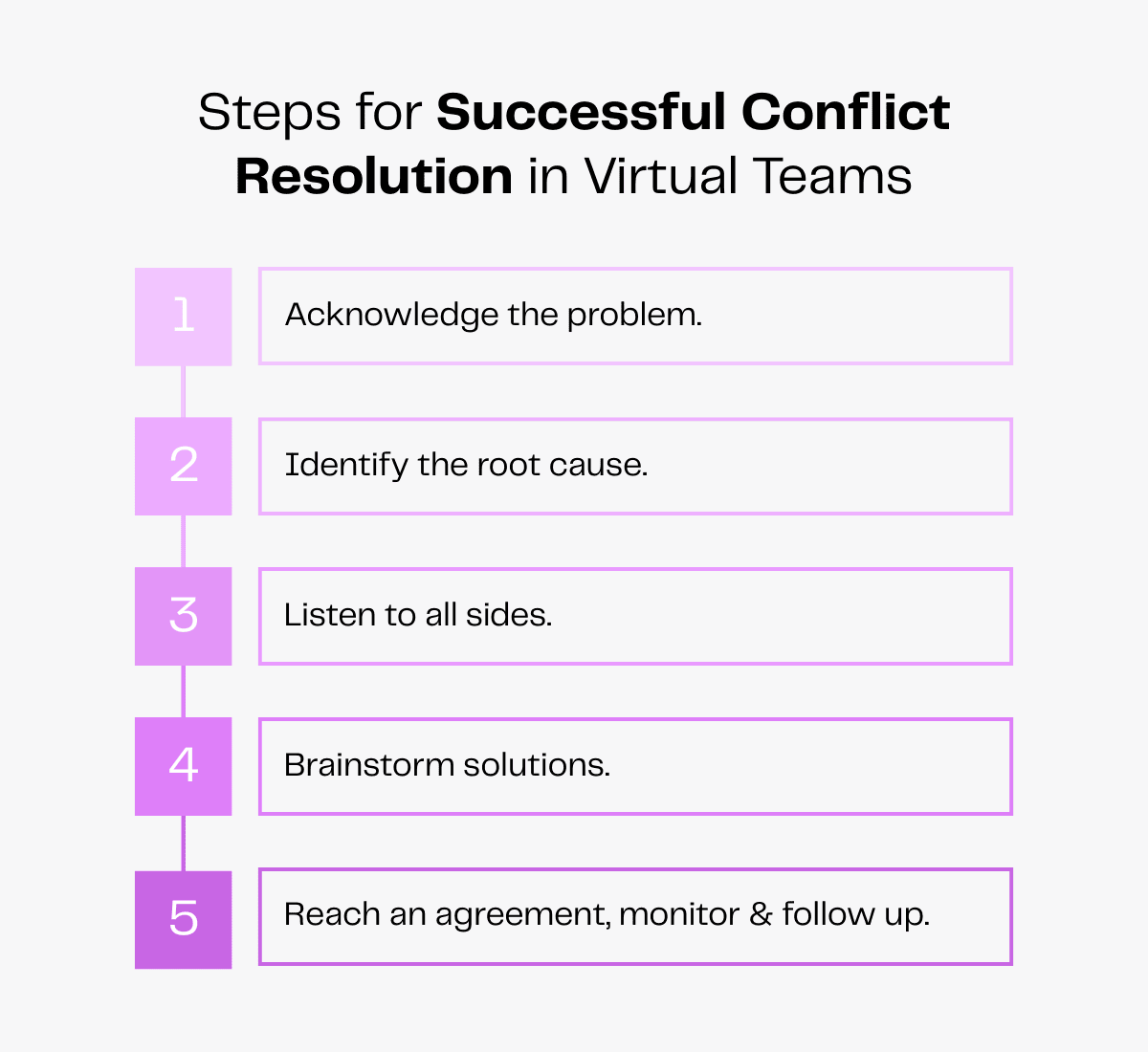
1. Acknowledge the problem: 53% of employees deal with problems by ignoring them, but ignorance isn’t always bliss! Unresolved issues harm performance, engagement and morale. If you notice tension, address it immediately.
2. Identify the root cause: Employees often hesitate to share problems for fear of retaliation. Hold private 1:1 conversations or offer anonymous forums to uncover the real issues beyond surface-level outbursts.
3. Listen to all sides: Create a safe space where all parties can express their viewpoints without judgment or interruption. Ensure respectful communication and show empathy to both sides.
5. Brainstorm solutions: Collaborate to discuss fair solutions that satisfy everyone involved, assuring a productive outcome. Weigh different perspectives and give equal importance to everyone’s concerns.
6. Reach an agreement: Once common ground is found, outline the action plan and set clear expectations moving forward.
7. Monitor and follow up: Ensure the solution is effective by checking for progress and seeking feedback. If needed, make changes to sustain productivity and satisfaction for all members.
Benefits of Effective Conflict Resolution in Virtual Teams
When your team is in harmony, your organization thrives.
Effective conflict resolution teaches employees to respect differences, communicate better and handle disagreements constructively.
The result is a positive work environment where employees are satisfied, collaboration is seamless and decisions are made without arguments.
Improved Collaboration and Productivity
While conflict weakens team bonds, effective resolution strengthens them.
By fruitfully managing conflict in virtual teams, you create learning opportunities and lower the risk of future disputes. Every challenge offers insight into your employees’ struggles, allowing you to find proactive solutions.
Open communication helps teammates understand each other’s perspectives, building trust and empathy. With members attuned to each other, virtual team collaboration becomes seamless and productivity stays consistent.
Better Decision-Making
Open discussions are key to conflict resolution in virtual teams.
They bring everyone’s perspectives to the forefront, allowing well-rounded solutions that benefit all parties. Honest team discussions also uncover underlying issues, helping you solve root problems rather than surface symptoms.
Plus, when members have a safe space to express concerns, emotions are in check, enabling logical decision-making without clouded judgment.
Positive Work Culture
A positive work culture fuels organizational success.
Effective conflict resolution plays a key role in this, strengthening team bonds through transparency and mutual respect. When employees support and uplift one another, collaboration flows effortlessly. A shared sense of belonging ties the team, boosting engagement and productivity.
Plus, by resolving concerns with sincerity and fairness, you make employees feel valued. Happy workers make loyal employees, delivering higher quality work and lowering turnover rates.
Higher Employee Satisfaction and Retention
As a Talent Retention survey also reported, 26.8% of employees voluntarily left their jobs due to a toxic or negative work environment, 24.2% left due to poor company leadership and 22.8% quit because they were unhappy with their manager.
When employees are unsatisfied, they leave and companies bear the cost in the form of unexpected turnover—a nightmare for every business owner.
Beyond losing productivity, hiring and training replacements drain time and resources. Unresolved conflict creates a toxic work environment—lowering morale, diminishing work quality and driving employees to seek better opportunities.
However, by addressing concerns promptly and effectively, you gain their trust, enhance satisfaction and boost retention.
Workplace Conflict Resolution in 2026
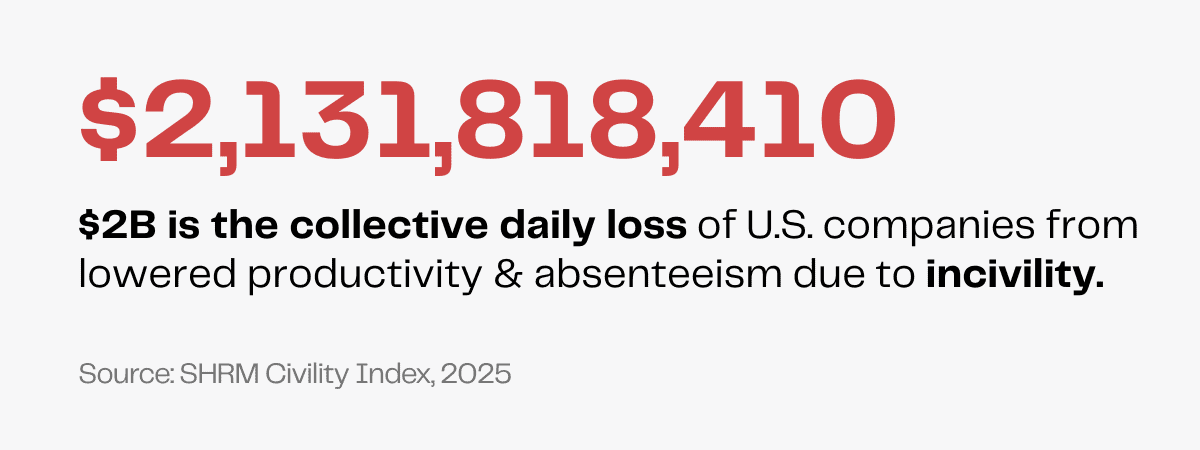
In 2026, incivility (rude or disrespectful behavior) is a common occurrence in workplaces. For business owners, this comes with a hefty price—a collective daily loss of over $2 billion from reduced productivity and absenteeism due to incivility.
And this incivility stays unchecked, with 71% of workers agreeing their managers are not doing enough to prevent incivility.
In a virtual environment, managing such conflicts can be even more difficult.
As a team leader, it’s your responsibility to be proactive in handling and resolving such conflicts before they escalate.
You can adopt different strategies for this, such as:
- Detecting conflict: Leveraging AI can help you analyze communication patterns in your virtual teams’ email or chat, study sentiment or tension and detect early warning signs of conflict.
- Preventing conflict: Simulating conflicts and “what if” roleplays in workshops to practice for tough conversations and rehearse the best solutions.
- Strengthening team environments: Conducting regular “speak-up circles”, encouraging questions without judgment and setting clear behavioral norms.
Final Thoughts
Virtual team conflict is challenging but it’s not the end of the world!
By implementing proactive measures like conflict resolution training, team building activities and collaborative decision-making, you foster a harmonious workplace where issues are resolved before they escalate.
If conflict arises, approach it with patience, active listening and open communication to strengthen team bonds and find lasting solutions that prevent future clashes.