
Key Takeaways
The virtual assistant market isn’t a temporary fad but is growing consistently at a CAGR of 11%.
Share training materials and SOPs with your VA during onboarding so they can deliver their best work.
You’ve been thinking about hiring a virtual assistant for ages, but something always holds you back, right?
The idea of handing over part of your business to an outsider feels scary.
On top of that, all kinds of worries creep in: Will it cost a fortune? Can they be trusted with sensitive company information? How big a headache is communication across time zones?
While these are valid concerns, the truth is that most of these fears stem from simply not knowing how virtual assistants work.
Let’s debunk the most common virtual assistant myths, so you can finally get the help you need to lighten your never-ending workload.
Who Are Virtual Assistants?
Virtual assistants are remote employees who offer administrative and technical support to businesses.
They can handle over 300 tasks, from routine chores to niche responsibilities.
An admin virtual assistant can manage your calendar and email to streamline communication and coordination with clients.
VAs can also research, compile and organize information to simplify data entry and management for your business.
Some virtual assistants specialize in specific niches. These specialized virtual assistants possess unique technical capabilities and polished interpersonal skills. Based on their profiles, they can assist you with bookkeeping, content creation, social media management, customer service and more.
Hiring VAs is also easier, faster and more affordable than recruiting in-house employees!
To assess how VAs can help grow your business, it’s crucial to unlearn common misconceptions about them.
13 Virtual Assistant Myths and Their Reality
From their role and skills to their affordability and credibility, virtual assistants are often misjudged. Some believe VAs work remotely to avoid hard work, while others assume VAs aren’t skilled enough to tackle technical tasks.
Have you also been misled by VA myths? If yes, you deserve to know the truth!
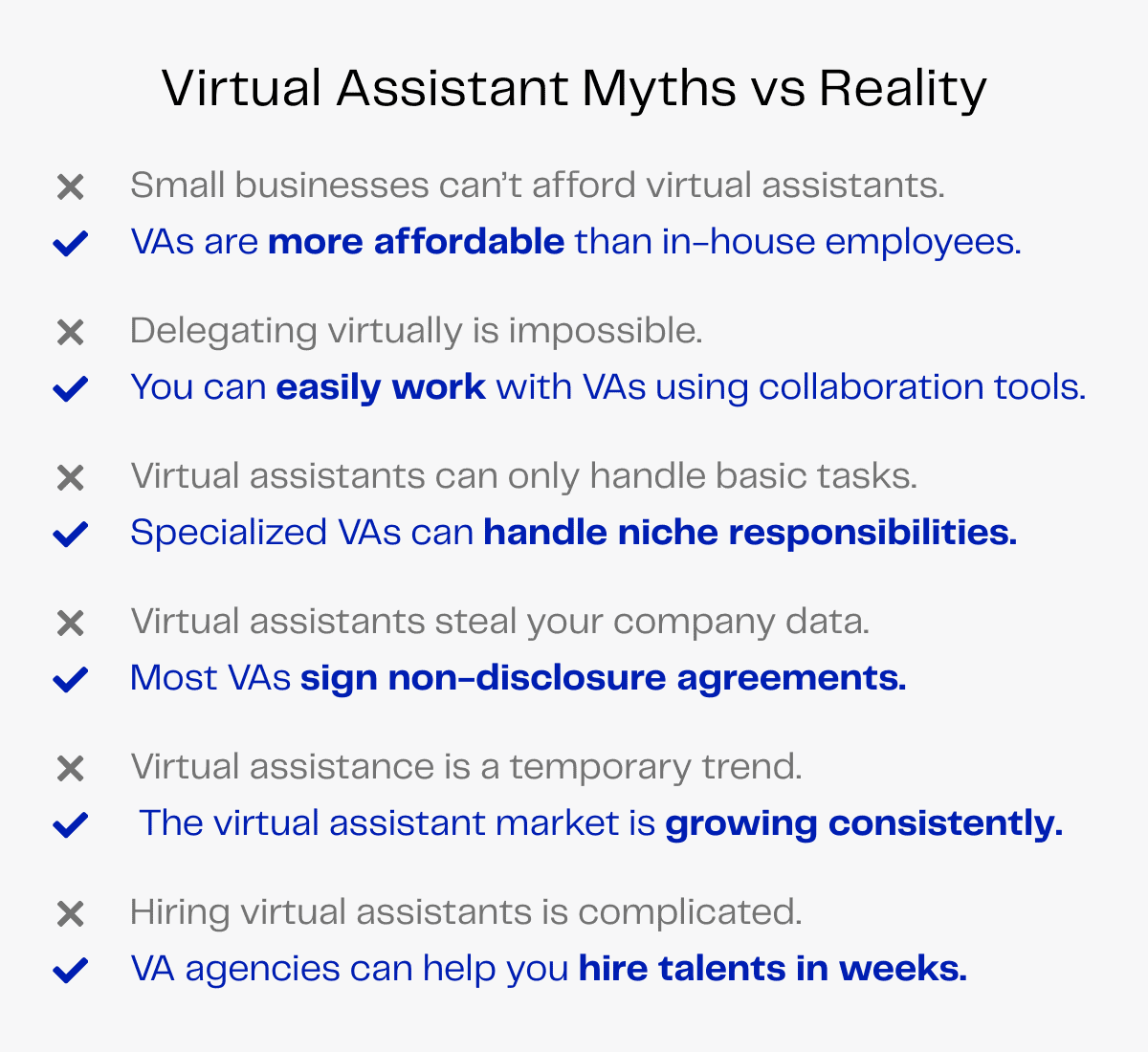
1. Small and Medium Businesses Cannot Afford Virtual Assistants
This misconception questions the affordability of virtual assistants.
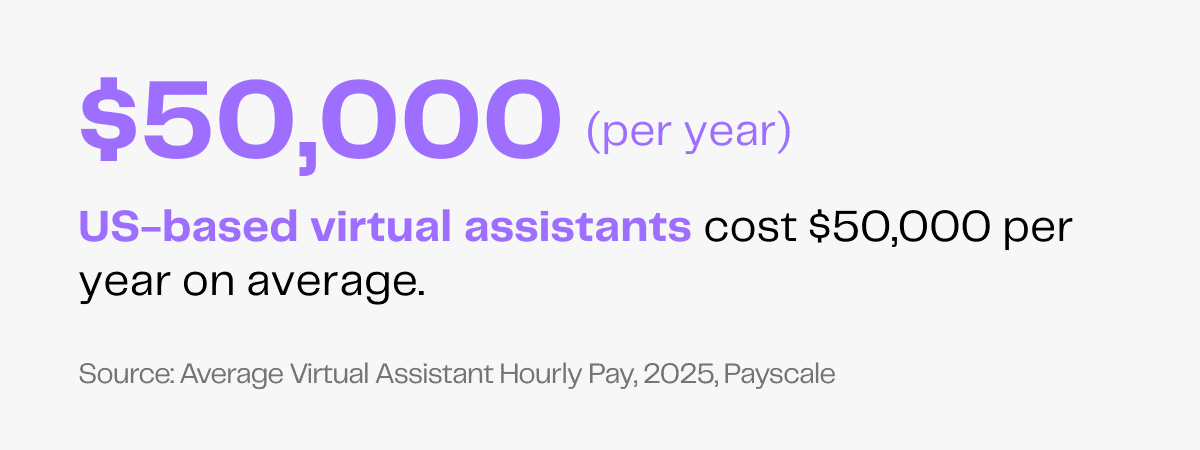
Business owners managing a small or medium-sized company believe they can’t cover a VA’s salary. This assumption isn’t entirely untrue, as US-based VAs can cost over $50,000 per year. But you can opt for an alternate solution to dispel this myth!
Reality: Virtual Assistants Are More Affordable Than In-House Employees
Small business owners can hire virtual assistants at lower costs than local, in-house employees.
While local VAs cost over $50,000 yearly, overseas virtual assistants are far more budget-friendly.
Most of these VAs come from countries with lower costs of living, like India and the Philippines, so their hourly rates are significantly more affordable.
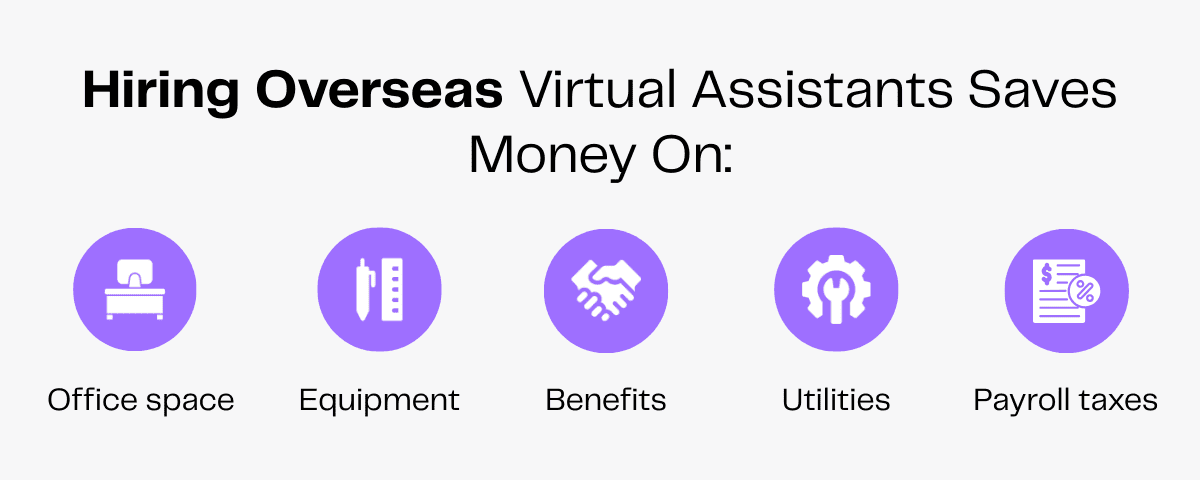
Additionally, unlike traditional employees, virtual assistants don’t need office space, new equipment and employment benefits. This reduces your infrastructure, utility and payroll expenses. You can reinvest these savings into core business areas to scale operations.
2. Delegating Virtually Is Not Possible
This myth raises concerns about the productivity of virtual assistants.
As they work remotely, it’s easy to assume VAs spend hours sitting idle, watching movies or handling household chores. Managers also mistakenly believe VAs report false working hours and cut corners to avoid hard work.
This misconception is only due to a lack of visibility. A remote work environment doesn’t allow you to observe your employees directly. But you can easily overcome this challenge.
Reality: Virtual Assistants Are Reliable Professionals You Can Easily Monitor
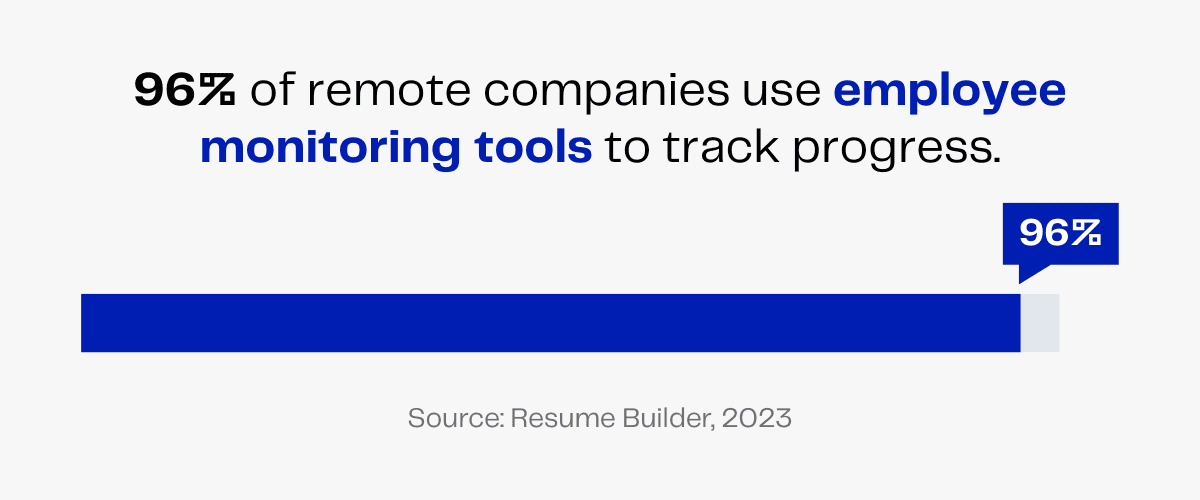
You can monitor virtual assistants using employee monitoring software, like Hubstaff and Insightful. These tools can help you track your VA’s working hours and the time they spend on each task. 96% of remote companies are already using such tools.
Some tools also offer features to capture and store screenshots of your VA’s screen at random intervals. This can help you review your VA’s daily performance in real-time or during your free hours.
Bonus Tip: Avoid interrupting your VA every time you see small irregularities on the monitoring software. Ask them about it later in a professional tone and exchange feedback based on their answer.
3. Virtual Assistants Cannot Understand Unique Business Needs
This misconception discredits a virtual assistant’s intelligence and adaptability.
Industry leaders assume VAs cannot understand complicated workflow processes. New entrepreneurs presume VAs lack the ingenuity required to solve complex problems. And HR managers believe VAs cannot adapt to different company cultures.
But these incorrect assumptions are just that, incorrect.
Reality: Virtual Assistants Can Provide Personalized Services
Virtual assistants can learn and follow your workflow strategies to provide personalized support. You only need to walk them through a sample task to prepare them for their daily responsibilities.
Virtual assistants are highly motivated self-learners who can research online guides to solve complex problems. They only ask for support after exhausting all available resources. With this considerate and calculated task management, VAs meet all deadlines and keep your projects on track.
Finally, to ensure cultural compatibility, you can provide virtual assistants with diversity training, as you would for an in-house employee.
4. Virtual Assistants Can Only Handle Basic Tasks
This belief questions a virtual assistant’s technical capabilities.
Business owners see the term ‘assistant’ and assume it must have something to do with administrative duties, such as scheduling, recordkeeping or email management. But to presume that VAs can only handle non-technical, low-risk tasks is incorrect.
Here’s the truth.
Reality: Specialized Virtual Assistants Can Manage Complex, Technical Tasks
Specialized virtual assistants can handle multiple technical tasks for businesses across industries, including real estate, IT, e-commerce, healthcare and more.
The next table highlights various specialized VA roles and their technical responsibilities.
| Specialized Virtual Assistant Profile | Tasks and Responsibilities |
|---|---|
| Bookkeeping virtual assistant | Create invoices, update expense ledgers and file taxes. |
| IT Support VA | Install new software and troubleshoot technical issues. |
| E-commerce virtual assistant | Process orders, manage inventory and list products. |
| Customer Service VA | Respond to queries and resolve complaints. |
| Copywriter virtual assistant | Draft blogs, landing page copy and social media captions. |
| Graphic Design VA | Design branded graphics, edit images and create posters. |
5. Virtual Assistants Steal Your Private Information and Company Data
This myth raises ethical concerns about virtual assistants.
Business owners assume VAs steal and sell private and company data. Brand managers may refuse to share sensitive information, such as social media credentials, with their VA, thinking the latter might misuse it to damage the brand’s reputation.
This risk of data theft is a viable concern. But alleging claims against VAs or any employee without proof is unprofessional and unnecessary. Instead of believing false rumors, you can use legal means to ensure data security.
Reality: Virtual Assistants Can Sign and Comply With Non-Disclosure Agreements
Virtual assistants are trustworthy professionals. They don’t cheat companies by collecting and selling private data. To reassure you, they can sign and comply with non-disclosure agreements, eliminating your data security concerns.
To further safeguard company information, you can also prepare data security guidelines that address common cyber threats. Tech-savvy virtual assistants can follow top cybersecurity strategies to prevent data theft and corruption!
6. Virtual Assistants Fail To Meet Tight Deadlines
This delusion disputes a virtual assistant’s time management and organizational skills.
Managers assume that remote employees relax at home, ignore projects until late and only do the bare minimum to meet deadlines. But believing that all VAs submit rushed, poor-quality projects and frequently miss deadlines is presumptuous.
This misconception is rooted in a universal concept—there are more distractions at home than at work. While this may be true, it doesn’t mean all VAs are insincere during working hours and ineffective at meeting tight deadlines.
Reality: Virtual Assistants Possess Time Management and Organizational Skills
Virtual assistants can handle multiple tasks in a fast-paced virtual work environment. If you set clear expectations, ensure effective onboarding and provide them with a structured operational workflow, VAs can meet tight deadlines with ease.
And if unavoidable or unforeseen circumstances lead to delays, VAs take accountability for their actions and improve their performance to ensure timely project completion.
7. Virtual Assistants Can Support Your Business 24/7
This myth labels virtual assistants as robots, handling tasks around the clock.
Business owners expect their VA to be available at all hours, work long nights and handle more and more tasks every day. Team managers also want VAs to set personal life aside and stay devoted to company projects.
This unrealistic expectation can lead to employee dissatisfaction and burnout. And dispelling this myth is easy.
Reality: No One Works 24/7 and No One Should
Imagine working all hours throughout the week, month after month. Even if you manage to handle such an immense workload, you will face serious health concerns.
You can have a thousand problems in life until you have a health problem and then you only have one.
Your virtual assistant is not immune to these issues. They will be available during their working hours and finish their tasks on time. They can also overlap with your working hours to ensure consistent communication and efficient collaboration.
But they’re still humans. They need rest to recharge and avoid burnout. By giving them enough time and space, you can build a productive and professional partnership!
8. Virtual Assistants Cannot Communicate and Collaborate With Core Teams
This misconception addresses a real-life challenge of managing virtual teams: communication.
Managers believe VAs lack the communication skills necessary to coordinate with their core team members. Team leaders also perceive that technical issues can interrupt internal workflow. And business owners question a VA’s ability to operate project management tools.
But these assumptions are incorrect.
Reality: Virtual Assistants Utilize Communication and Collaboration Tools Daily
As virtual assistants work remotely, they’re familiar with communication and project management tools.
You can easily communicate with your VA via instant messaging apps like Slack and have face-to-face conversations using video call tools like MS Teams and Zoom. VAs also speak fluent English and write grammatically correct emails to ensure fast and accurate knowledge exchange.
They can utilize project management software (Asana and Trello) to manage tasks and coordinate with core team members. VAs can also take meeting notes and create standard operating procedure (SOPs) documents to update team members about new tasks, projects and deadlines.
9. Virtual Assistants Cannot Provide Long-Term Support
This myth questions a VA’s commitment to long-term employment.
HR managers assume virtual assistants are only effective for short-term projects. Solopreneurs believe VAs can’t be trusted with lengthy projects and they jump ship to advance their careers. But these misconceptions don’t apply to dedicated virtual assistants.
Reality: Full-Time Virtual Assistants Can Support Businesses for Long Periods
A full-time virtual assistant can provide reliable long-term support to businesses. Just like your core employees, dedicated VAs only focus on your tasks. If you avoid overworking and mistreating them, there’s no reason a VA won’t work for you for years.
Still unsure? Here’s a statement from the CEO and co-founder of Massive, a US IT company specializing in cloud-based data management.
While I have multiple assistants at times, my main assistant has worked with me for five years. She has saved me countless hours. At times, with her help, I can 5x or 10x my productivity.
Jason Grad
10. Virtual Assistants Cannot Learn to Operate New Tools and Systems
This myth raises concerns about a virtual assistant’s adaptability in an evolving technological workspace. Managers presume that VAs lack the intelligence to learn new skills, understand complex systems and operate new tools. But this conception is untrue.
What’s the truth?
Reality: Curious, Tech-Savvy Virtual Assistants Can Operate Complicated Tools
Virtual assistants are curious, tech-savvy professionals who can learn to utilize new tools and systems. When recruiting a virtual assistant, you can assess their proficiency in the tools used in your business to ensure technological compatibility.
When onboarding your virtual assistant, you can provide training materials to help them operate your proprietary software. You can also create a walk-through video explaining your preferred workflow strategy. They can also research YouTube and software manuals to learn about a complex application.
11. Virtual Assistance Is a Temporary Trend
This myth is based on the belief that remote work will cease to exist and companies will switch back to onsite employment.
Industry leaders assume that remote work only became viable due to the pandemic. And this trend is about to come to an end. Many companies have already ordered employees to return to the office.
But how much of this impacts virtual assistants?
Reality: The Virtual Assistant Market Continues To Thrive
98% of employees prefer to work remotely at least some of the time. Companies also continue to rely on virtual assistants due to their cost-effectiveness and versatility.
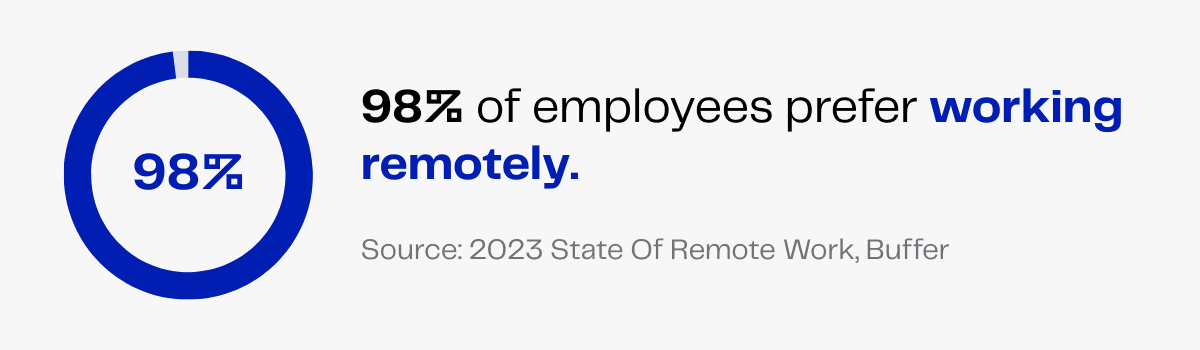
For these reasons, the virtual assistant market is forecasted to grow at a 11% CAGR until 2035.
Business owners prefer to avoid administrative tasks and focus on core duties. This means virtual assistance will be leveraged for saving time and streamlining internal operations in future years.
12. One Virtual Assistant Can Do Everything
This myth creates unrealistic expectations about virtual assistants.
Industry leaders believe one VA should handle bookkeeping, marketing, administrative tasks and more. This versatility can improve return on investment. But delegating multiple duties that require specialized knowledge of different subjects to one VA can affect the project’s quality.
No worries. There’s an alternate solution to this VA myth.
Reality: A Single Professional Can’t Do Everything, but Virtual Teams Can Manage All Business Operations
Expecting one person to have expertise in accounts, digital marketing and customer service is unfair and unrealistic. Instead, you can hire multiple virtual assistants for specific, specialized tasks at affordable prices.
For instance, an administrative VA can handle routine duties, a bookkeeping VA can organize your finances and a marketing VA can manage promotional campaigns. By building an affordable virtual team, you can improve work quality and prevent employee burnout!
13. Hiring Virtual Assistants Is Complicated and Exhausting
Recruiters often assume that hiring VAs consumes too much time and is complicated and risky. Well, this is true for every employee. Searching candidates, reviewing resumes, interviewing qualified prospects and negotiating contracts can consume weeks, even months.
You can avoid these hiring hassles and accelerate recruitment by contacting a virtual assistant agency.
Reality: A Virtual Assistant Agency Can Help You Hire Talented Virtual Assistants Fast
Virtual staffing agencies can help you hire VAs at affordable rates in a short time!
They search the global talent pool to identify candidates most suited to your business needs. Companies like Zenius evaluate prospects not only on their technical skills but also their communication, collaboration and problem-solving abilities, so you get VAs who are reliable in every way.
How To Hire the Right Virtual Assistant for Your Business
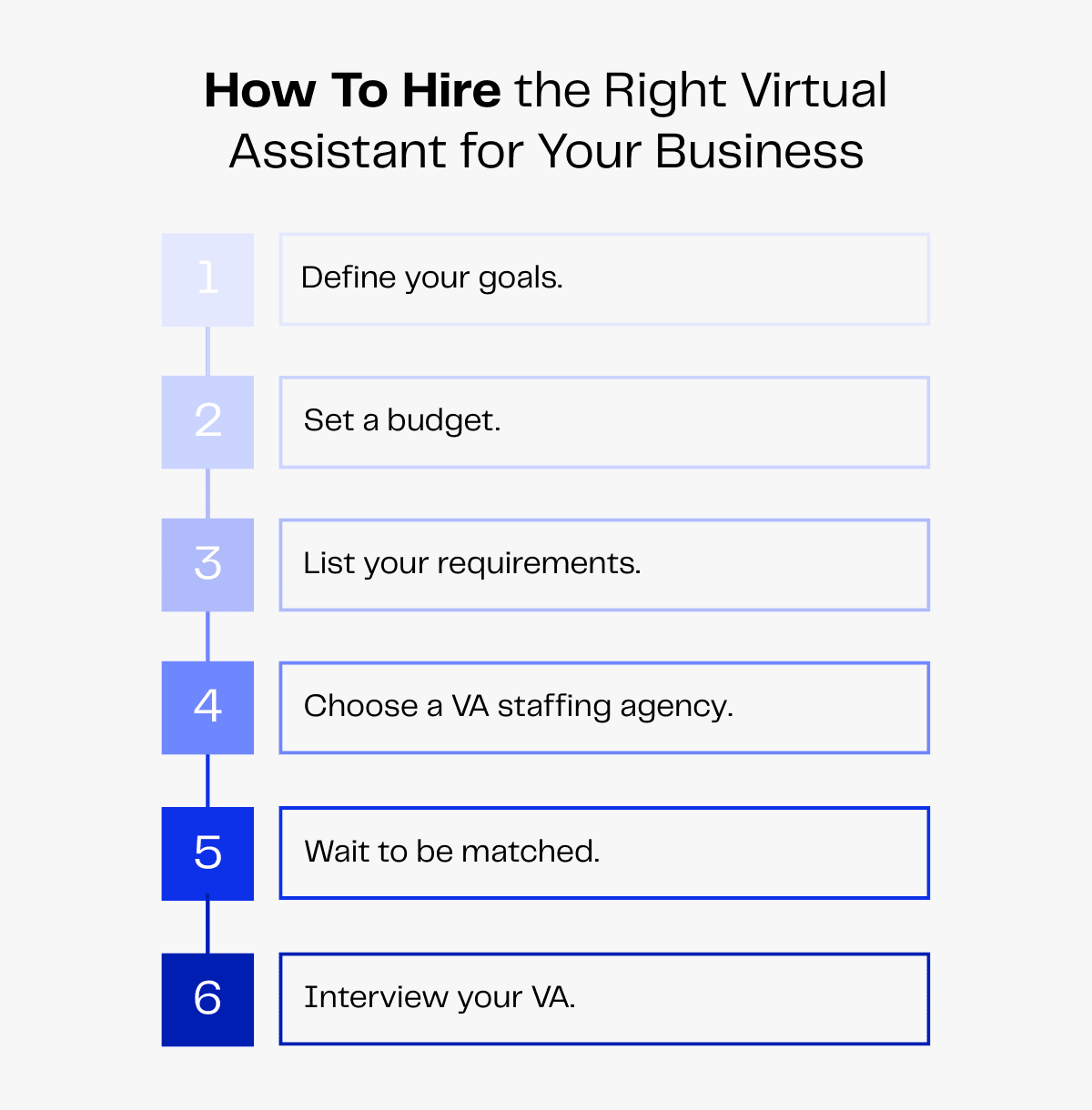
Here’s a step-by-step guide to help you hire a good virtual assistant.
- Before hiring a virtual assistant, you should define the tasks you want to delegate and set a budget to accommodate your VA’s salary.
- Then, carefully craft a comprehensive job description which mentions your task requirements, skill preferences and compensation package.
- Choose a reliable staffing agency for overseas recruitment.
- Provide the job description so they can search, screen and recommend talented candidates within your budget.
- You can also interview the agency recommendations to verify their technical proficiency and cultural alignment.
After finalizing contracts, onboard your virtual assistant by informing them about company policies, communication guidelines and workflow processes and ensure they have access to training courses and work-relevant systems and tools. You can also offer them feedback to improve their performance.
Wrapping Up
Virtual assistants are reliable, remote professionals who help manage and grow your business.
They’re much more affordable than in-house employees, saving you thousands on overhead, benefits and taxes. This makes them a great option for small businesses in need of budget-friendly support.
Contrary to popular belief, VAs also do way more than just admin tasks. They can offer seamless support to your marketing, HR, sales, customer service and other departments.
And if you hire from a VA staffing agency, you can skip the exhausting process of posting job descriptions, screening resumes and interviewing candidates as well.