
Key Takeaways
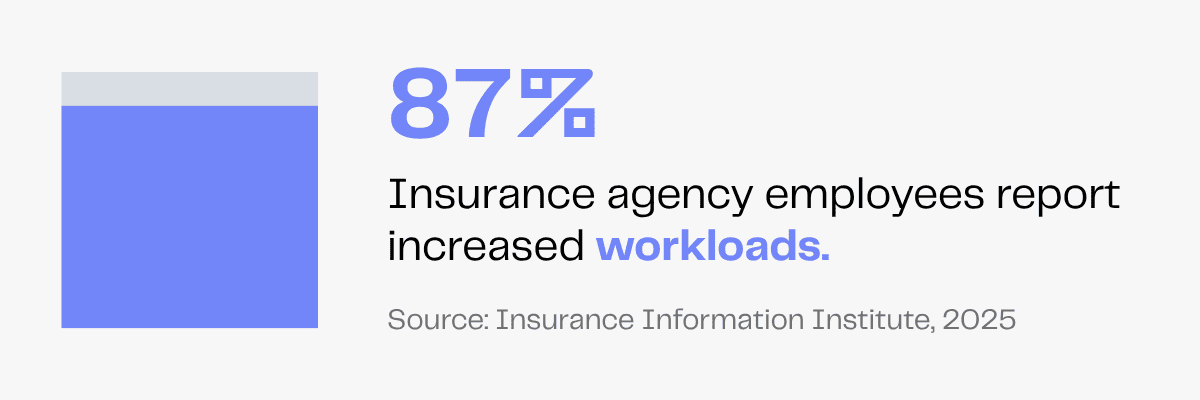
87% of insurance agents report increased workloads, with 42% of their workweeks spent on admin tasks. An insurance VA can take such routine tasks off your agents’ plates.
With 42% of customers not trusting their insurers and 40% never hearing back after purchase, it’s crucial for agencies to improve customer service.
88.6% of insurance agencies are using AI for tasks like claims handling, fraud detection, marketing and rating—despite the risks involved.
US-based insurance companies compete for clients in the world’s largest insurance market.
With over 1.4 million insurance agents in the US, you must offer unique, exceptional services to attract and retain clients. This can help you outperform competitors.
To stand out and boost client satisfaction, you also need competent staff.
However, hiring local, in-house employees can increase overhead and reduce profits because you have to pay for benefits on top of salaries.
Benefits account for over 30% of employee compensation in the US private industry.
Want to recruit skilled support and avoid additional expenses at the same time? Hire insurance virtual assistants (VAs) for your agency!
An insurance agency virtual assistant is a remote specialist who handles repetitive administrative tasks for your insurance business. They’re proficient in insurance industry terminology and can use online tools like Applied Epic to simplify everyday operations.
Hiring them is also affordable because they don’t need employment benefits, eliminating expenses for Medicare, Social Security or unemployment insurance.
What Can an Insurance Agent Virtual Assistant Do?
A virtual assistant can manage client communication, recordkeeping, lead generation and more for your insurance business.
Essentially, there’s a VA for almost every task you want to delegate. So if you want marketing support, you can hire VAs specializing in social media or content creation as well.
Here are some everyday tasks to delegate to a virtual assistant for insurance companies.
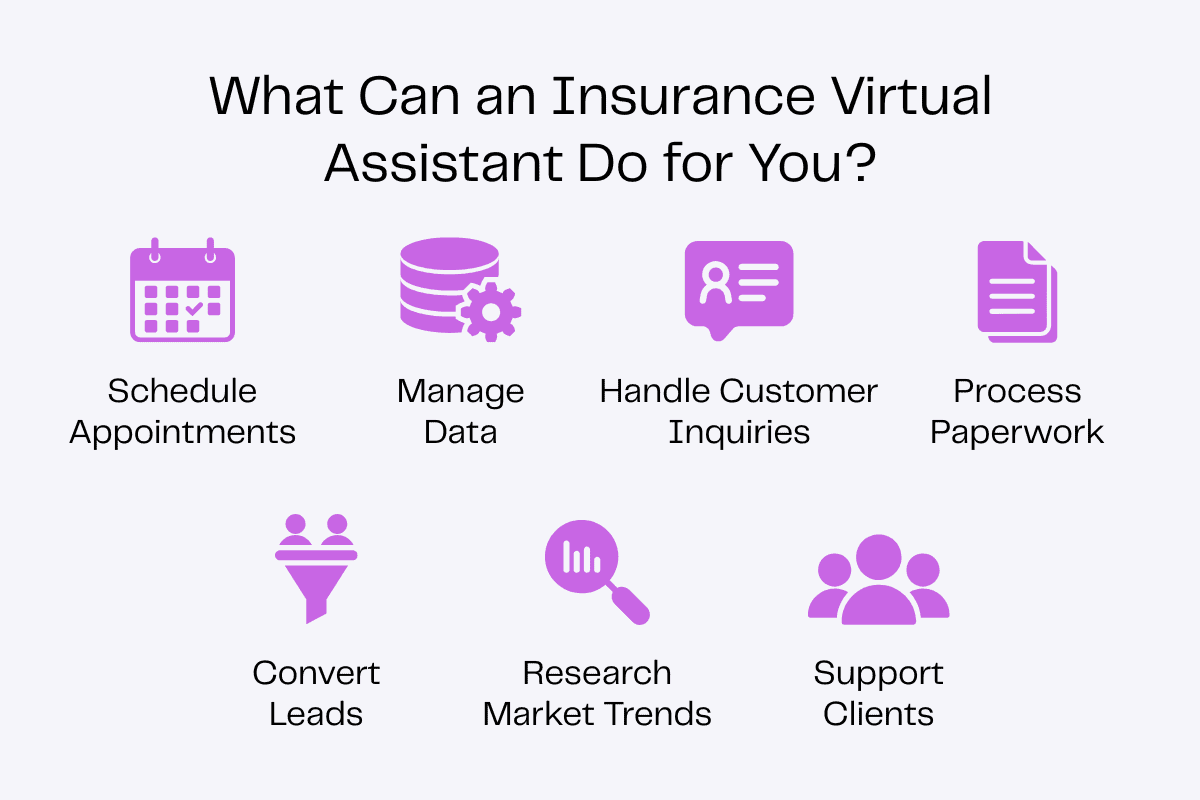
Handle Client Inquiries
Inquiry emails and messages can pile up fast, especially when you’re scaling operations. Answering thousands of questions daily can distract you and your sales agents from core duties.
To save you time and energy, virtual assistants handle email and website inquiries.
Your VA can engage in clear, concise conversations with clients and leads, helping you increase conversions and improve client satisfaction.
They can:
- Draft template answers to routine questions and schedule emails to accelerate inquiry resolution.
- Sort and label emails by priority and forward urgent issues to core teams.
- Share signup forms and SLAs to streamline client onboarding.
- Send reminders for policy renewals or limited-time offers to enhance client relationships.
- Remove phishing and spam emails and scan email attachments to prevent cyber fraud.
Read more: How Virtual Assistants Provide Professional Chat Support
Schedule Appointments
Insurance agents spend 42% of their workweek on scheduling and admin tasks.
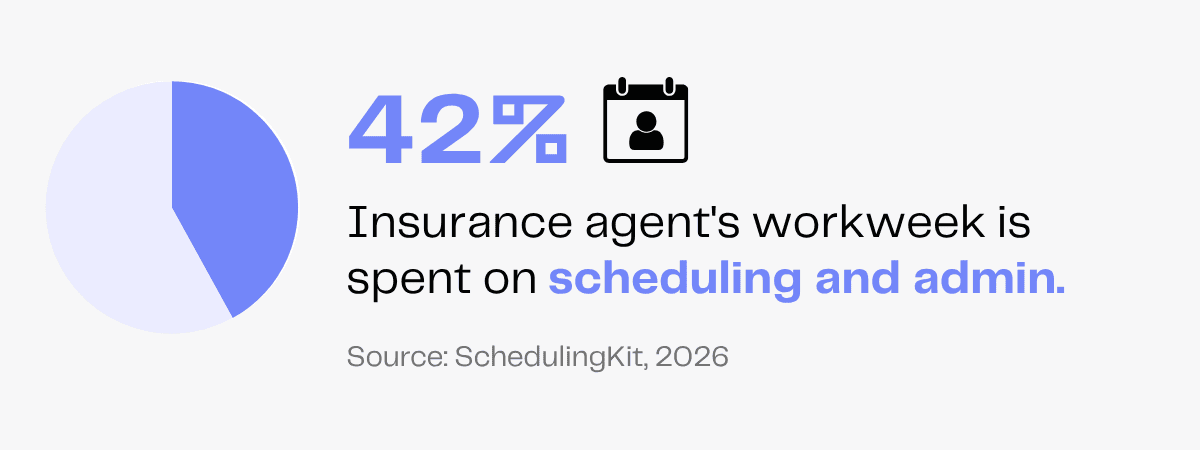
To save time, virtual insurance assistants can schedule appointments between insurance agents and clients.
To meet urgent client needs, VAs can identify available agents and schedule quick meetings to enhance customers’ confidence. To further streamline routine scheduling tasks, VAs can:
- Check client availability and add relevant dates to your agent’s calendar.
- Send automated meeting reminders to reduce no-shows.
- Prepare meeting agendas and share them with participants to facilitate productive discussions.
- Convert time zone formats in the calendar to suit the client’s location to prevent confusion.
- Handle rescheduling and cancellation requests based on priority and availability.
Process Paperwork
In insurance businesses, maintaining precise policy documents is not only crucial but legally required.
ACORD forms and insurance certificates are vital for establishing proof of insurance. But managing these files can be exhausting, especially for firms that issue thousands of them weekly.
Insurance virtual assistants can reduce your paperwork problems! They can:
- Draft and format policy documents and cancellation notices in MS Word.
- Convert scanned insurance certificates into editable text files using OCR technology.
- Review client signatures on digital forms using e-signature platforms (DocuSign).
- Sort policy documents based on expiration and renewal dates.
- Upload documents to cloud platforms like Google Drive for fast access and data security.
Manage Data
From customer profiles and claims documentation to policy terms and financial records, insurance agencies deal with vast amounts of data.
Insurance virtual assistants can store these details in your CRM or AMS platforms, helping you compile, analyze and leverage business data.
85% of insurance agencies use AMS and 20% use CRM tools.
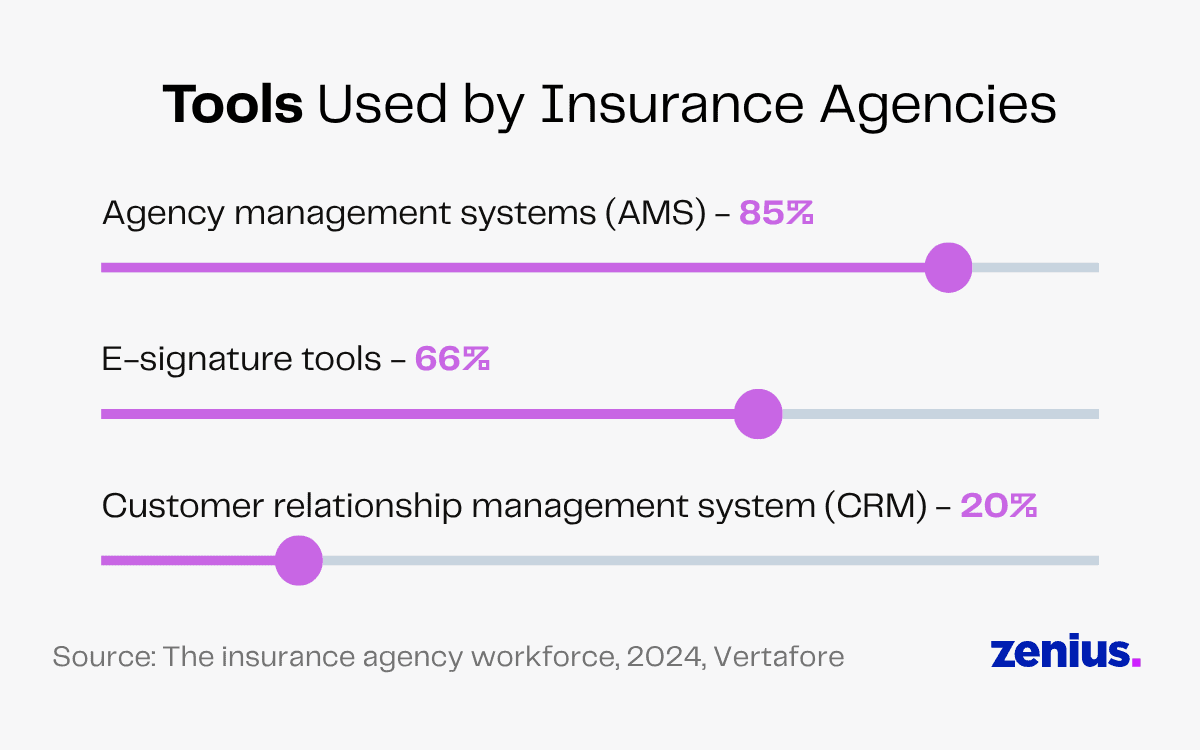
A specialized CRM designed for insurance should store essential client data, such as contact details, policy information and reminders.
Angela Palo, COO, Pinnacle Financial Services
This shift away from paper-based systems can allow agents to easily access information and automate tasks like renewal reminders and client birthdays.
Using a CRM helped streamline operations within my agency, significantly reducing the time my agents spent on manual data entry.
Your insurance VA can:
- Compile lead information (name, contact, insurance preference) from email and website inquiries and input this data into AMS platforms.
- Clean your database by correcting grammatical, numerical and logical errors, such as by changing ‘W Avenew, Californea, 935369’ to ‘W Avenue, California, 935369’.
- Deduplicate data by identifying and removing or merging repetitive entries. For example, they can ensure no two fields have the same insurance number.
- Standardize data by formatting similar fields using a fixed structure. For example, formatting dates as MM/DD/YYYY for quick scanning.
- Validate datasets by cross-checking policyholder data with public records for accuracy.
Convert Leads
Insurance agent virtual assistants can assess a lead’s coverage requirements and budget to qualify or disqualify prospects.
This initial evaluation saves your sales agents’ time, as they won’t have to engage with low-value prospects.
Insurance VAs can also help convert leads into customers.
They can draft compelling cold emails by emphasizing the benefits of your insurance terms to attract more clients. Based on the prospect’s policy interests, your VA can also send personalized messages to increase conversion chances.
If you hire a licensed virtual assistant, they can also help boost sales via cross-selling.
For example, when a lead inquires about home insurance, your VA can provide additional details about car and life insurance.
And if you offer discounts on combined loans, you can sell multiple policies on the spot!
Read more: How To Maximize Conversions With a Prospecting Virtual Assistant
Support Clients
46% of customers say customer experience is a crucial factor when choosing an insurance agency.
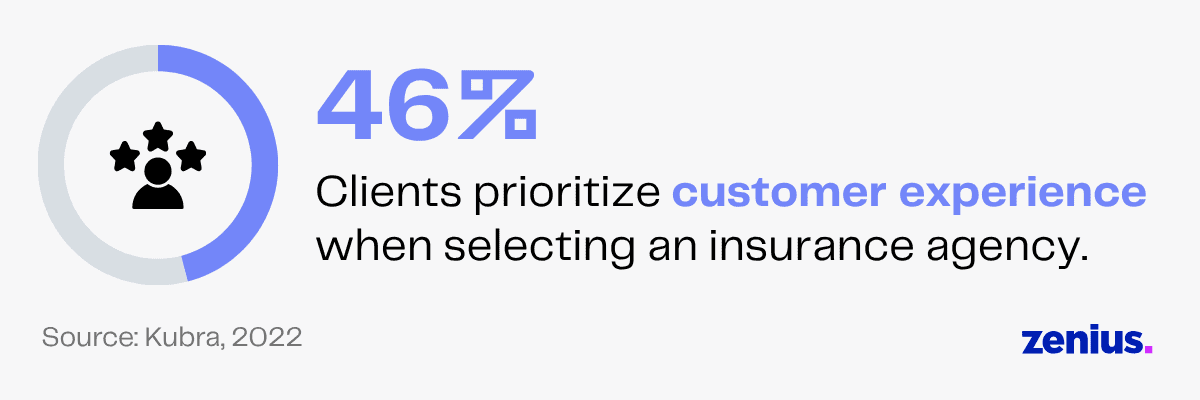
That’s why, besides acquiring leads, you must also focus on retaining clients.
It’s these existing members who pay monthly premiums and exhibit trust in your business. Neglecting their needs means losing their respect and money.
To avoid these risks, an insurance virtual assistant can tend to your clients.
They can resolve client inquiries, complaints and misunderstandings. With a VA by your side, you can provide better experiences and improve client satisfaction.
They can:
- Communicate with clients via multiple channels, including email, live chat and helpdesk software, which increases accessibility.
- Answer clients’ routine yet important questions on policy changes, payment methods and filing claims. This helps reduce the burden on in-house and on-call teams.
- Forward complex queries and complaints to internal insurance agents for swift resolution.
- Assign dedicated agents to priority clients’ requests. This ensures timely support for long-time members, shareholders and other key personnel.
- Coordinate between frustrated clients and in-house specialists during emergencies, such as floods or wildfires. Such acts of kindness and composure can establish your agency’s expertise and compassion.
- Log client records into the CRM database to train internal service teams.
- Collect feedback and report positive testimonials to the marketing team for content marketing campaigns.
Research Market Trends & Competitors
Besides supporting clients, you must also outperform competitors to grow consistently. For this, you need accurate information on their strategies and market trends.
Virtual assistants for insurance agents can research these details to help you make reliable decisions.
They can:
- Compile data on competitors’ written premium rates from publicly available filings.
- Monitor Google News and the social media accounts of regional insurers to identify emerging trends and policies.
- Collect and organize regulatory changes to policy guidelines to create a checklist for legal compliance.
- Review whitepapers and case studies of national carriers to spot strategic opportunities.
- Create weekly research reports formatted with bullet points, facts and statistics to highlight actionable insights and drive accurate decision-making.
Benefits of Hiring Insurance Agent Virtual Assistants
Hiring a virtual assistant offers several benefits to insurance agency owners.
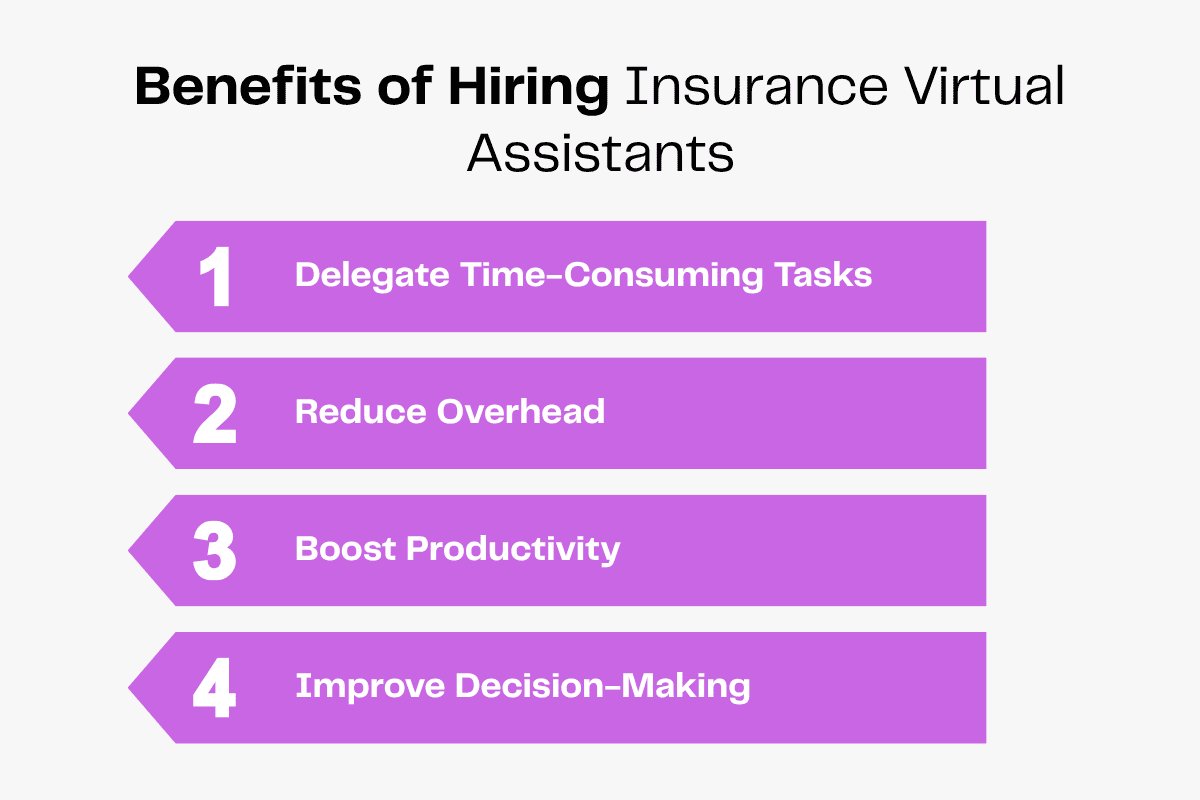
These include reduced workload, lower overhead costs, higher productivity and improved decision-making.
Delegate Time-Consuming Tasks
Both insurance agencies and independent agents struggle with heavy workloads. 87% of insurance employees report higher workloads and 50% are burned out.
A virtual assistant for insurance companies can reduce administrative burdens, giving you more time to sell insurance policies.
You can even use these extra hours to relax with friends and family and return more energized to pursue bigger projects.
They can organize client records, handle client queries and schedule appointments, providing reliable back-office support for smooth workflows.
Reduce Overhead
By hiring an insurance virtual assistant, you can eliminate expenses for office space, utilities and equipment.
Unlike in-house employees, VAs don’t need additional benefits or annual bonuses, either. You need to cover their wages and that’s all.
This lets you reinvest your savings into acquiring more clients or expanding your service offerings.
For quick, hassle-free insurance virtual assistant hiring, contact a reliable VA agency like Zenius.
We help businesses find talented, pre-vetted candidates at affordable rates.
We also track attendance, process payroll and handle taxes for your VAs, taking away most hassles.
Boost Productivity
Money alone isn’t enough for growth. You need time and energy to focus on strategic projects.
Insurance agency virtual assistants give you your time back by handling routine, exhausting tasks.
Their support can also boost your core employees’ productivity. For example, your VA can monitor your sales pipeline, organize client documents and schedule email follow-ups.
This way, you and your core teams will have fewer low-value chores to handle, resulting in more free time for core work.
More time allows your team to convert more leads, sell more policies and make more profits.
Improve Decision-Making
Insurance agencies can face unexpected challenges, including technological advancements, regulatory changes and market shifts.
You might not have the time to monitor everything, which can lead to mistakes. But not if your insurance virtual assistant keeps you updated and aware!
They can research trends, technologies and laws to collect the latest news and update your knowledge base with reliable information.
With their support, you can make accurate decisions and prevent penalties or client drop-offs.
How Is the Insurance Industry Changing in 2026?
In 2026, most insurance agencies have embraced AI for everyday tasks.
AI speeds up routine processes, reduces manual paperwork and helps spot potential threats early, empowering agencies to serve customers better and faster.
However, human intervention is still non-negotiable as customers want advisors to answer questions and offer guidance.
Additionally, with many clients abandoning purchases due to confusion or a lack of support, it’s high time for insurance agencies to step up their customer experience strategy.
AI Transforms Insurance Workflows
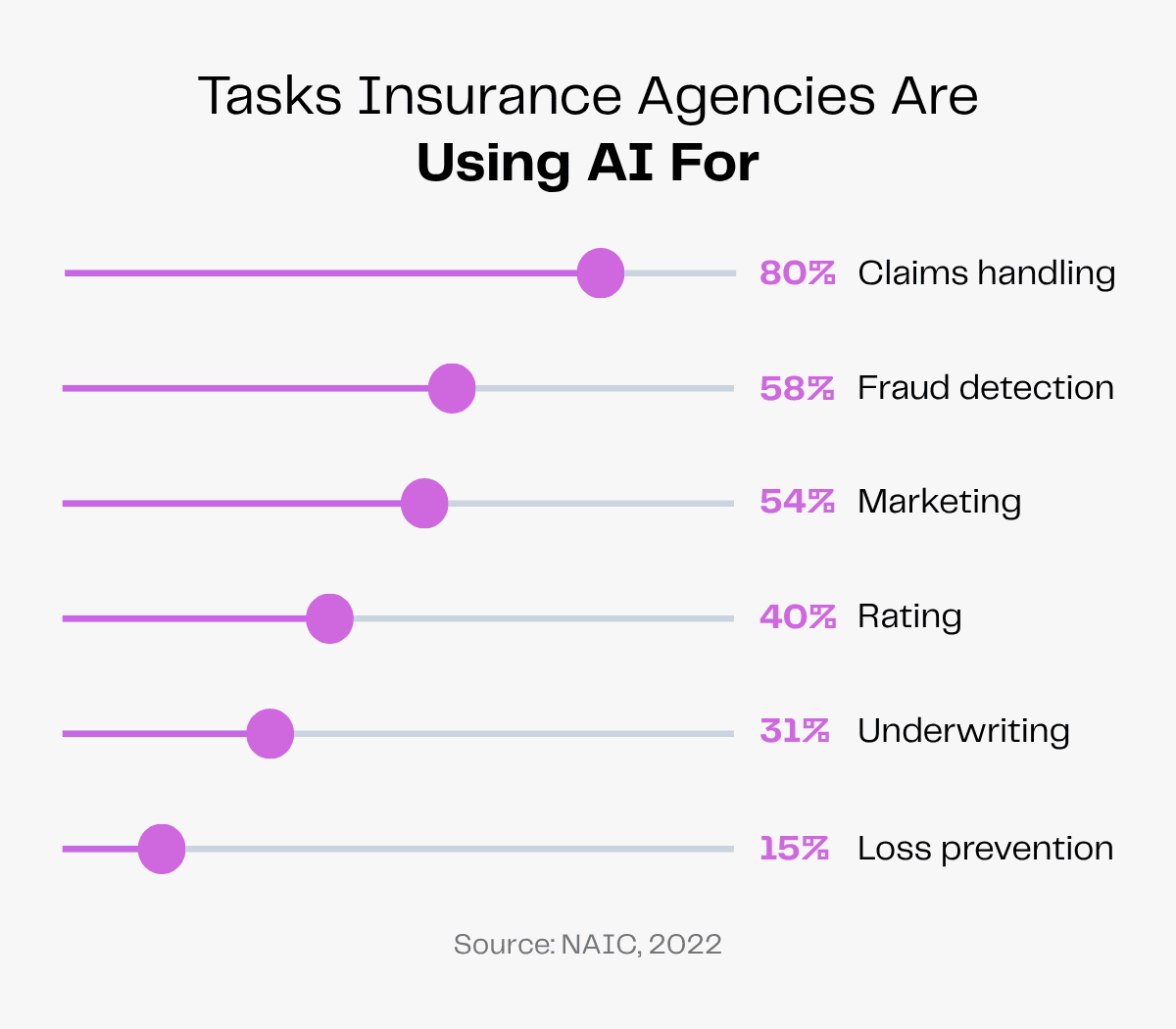
As in many other sectors, AI is transforming insurance workflows. 88.6% of private passenger auto (PPA) insurance companies are using AI/ML for tasks like:
- Claims handling (80%)
- Fraud detection (58%)
- Marketing (54%)
- Rating (40%)
- Underwriting (31%)
- Loss prevention (15%)
Deloitte also estimates that AI-driven fraud analytics can save property and casualty (P&C) insurers up to $160 billion by 2032.
But despite these benefits, many agencies are on the fence about using AI, citing reasons such as “lack of resources and expertise” and “security risks.”
That’s why human governance is a must.
You need someone to protect sensitive information, verify AI output and use judgment to override incorrect AI recommendations.
Plus, customers also want human guidance.
2/3rds of clients prefer working with a human advisor when making coverage decisions and 85% want an advisor to answer questions at some point.
A skilled, next-gen insurance virtual assistant with AI knowledge can help you safely incorporate AI into your workflows and add the human touch your clients need.
With them, you can achieve more profitable results from human-AI collaboration.
Customers Demand Better Experiences
Customers rely on insurance agencies to help them through major life events, from education and marriage to retirement and death.
As such, they deserve a strong, trustworthy and reliable partnership. Yet 42% of customers don’t fully trust their insurer.
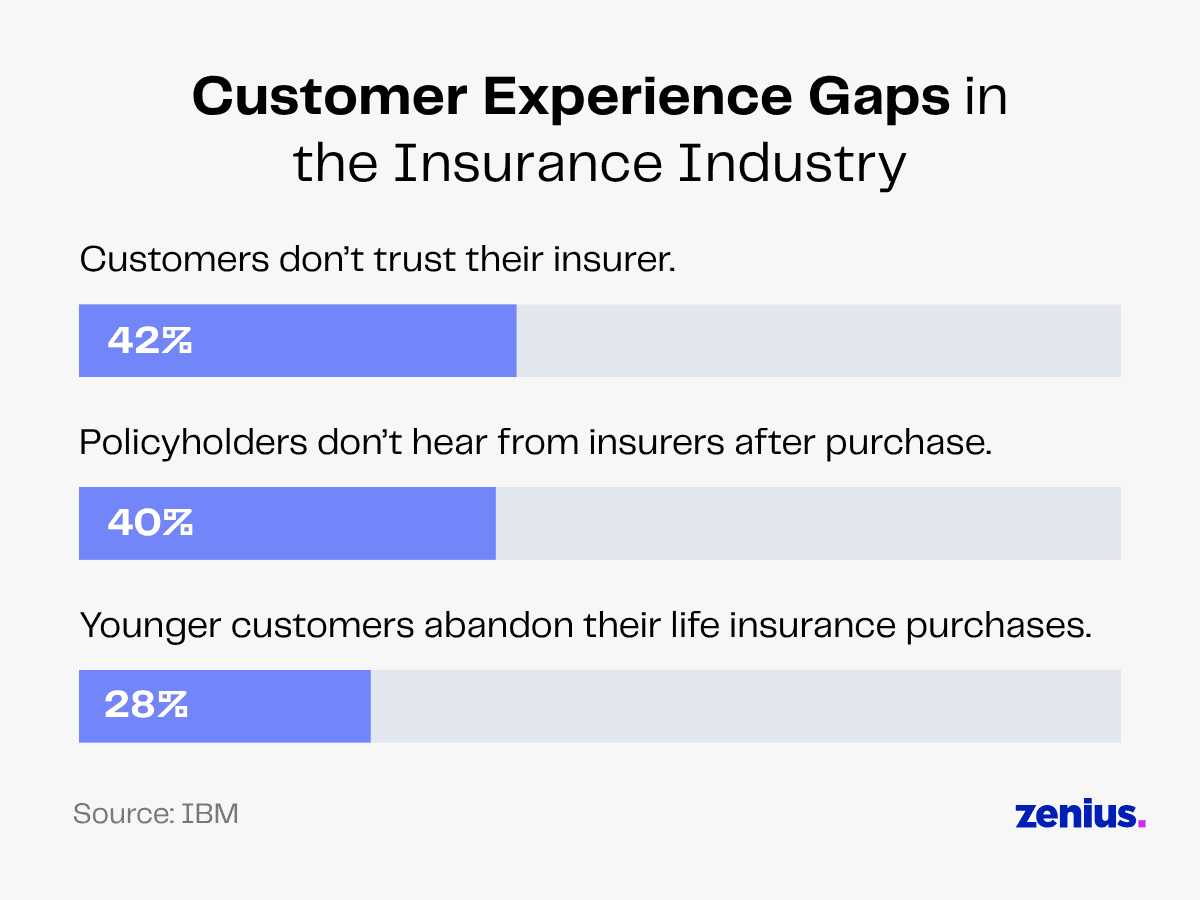
40% of policyholders also say they never hear from their life insurer post-purchase. This highlights a significant gap in customer experience.
Younger customers aged 18–40 years feel particularly neglected. 28% abandon life insurance purchases due to overtly technical language (37%) and affordability concerns (35%).
However, as Bryan Hodgens, Senior Vice President at LIMRA Research, explains, affordability is often a “perception problem.”
Consumers believe life insurance costs far more than it does—and that makes education the industry’s biggest opportunity.
We need to bring consumers into the fold and guide them through the entire process, keeping it simple, embracing tools like AI, but never losing sight of how essential human advisors are.
This means that your relationship with your clients must be meaningful, not just transactional.
It’s not enough to just provide the logistics. You must stay by their side, clarify their doubts and guide them as they make major decisions.
An insurance virtual assistant can help you deliver the experience your customers deserve.
They can break down technical terms, follow up with clients after purchase and personalize each interaction, making every customer feel valued.
Best Virtual Assistants for Insurance Agents
Beyond daily operations, you can also hire specialized virtual assistants for specific tasks in your agency.
You may want to hire a dedicated data entry VA for recording policyholder, claims and property risk data.
Or, you can hire a marketing VA to help build brand awareness and boost sales.
| Types of Virtual Assistants | Benefits for Insurance Agencies |
|---|---|
| Data Entry VA | Maintains accurate client and company databases to ensure legal compliance. |
| Research VA | Provides actionable insights on market trends and competitors for strategic planning. |
| Marketing VA | Develops targeted promotional campaigns to boost brand awareness. |
| Sales VA | Manages leads to increase conversions and return on investment. |
Read more: Best Virtual Assistant Niches To Transform Your Business
Skills of an Insurance Virtual Assistant
To find the right fit, you should learn which skills your virtual assistant needs to excel in the insurance industry.
This role requires attentiveness and quick, critical thinking to handle sensitive requests. So insurance VAs must be good listeners.
Your VA must also be able to communicate with leads and clients in a fluent, clear and engaging way.
Apart from interpersonal skills, a virtual assistant for insurance companies must have strong technical skills in their niche.
They need to know how to operate CRM tools and AMS platforms like Applied Epic or AMS360.
FAQs
What is an insurance virtual assistant?
An insurance virtual assistant is a remote professional who provides back-office support to insurance agencies. They answer client queries, input data into AMS platforms, schedule appointments between clients and advisors and handle lead follow-ups.
Can an insurance VA sell policies on my behalf?
No, an unlicensed VA cannot sell policies or give coverage advice on your behalf. State regulations require a licensed insurance agent for these tasks.
How do I use AI for my insurance agency?
You can use GenAI to draft client emails, deploy chatbots for instant replies and leverage predictive analytics to detect fraud or spot bottlenecks. Just remember to never paste sensitive client data or PII into AI tools and always maintain human oversight for accuracy.
Final Thoughts
To thrive in a competitive market and satisfy rising consumer expectations, insurance companies must handle a thousand different responsibilities.
You need to diversify your offerings, integrate AI into your workflows and build strong client relationships.
While you focus on these priorities, an insurance virtual assistant can manage routine tasks that keep your business running smoothly.
With their affordable, reliable support, you can save money, attract more clients and scale your insurance agency.