
Key Takeaways
Screening, hiring and training an employee are more expensive and time-consuming than a VA. U.S. businesses spend 40 hours per employee on training.
If you hire a VA, you only pay for their services. But with employees, you must pay for salaries, office space, equipment, employment benefits, payroll taxes and more.
If your goals are cost-effectiveness and scalability, VAs are a better choice. But if you want hands-on support and long-term partnerships, hire employees.
Building an efficient workforce is a priority for all business owners. If your staff is skilled, your business advances. If they’re motivated, you hit your goals faster.
You might be at a point right now where you’re looking for your next perfect candidate.
While earlier, hiring someone always meant a full-time, in-house employee, the rise of remote work has given way to more options.
Businesses can now hire virtual assistants (VAs) and part-time remote workers at lower costs.
When making the virtual assistant vs employee decision, you must weigh all your options strategically. There’s no universal answer.
VAs are a good choice for businesses needing quick, cost-effective support, but employees may be a better fit for organizations looking for a long-term solution.
This article analyzes their key differences, hiring costs, perks they offer and your business objectives to help you pick the most suitable match.
Virtual Assistant vs Employee: Definition
In-house employees are professionals who work directly for your company. Since they are hired by you and not an outsourcing agency, you’ll be responsible for the entire hiring process.
You will be in charge of recruitment, training, payroll, employee benefits and taxes.
An in-house professional will be your permanent employee. You will be expected to provide them with office space, computer devices and internet access.
On the other hand, virtual assistants are professionals who will assist your business remotely. They’ll complete assigned tasks on time and collaborate with you, but they’re not on your payroll system.
You won’t need to provide employment benefits or invest in office space, equipment and utilities for them.
They can handle a variety of digital tasks like:
- Scheduling appointments
- Planning your calendar
- Managing emails
- Creating social media content
- Building and designing a website
- Writing blog posts
- Marketing your brand
- Conducting research
- Preparing reports
- Providing customer service
If you want to hire a professional for your administrative needs, a virtual assistant will be of great help.
Virtual Assistant vs In-House Employee: Key Differences
Both virtual assistants and in-house employees will work on the given tasks efficiently. But there are a few key differences in the nature of their work.
| Comparison Factors | In-House Employee | Virtual Assistant |
|---|---|---|
| Work location | In-office | Remote |
| Work schedule | Fixed hours | Flexible |
| Hiring timeline | Months | Weeks |
| Scope of tasks | Complex, hands-on tasks | Repetitive digital tasks |
| Communication | In-person | Virtual |
| Time zone | Same | Different |
Work Location
In-house employees will work in your company office.
A virtual assistant, on the other hand, works from an offshore location.
They’ll connect with you and your team virtually. Since VAs handle remote-capable tasks, physical absence will not affect the quality of their work and performance.
Work Schedules
Since an in-house employee works in your office, their working hours will usually be the same as yours. They will have a set schedule for each day.
However, virtual assistants offer flexibility when it comes to their work schedule. You can hire a VA who will work hours outside your typical 9–5.
Virtual assistants can also be full-time, part-time or even project-based.
Hiring Timeline & Process
You’ll have to manage the entire hiring process of an in-house employee on your own. The whole process is mundane and takes months. This will include:
- Researching suitable candidates.
- Screening their resumes.
- Interviewing each of them.
- Assessing their skills and qualifications.
- Recruiting your employee.
In the case of a virtual assistant, hiring through an outsourcing agency can save you time.
Agencies like Zenius can take care of the entire hiring process and pair you with a candidate within weeks while you concentrate on your business.
Scope of Tasks
An in-house employee’s scope of tasks is usually more complex. It may involve hands-on activities like warehouse management or meeting clients for in-person meetings.
Whereas a virtual assistant can help you with digital tasks like administrative or creative duties.
VAs work using digital tools and software. Since they work remotely, they are trained to work independently and manage their time well, so no need to worry about constant supervision!
Communication
In-house employees offer the advantage of in-person communication. But this digital world has also given us the flexibility of easy virtual communication.
You can effortlessly collaborate with your virtual assistants using virtual communication channels like Zoom, Google Meet or Microsoft Teams.
Time Zone
An in-house employee works in the same time zone as you, whereas a virtual assistant may work from a different time zone.
However, VAs can still guarantee some overlapping working hours for real-time collaboration, along with the benefit of continuing work even after your workday ends.
Costs
Cost is an important factor to consider while choosing between a full-time employee and a VA.
Hiring skilled staff for your business shouldn’t cost you an arm and a leg. You should hunt for talent that delivers top-tier quality work at an advantageous price.
If you hire VAs, you only pay for their services. But the cost for in-house employees includes salaries, benefits, taxes, overhead and much more.
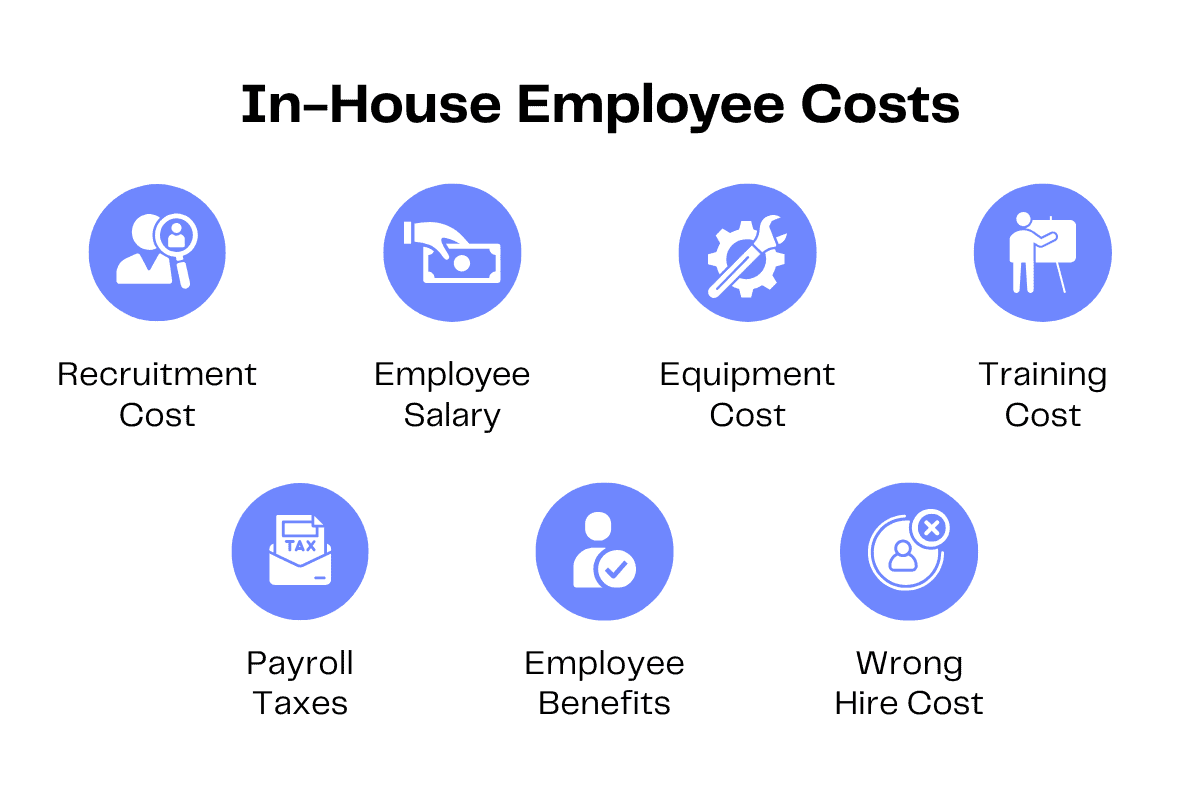
Here are some types of costs you’ll have to incur for your employee.
Recruitment Cost
You’ll have to include the recruitment costs of your in-house employee in your hiring budget. The total expenses will include hard costs and soft costs.
Hard costs are the total money spent on the recruitment process, such as:
- Cost of posting jobs across sites.
- Employer advertising costs.
- Applicant tracking systems.
- Recruiting fees.
- Background screening costs.
- Internal costs for the human resources (HR) department.
Soft costs are non-monetary, indirect expenses. They are calculated based on the time and resources spent.
These include time spent interviewing job applicants and productivity loss during hiring.
Speaking on the hassles of hiring, a manager shares,
I was not prepared for how much work it takes to hire one person. There are a million steps to this process and I worry I won’t pick the best fit in the end.
Employee Salary
The total cost of hiring your in-house employee will include their base salary. You’ll have to pay a fixed rate depending on market factors, their role and experience.
An in-house employee’s salary is usually higher than a virtual assistant’s.
Equipment Cost
Your in-house employee will need office supplies. You’ll have to cover the cost of:
- Extra office space
- Furniture
- Computer devices
- Internet connection
- Office stationery
- Equipment like headphones, webcam
Training Cost
The total cost of an in-house employee will include their onboarding and training costs. In some cases, you might have to start with the basic training.
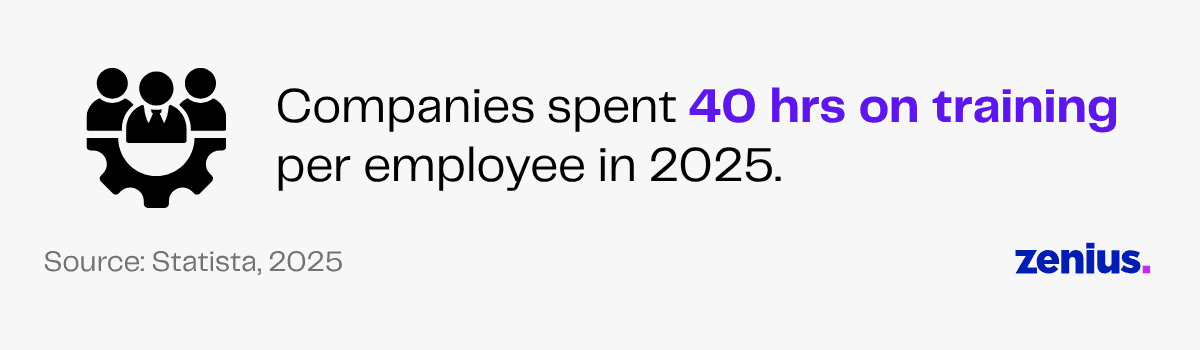
In 2025, companies in the US spent roughly 40 hours on training per employee.
Training costs will include:
- Course fees.
- Training material or software cost.
- Indirect costs such as training time and productivity loss.
Payroll Taxes
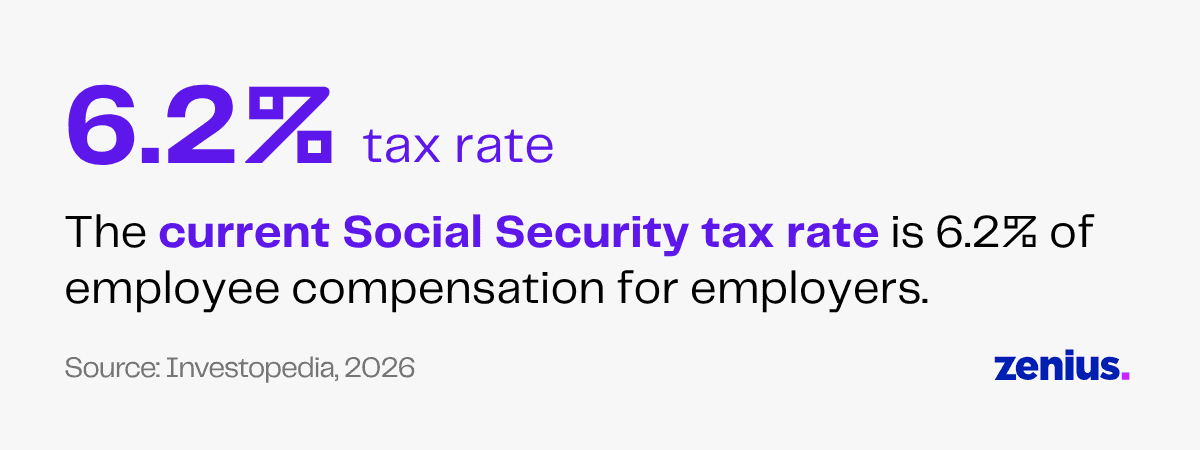
The current Social Security tax rate is 6.2% of employee compensation. You will have to pay such payroll taxes on your full-time employees’ wages.
You’ll also have to invest in:
- Medicare
- Unemployment insurance
- Workers’ compensation insurance
- Health and life insurance
Read more: Decoding Virtual Assistant Tax Deductions for US Businesses
Employee Benefits
Other than the above-mentioned costs, you’ll have to provide some benefits to your employees. These corporate perks will include:
- Yearly bonus
- Paid time off (sick leave, paid vacation and sabbatical leave)
- Unpaid leave under the Family and Medical Leave Act (FMLA)
- Childcare support
- Snacks and beverages
Wrong Hire Cost
A bad hire can cost you both money and time.
You will lose the money spent on their recruitment, onboarding and training.
Poor hiring decisions will also lead to loss of valuable time, low employee morale and decreased customer satisfaction.
Virtual Assistant vs Employee: Whom Should You Choose?
Still debating whether to choose a virtual assistant or an in-house employee? Don’t worry—we’ll make it easier for you!
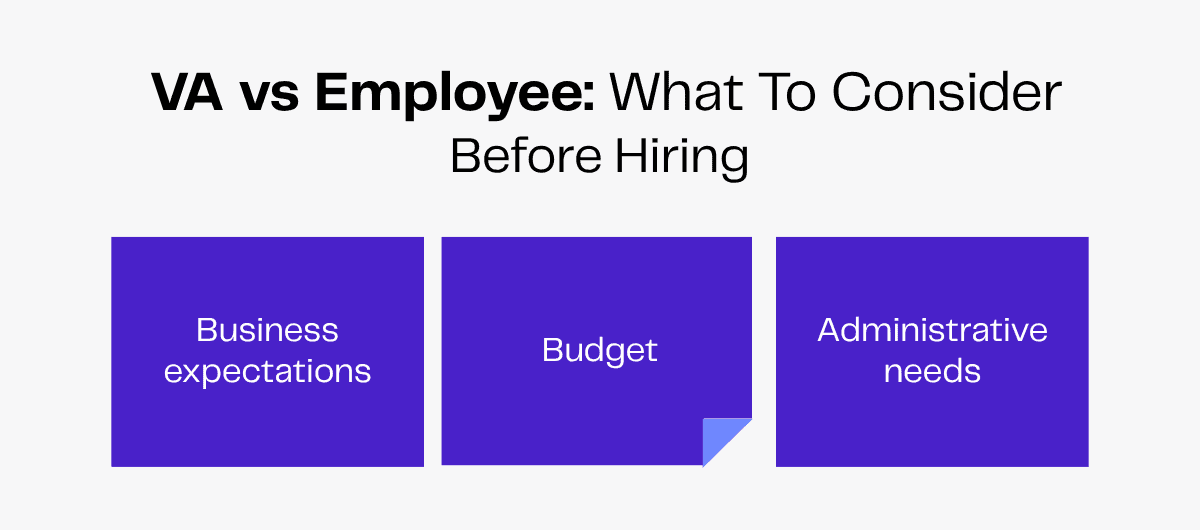
You need to look into your business demands to figure out the right fit. Here are a few things to consider before you make the decision.
Business Expectations
The first question you need to ask yourself is this: What are your business expectations? A clear picture of where you see your business in the future will help you make the right choice.
You need to choose a virtual assistant if you want to:
- Save more time and focus on core business tasks.
- Reduce hiring costs.
- Achieve your business goals faster.
- Scale your business.
- Leverage global professionals to grow your business.
If you want to optimize your business, hiring a VA is the best choice you’ll make.
However, a full-time employee might be a better option if you:
- Want an on-site worker for hands-on tasks.
- Need a senior, specialized professional with decades of experience.
- Have the need and budget for a long-term commitment.
Job Role
You need to assess which role you’re hiring for.
For instance, if you need someone to manage back-office tasks like scheduling appointments, calendar management, data entry, transcription, document organization and so on, a VA is the better choice.
If you have a small business or a startup, you can save money by hiring an administrative VA.
They’ll speed up everyday workflows, while you focus on other high-value tasks.
However, if you want support with high-level decision-making, brand strategy, policy-making or in-person client communication, you should hire an employee.
Budget Availability
You must prioritize saving money, especially if your business is new. Before making your decision, remember to calculate your total budget.
Virtual assistant costs and in-house employee costs differ significantly. You should compare them on:
- Hiring costs
- Recruitment and equipment costs
- Benefits like health insurance, paid leave and taxes
- Turnover costs
Hiring a VA is often more economical as they help your business reach new heights on a budget.
Benefits of a Virtual Assistant Over an In-House Employee
Before choosing to hire a virtual assistant or an in-house employee, you need to weigh their pros and cons.
While an in-house employee offers the ease of in-person communication, a VA offers several other advantages by working remotely.
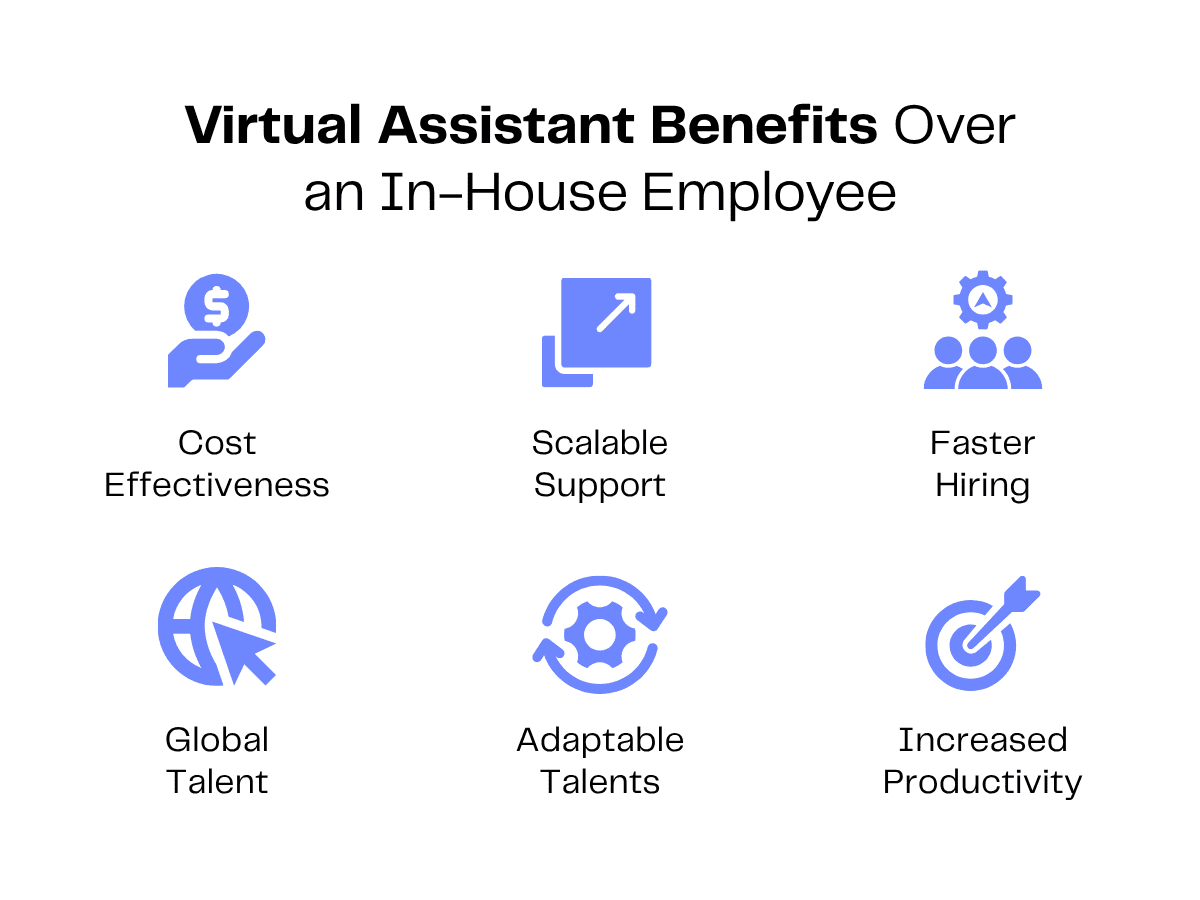
Here’s how a virtual assistant offers better support compared to an in-house employee.
Cost-Effectiveness
If you are an entrepreneur or a startup owner, hiring an in-house employee can be quite expensive.
You need to provide several utilities like office space, office supplies, a computer, work equipment, paid vacation and tax benefits.
Your VA does not need these things and they arrange for their essential equipment.
Hiring VAs through an outsourcing agency like Zenius is even more cost-effective since you don’t need to spend money on posting job openings, screening candidates and interviewing them.
You don’t have to bear any overhead costs, so hiring a VA becomes profitable in the long run.
Scalability
As your business grows, your workload will grow too. With VAs, you get the flexibility of hiring multiple workers as and when needed. You can scale up or down at your own will.
On the other hand, hiring new in-house employees is a lengthy process. Plus, you can’t adjust their hours or tasks based on your current needs. Even during slow seasons or downtime, you’ll need to pay them the same.
Hiring a virtual assistant instead of an in-house employee will help you scale your business and pay only for productive work.
Global Talent
Since virtual assistants are remote, you can go beyond geographical boundaries and hire global workers. This lets you access niche skills lacking among your local candidates.
You can choose VAs with specific skills, language proficiency and understanding of a particular market.
When expanding your talent search globally, don’t just look for skills that match a job description. Look for people who deeply understand their local market.
Saeed Amidi, CEO, Plug and Play
Our international teams have opened doors that headquarters never could have. The right hire abroad isn’t just an employee; they are your eyes and ears on the ground.
These skilled talents bring fresh perspectives and unique insights to all aspects of your business, from digital marketing to customer service.
Faster Hiring
You’ll need to research, screen, interview and assess candidates for hiring an in-house employee. And if you don’t find a fit, you’ll have to repeat the process all over again.
One of the advantages of choosing virtual assistants is faster hiring.
When you hire VAs using an outsourcing agency, you don’t have to bother about the hiring process. The agency will take care of it and find you the best match!
Increased Productivity
When you hire virtual assistants, you won’t have to go through the tedious process of hiring. You and your team can focus on ideation and growing your business instead.
And after recruitment, your VA will take care of back-office tasks to help you save valuable time.
That’s why hiring a virtual assistant is beneficial for the overall productivity of your organization.
Adaptability
Virtual assistants hired from outsourcing agencies are hand-picked for your specific needs. They will be cooperative and easily adapt to different tasks. They are trained to:
- Work in diverse environments.
- Adapt to new technologies in the workplace.
- Think innovatively and solve problems efficiently.
How To Work With a Virtual Assistant
Once you’ve decided to hire a virtual assistant, you’ll need to follow some best practices to collaborate with them.
Here are a few tips to work with your VA efficiently.
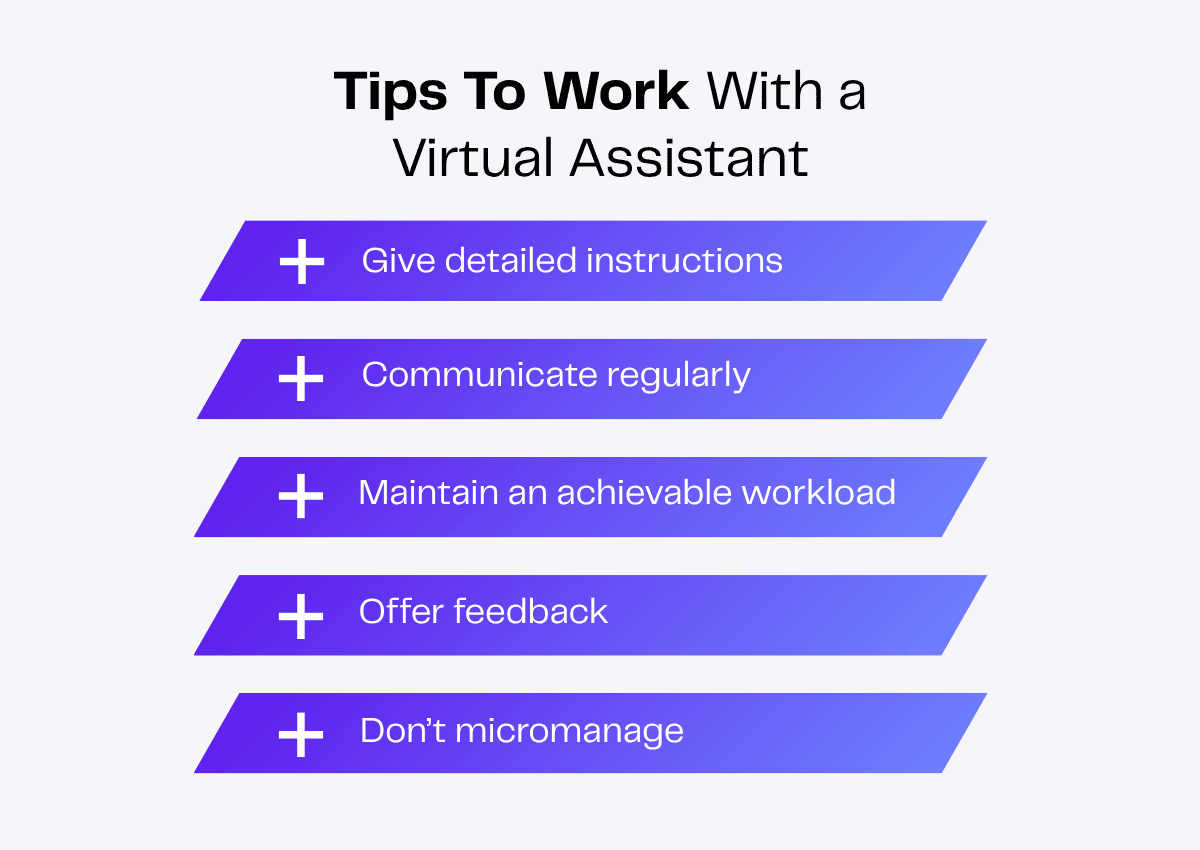
Define Expectations
You must remember to clearly state what is expected of your virtual assistant. You need to explain your brand values and business goals when your VA joins your team.
If your virtual assistant is unclear about their job role and responsibilities, it can lead to unnecessary confusion and delays. Remember to:
- Delegate tasks with detailed instructions.
- Specify work deadlines.
- Highlight tasks that need to be prioritized.
If you follow these suggestions, your VA will be able to deliver the best-quality work on time.
Communicate Regularly
Virtual communication with your VAs may seem difficult when compared to in-person meetings with your in-house employees. But physical distance shouldn’t be a barrier to efficient collaboration!
You can easily improve communication with your virtual assistants by following a few tips. For example, you must:
- Specify available hours to communicate.
- Use communication channels for updates and feedback.
- Hold frequent meetings to discuss tasks and progress.
- Create shared calendars to sync schedules.
- Answer all their questions with patience.
- Maintain professionalism and transparency.
Monitor Workload
Overworking is known to have negative side effects on workers’ physical and mental health.
Your virtual assistant is trained to handle many tasks, but they shouldn’t feel overburdened.
They’ll stay productive and deliver better results when they have a healthy work-life balance. So you must monitor their workload to check that they don’t exhaust themselves.
You need to understand your VA’s strengths and analyze their capacity to delegate achievable tasks.
Offer Feedback
As stated by Steven D. Levitt, an American economist,
The key to learning is feedback. It is nearly impossible to learn anything without it.
Assigning tasks and holding regular meetings with your virtual assistant is not enough.
You need to acknowledge their work and offer feedback. You must remember to give constructive criticism and advice on what could be improved.
If you review your VA’s work regularly and show appreciation, it will boost their morale and help them improve their performance.
Don’t Micromanage
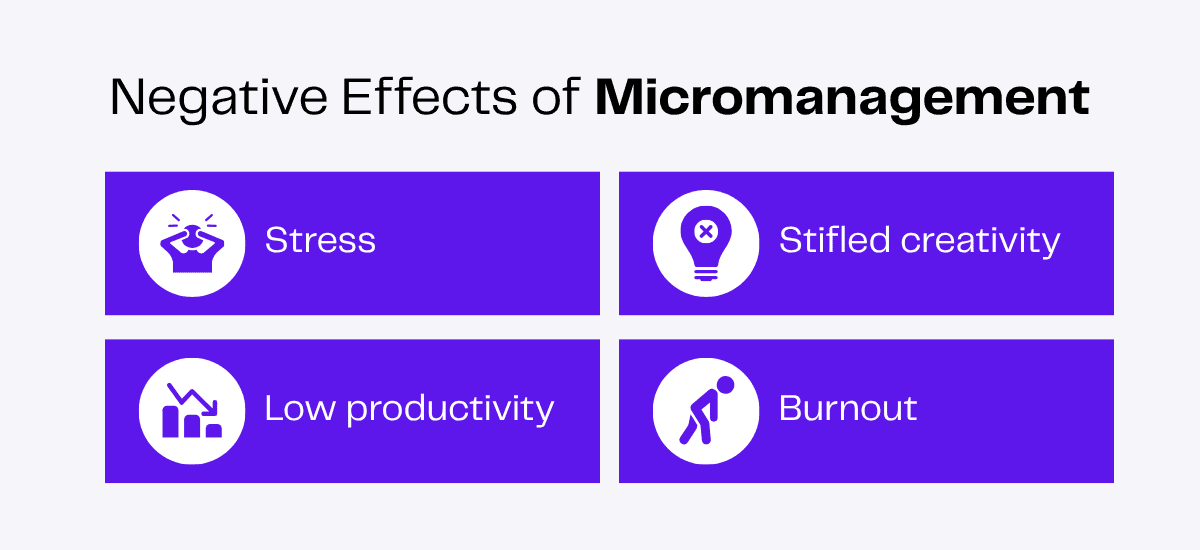
Since your virtual assistant works remotely, you may feel the need to micromanage.
But this is not a good idea. Micromanaging can have several negative psychological effects, including increased stress, stifled creativity, decreased productivity and burnout.
You should know that your virtual assistant is here to lighten your workload, not add to it. You must learn to let go of control and:
- Delegate tasks effectively.
- Provide clear instructions to prevent confusion.
- Trust your virtual assistant’s skills.
- Offer guidance only when required.
FAQs
Are virtual assistants employees?
No, virtual assistants aren’t your legal employees. They’re remote workers who support your business in the same way your employees do, but they aren’t on your payroll and don’t need employment benefits, office space, bonuses or insurance.
Why might a business choose a virtual assistant over an employee?
A business can choose a VA over an employee to reduce overhead costs, fill vacancies quickly, avail part-time or hourly services, access global talents or hire for niche skills.
What is the difference between freelance virtual assistants and a virtual assistant agency?
You have to find, screen and interview freelance VAs yourself and be in charge of their attendance, compensation, leaves, etc. On the other hand, VA agencies handle hiring and day-to-day management of your VAs. They also provide replacements when your VA is unavailable.
Wrapping Up
Hiring a virtual assistant over an in-house employee is going to help you in multiple ways.
They’ll be cost-effective, offer diverse perspectives, enable smooth scaling and adapt to new situations easily. You’ll be able to delegate both admin and specialized tasks with ease and accelerate your workflows.
Virtual assistants are profitable for your business in the long run, so when you choose VAs, you choose your business!