
Key Takeaways
Since recruiting in-house staff can take up to 7 weeks, hiring virtual assistants is more time-efficient for growing startups.
Cold outreach is one of the most popular ways for startups to gain their first paying customers. VAs can make cold calls to help you build a loyal customer base.
Entrepreneurs are courageous innovators.
They are unafraid of failure, pursuing interesting ideas in uncertain markets. They invest their time and energy to create useful products for the public.
But even entrepreneurs need operational support to grow their business.
As a new business owner, you need to persuade investors to fund your business, understand market trends, focus on R&D for your products and handle a hundred more tasks.
On top of it all, you also need to manage routine administrative tasks to stay on top of your business needs.
Sounds overwhelming? No worries, virtual assistants for startups have got your back.
Why Startups and Virtual Assistants Go Together
Over 20% of new startups between March 2023 and 2024 failed within a year. Why do these startups, usually built on great ideas, fail?
One reason for this is that startups are often short-staffed. Entrepreneurs end up handling a range of tasks from investor management to bookkeeping, all by themselves.
So their ideas end up remaining ideas, instead of stable business models. And the consequence? Burnout.
Hiring more staff can solve many problems for startup owners, but recruiting full-time, in-house employees is time-consuming and expensive, especially for a new business.
Recruiting talent can take almost 7 weeks. In-office staff also requires additional investment in office space, equipment and utilities.
This is what makes hiring virtual assistants (VAs) the best option for startups.
They’re remote workers who can handle routine tasks for your startup, like scheduling and recordkeeping, as well as technical tasks like marketing and sales.
VAs can fill skill gaps in your business at a cost-efficient rate, while lowering overhead expenses.
Read more: Why Virtual Assistants for Entrepreneurs Just Make Sense

Tasks of Virtual Assistants for Startups
Virtual assistants are tech-savvy, organized and punctual. Plus, hiring overseas virtual assistants lets you tap into a global talent pool and boost your startup’s growth.
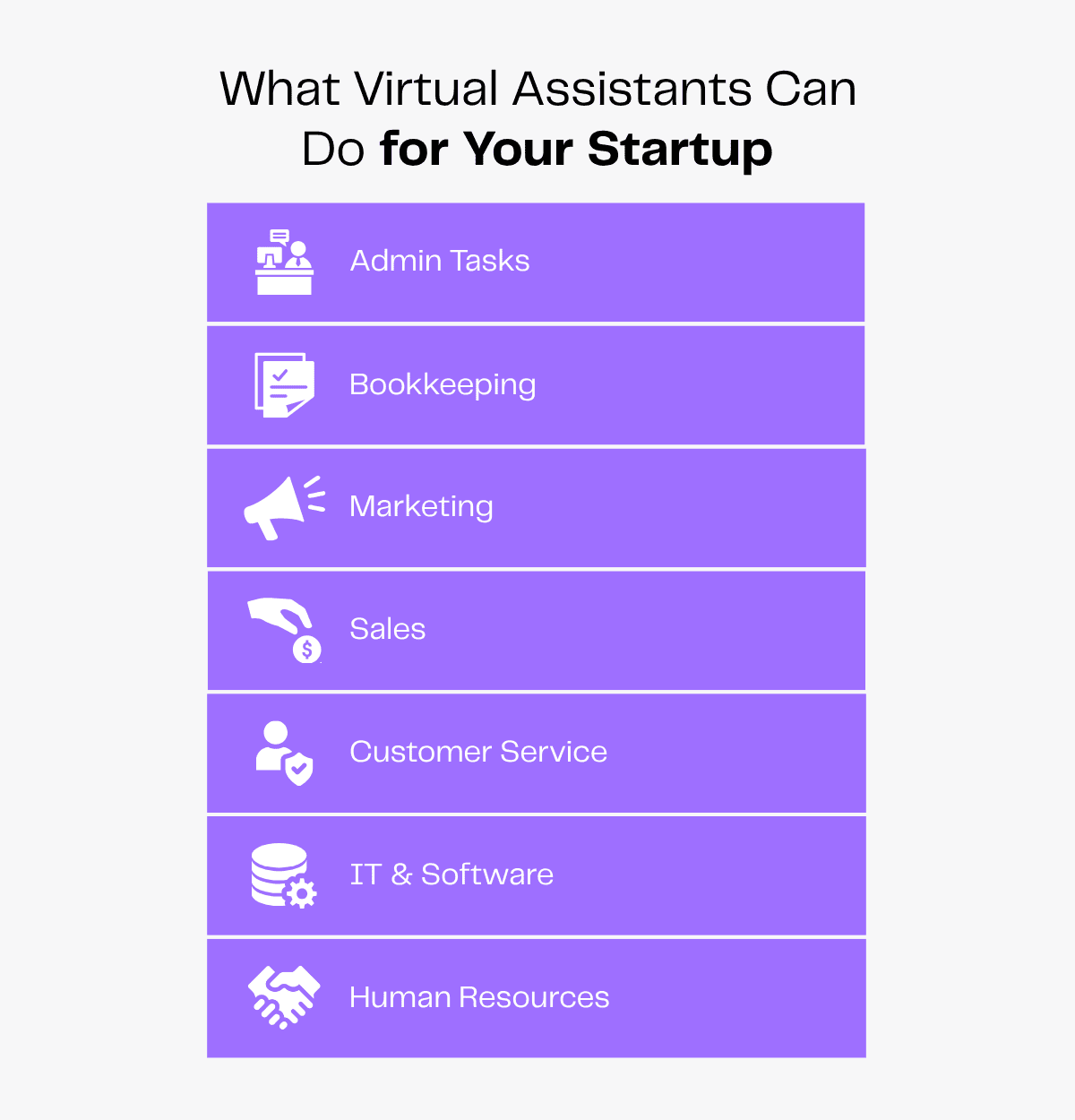
Wondering what exactly virtual assistants can do for your startup? Here’s the list of top tasks you can hire VAs for.
Administrative Tasks
As a founder, your time is too precious to be wasted on non-core tasks. You’ve got board meetings to attend and stakeholders to meet.
But unfortunately, you can’t just ignore the routine and boring tasks either.
Administrative virtual assistants can help you handle daily duties, saving valuable time.
They can take meeting minutes, make bookings and manage your calendar. This will avoid scheduling conflicts and miscommunication.
VAs can also document and organize company information for quick and easy access, helping you keep accurate records.
Email management virtual assistants can sort your emails, delete spam and send outreach emails to industry peers you want to collaborate with.
They can also handle appointment scheduling with interested parties, so you don’t have to waste time on constant back-and-forth communication.
Bookkeeping
Startups require efficient financial management to minimize the risk of bankruptcy.
You must also record every income, expenditure and employment tax receipt to comply with IRS regulations. This can improve your financial position by helping you manage cash flow, reduce unnecessary expenses and generate positive revenue.
Bookkeeping virtual assistants can help entrepreneurs manage finances better. These remote accountants can file taxes and perform internal audits to ensure legal compliance.
They can also record invoice data, bill clients, update ledgers, track payments, send reminders and even create financial reports.
By managing financial tasks, bookkeeping VAs help you maintain a clear overview of your cash flow so you can stay financially competitive.
Marketing
As a startup owner, you need strong digital marketing strategies to gain a competitive advantage.
Marketing virtual assistants can research and understand industry trends, assess competitor strategies and analyze customer behavior to help you personalize your marketing efforts.
VAs for marketing can post SEO-optimized product listings to attract buyers and make them check out your products, increasing your audience base and sales.
Creative VAs can create graphics, taglines and short videos for your marketing campaigns to ensure a consistent, solid brand identity across channels.
For example, content writer virtual assistants can draft informative blog posts that provide value and generate interest in your products. This SEO and GEO-optimized content can also drive organic traffic to your website.
You can also hire copywriting virtual assistants to create compelling ad copy that drives action and boosts sales!
Read more: Affiliate Marketing Virtual Assistants: Tasks, Benefits & ROI
IT & Software
Technology and those who can work it have become an inevitable part of modern businesses.
Whether it’s creating a business website or training custom AI models, your startup needs professionals who can help you optimize your systems and fix routine issues to avoid creating any technical debt.
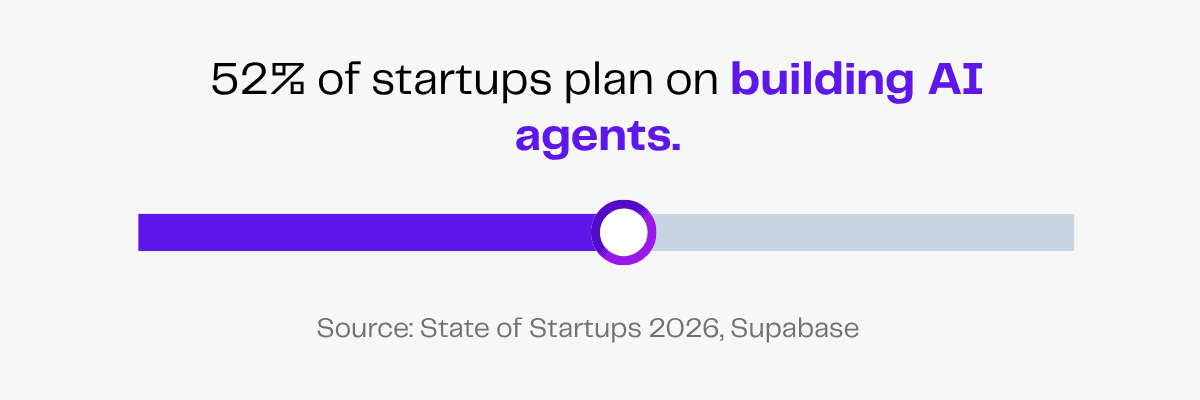
Plus, with 52% of startups planning to build AI agents, the need for skilled prompt engineers and AI developers is growing, too.
IT and software virtual assistants can help you implement a robust digital infrastructure for your startup. This means hiring:
- Web developers to design, create and maintain your website for better online visibility, improved user experience and customer engagement.
- Tech support VAs to troubleshoot network issues, reduce delays and downtime and enhance work efficiency.
- Database management VAs to collect, organize and safeguard data for faster and data-backed decision-making.
- WordPress VA to manage your website performance, SEO-optimize content, add relevant plugins and manage backups.
- Data Annotator VA, who can train AI models on text, audio, keypoint annotations and more to ensure model accuracy.
Sales
Entrepreneurs must generate revenue to satisfy investors. But selling your products is not that simple. You need to manage inventory, track leads, update the online store and more just to make a few sales.
Small business owners can be blindsided by these small steps and quickly feel overwhelmed with sales tasks.
Sales virtual assistants can help you sell products or services faster by handling all the routine tasks.
They can make cold calls, reaching out to leads, closing deals and strengthening customer relationships.
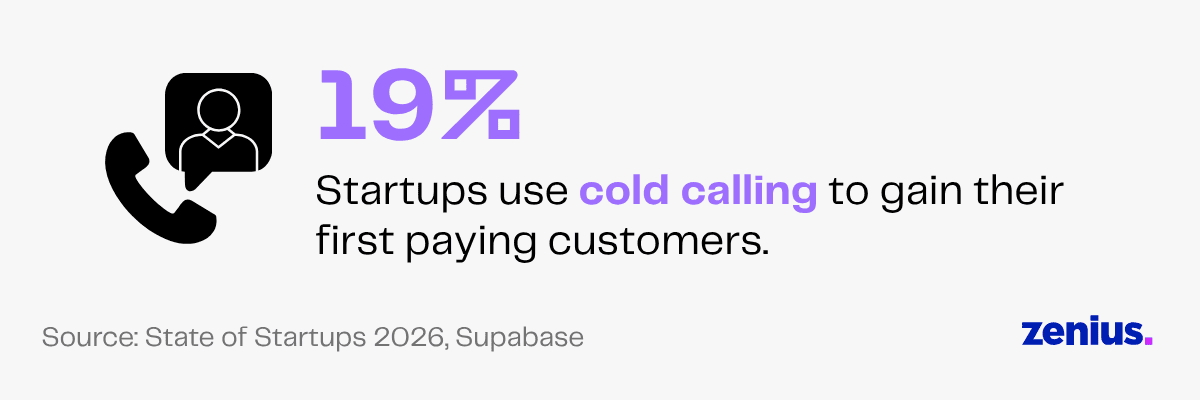
This is extremely helpful, since 19% of startups get their first paying customers via cold outreach.
Sales virtual assistants can also help with strategic planning by compiling purchase trends and creating accurate reports. This can help you make data-driven decisions to improve sales.
Customer Service
Startups not only need to attract new customers but also retain the ones that convert. This means prioritizing customer satisfaction at every touchpoint.
But if you are entertaining each customer complaint and query yourself, who’s going to handle the core operations?
This is why you need to hire customer support virtual assistants.
They are communication specialists who can professionally answer customer queries and resolve complaints.
They can also provide text-based assistance via live chat on your website or platforms like Walmart or Amazon, improving customer experience.
Moreover, customer service virtual assistants can also create consumer surveys to measure customer satisfaction.
Using the survey data, they can provide precise help, solve common problems and enhance customer engagement to boost your brand reputation.
Human Resources
Startups never have a stable workflow. From market changes to seasonal demand differences, there is always something that needs your time. The only way to get smoother operations? Hiring your first batch of employees.
Finding the right candidate can be the difference between optimal workflows and missed deadlines. And you must hire quickly to avoid losing the top candidates to your competitors.
This needs time and full attention, which owners of a growing business don’t have.
Plus, rushing hiring can lead to onboarding inefficient candidates, which costs your startup instead of supporting it.
By handing off hiring and recruitment to talent sourcing virtual assistants, you can reduce the hiring hassle. They can find, screen and recruit the right talent for your company so you can focus on strategizing for your growing business instead.
HR VAs can also help with payroll, onboarding and internal training, ensuring continuous productivity.
They can draft and communicate training material and company policies to employees, ensuring legal compliance.
With HR virtual assistants, you can rest assured that employee concerns are resolved promptly, improving morale and collaboration.
Benefits of Hiring Virtual Assistants for Startups
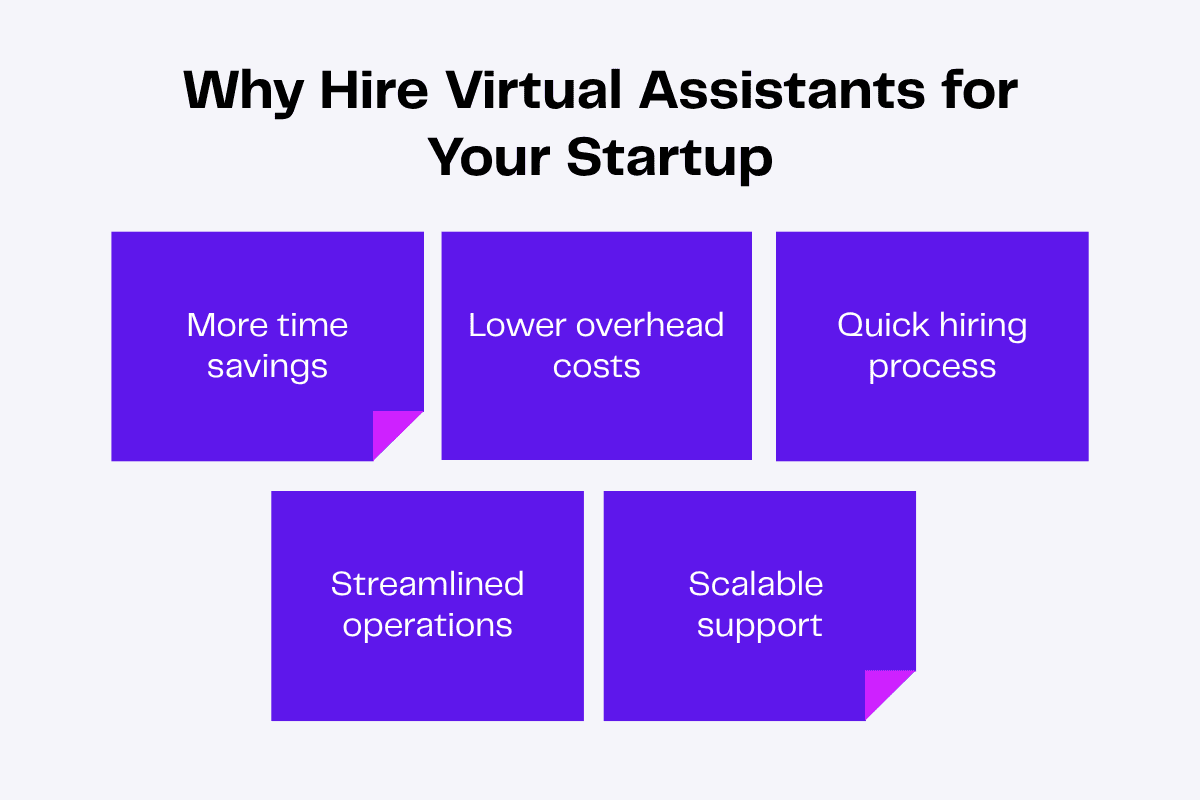
Virtual assistants offer various benefits to entrepreneurs. You can delegate numerous tasks to VAs and save time and money.
You can also enhance financial management and simplify recruitment, which allows sustainable upscaling.
Here’s a detailed look at how virtual assistants are advantageous for startups.
Saves Time
Virtual assistants can save valuable time by handling boring duties that drain your energy, enabling you to focus on core business functions. This means you don’t have to worry about:
- Completing repetitive tasks like scheduling, recordkeeping and email management.
- Handling internal communication, such as preparing meeting notes, agendas and to-do lists.
- Providing quick customer support via calls and live chat.
Their support helps you find time to meet investors, innovate products and invest in your mental and physical health.
Reduces Overhead Costs
What if you could hire specialized talent and cut hiring and recruitment costs at the same time?
As remote workers, VAs don’t need office space, equipment or utilities, making them more affordable than in-house employees.
Here’s a comparison of virtual and traditional employees based on required investment.
| Investment Requirements | Virtual Assistants | Traditional Employees |
|---|---|---|
| Infrastructure costs | Not required | Require office space |
| Employment benefits | Not mandatory | Mandatory Medicare, Social Security and insurance |
| Equipment costs | Not required | Require devices and supplies |
| Wages | Hourly or monthly | Require a fixed salary with bonuses |
At each step, virtual assistants are more cost-efficient than in-office employees. By outsourcing to VAs from low-cost-of-living countries, businesses can further minimize employment costs.
So even with a limited budget, startups can outperform their competitors by hiring talented employees from the global talent pool.
Read more: Decoding Virtual Assistant Tax Deductions for US Businesses
Streamlines Financial Management
Managing finances is crucial for continuous growth. But without accurate financial records and clarity, startups can end up making decisions in the dark.
You can improve your startup’s financial health with bookkeeping virtual assistants. They can track expenses, debts and earnings, ensuring you have a clear view of your operations and make the right financial decisions.
Bookkeeping virtual assistants can file taxes and document payments for your startup, helping you avoid hefty fines.
Accounting VAs also save money by creating financial reports and summaries so you can stay on top of existing resources and deductions and improve cash flow.
Facilitates Flexible Recruitment
You can hire virtual assistants for specific tasks or projects based on your requirements and budget.
This lets you scale your virtual team to meet current demands and ensure your workforce is aligned with the business.
Such flexible recruitment is immensely valuable for startups providing seasonal services. Based on customer demand, you can increase or decrease team capacity. So even if the market falls, you can save costs and stay afloat.
Provides Extensive Support
You can use virtual assistants during different startup stages. They can support your startup’s establishment and growth. Moreover, flexible recruitment allows you to focus on specific areas, maximizing return on investment. Let’s understand how virtual assistants can support you at every stage.
- Pre-Seed Stage: Marketing virtual assistants can research customer needs and market trends to help you make data-driven plans. Administrative VAs can contact potential investors to schedule pitch meetings, increasing funding chances.
- Seed Stage: Web design virtual assistants can customize page layouts and themes, ensuring effective navigation before the launch. Bookkeeping VAs can file taxes and manage funds to reduce expenses and avoid legal action.
- Early Stage: Copywriting virtual assistants can promote your services online, increasing brand awareness. E-commerce VAs can manage digital stores, supporting steady revenue.
- Growth Stage: Customer service virtual assistants can handle consumer queries, increasing brand loyalty. Web development VAs can create and update your company’s website, enhancing user experience.
- Expansion Stage: HR virtual assistants can simplify recruitment, saving time. IT support VAs can handle technical issues, minimizing delay and downtime.
- Exit Stage: Database management virtual assistants can record, organize and protect data, securing proprietary information. Paralegal VAs can verify documents during mergers or acquisitions, ensuring legal compliance.
Read more: Game-Changing Virtual Assistance for Managers
| Startup Stage | What a VA Can Do |
|---|---|
| Pre-seed stage | Research market needs for MVP development. |
| Seed stage | Help build and test product prototypes. |
| Early stage | Create online buzz about services. |
| Growth stage | Handle increasing customer queries. |
| Expansion stage | Fix technical issues to reduce downtime. |
| Exit stage | Verify documents during acquisitions. |
How Virtual Assistants for Startups Are Transforming in 2026
But are virtual assistants even relevant in 2026 when AI tools exist?
That’s a valid question. AI tools play a special role in boosting business growth. They can automate routine tasks like attending calls, handling professional calendars, scheduling, data entry and more faster than ever before.
These tasks overlap with what virtual assistants do, so why bother with hiring when you can just use AI? Here’s why.
AI Can Be Limiting, VAs Aren’t
No generic AI model that can do everything for you. For the best results, businesses rely on hyper-personalized models that perform end-to-end tasks, yet 95% of AI initiatives yield zero ROI.
This means your project management AI can only handle tasks like assigning projects, matching employees to the tasks, tracking progress, etc. The tool can’t help you outline or wrap up your projects.
Virtual assistants, on the other hand, can adapt to shifting workflows and provide in-depth support where you need it the most.
AI Costs Surpass VA Costs
Since you might end up needing multiple AI tools for all your tasks, the initial cost of AI tools can quickly add up. Startups often don’t have the means to handle this expense.
And if you’re planning to build custom AI, the costs are even higher. Beyond development, infrastructure, integration and maintenance costs will pile up and leave a huge dent in your finances.
This is an industry wide trend, affecting companies like Mircrosoft and Uber who are finding AI token costs to be significantly more than paying human employees. In fact, the latter ran through their 2026 budget for AI usage in April itself—within 4 months!
In comparison to the cost of AI tech, VAs remain a versatile and cost-efficient support.
Plus, your virtual assistant can always improve their performance and adapt according to your feedback.
Even AI Needs Humans To Work It
A study comparing AI vs. human effectiveness in classifying bird images found that AI alone achieved 73% accuracy and humans achieved 81%. But together, the accuracy jumped to 90%.
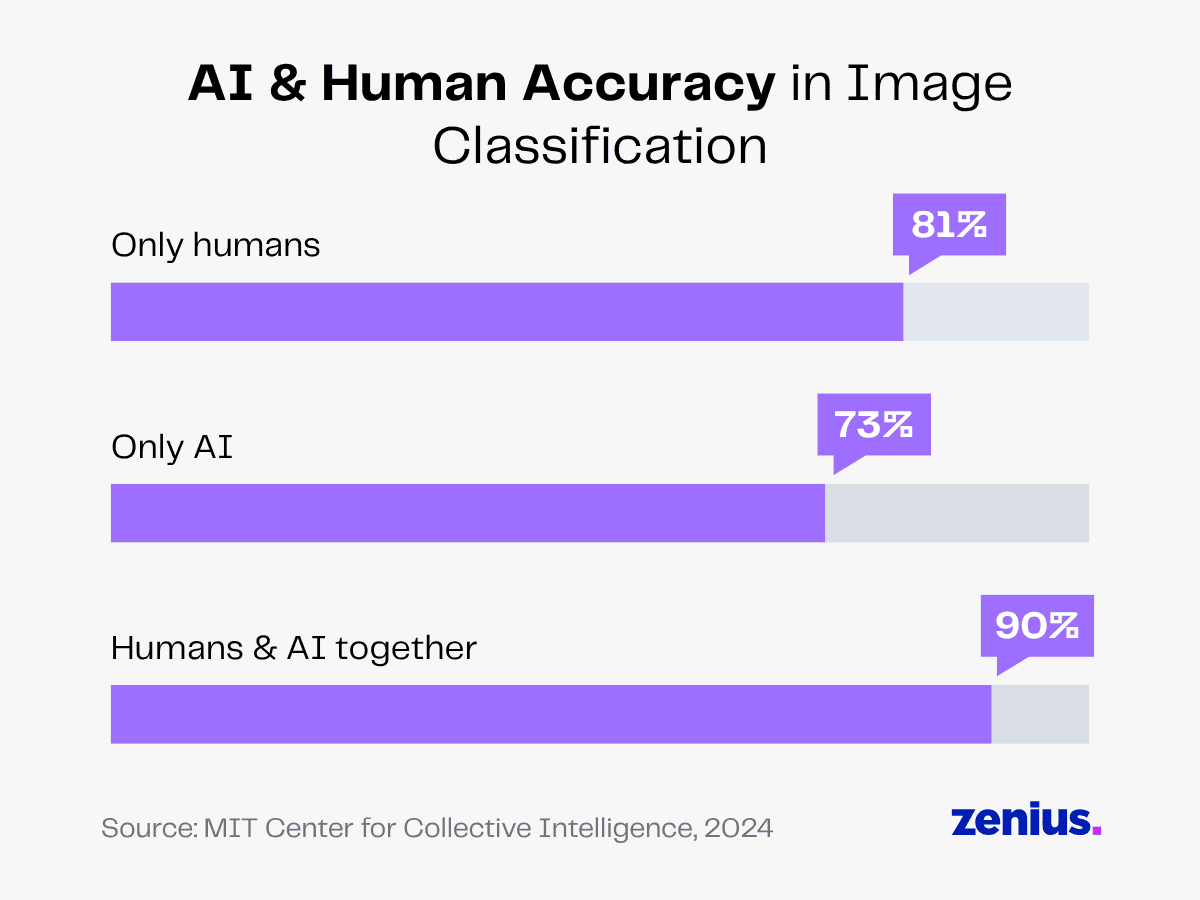
This is because AI tools aren’t fully autonomous. They need human oversight, which is yet another task added to the entrepreneur’s checklist.
Virtual assistants can work with your existing tech stack to ensure your operations are flawless. With them, you achieve AI-human collaboration that keeps your business competitive.
So let’s see how startups can hire their ideal virtual assistants.
You can contact a staffing company like Zenius to streamline recruitment for your startup.
We can help you search, evaluate and hire virtual assistants. Hiring with an agency significantly reduces business workload.
Final Thoughts
Multitasking is second nature for entrepreneurs. So they know that no amount of organization and compartmentalization can help them do everything all at once.
By hiring virtual assistants, you can delegate routine tasks and save time.
They also reduce overhead costs, so you can upscale your workforce and increase productivity within your budget.
VAs provide the support you need to give a satisfying and memorable customer experience, directly affecting your profit margins and enhancing brand reputation.