
Key Takeaways
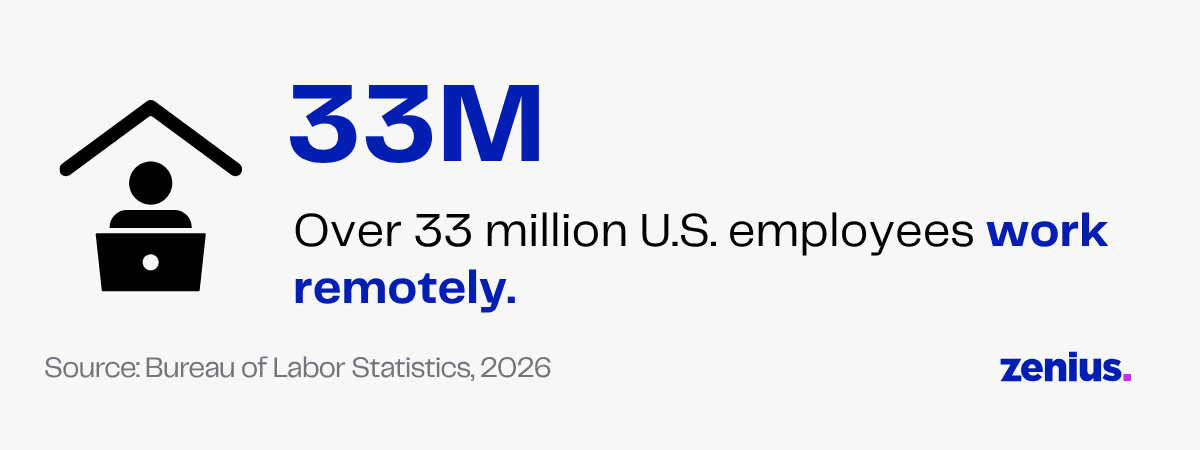
Over 33 million U.S. employees work remotely and 52% of remote-capable workers work in a hybrid setup.
Industries with the highest rise in remote job postings are computer, legal, finance, architecture & engineering, management and office administration.
50% of employees report higher productivity after working from home.
The COVID-19 pandemic drastically changed the traditional work system. Social isolation forced companies to set up a digital infrastructure and work remotely.
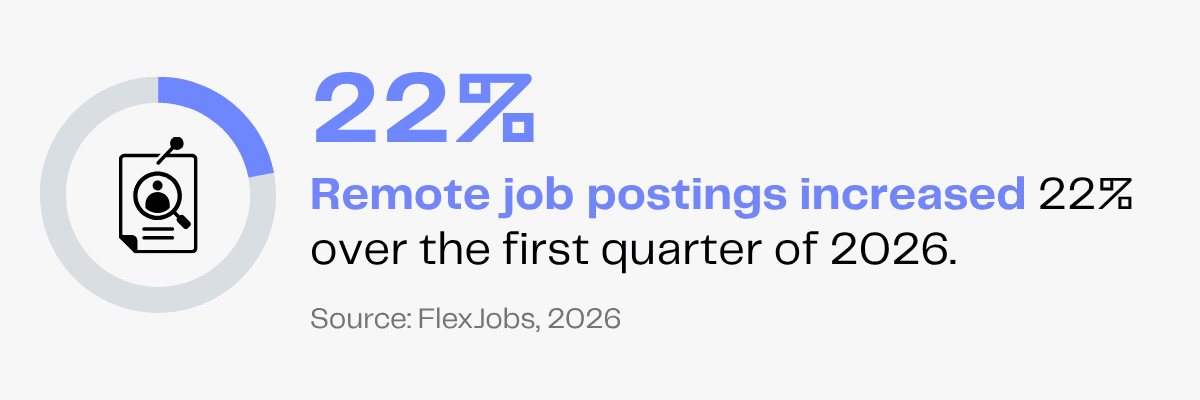
Now, years after the pandemic, many organizations still favor remote work. In 2026, remote job postings grew 22%.
This is for good reason! Hiring virtual employees offers many benefits like cost savings and access to the global talent pool.
So, who exactly is a virtual employee? What are the benefits of hiring virtual employees? And how do you hire them? We’re here to tell you everything.
Virtual Employee Definition
A virtual employee is a professional who carries out their job responsibilities from a remote location.
Instead of being physically present in the office, they may work from their home, an internet cafe, a coffee shop or anywhere else.
Unlike in-office workers, virtual employees rely on digital tools and collaborative software to communicate, coordinate with coworkers and complete their day-to-day tasks.
Virtual Employee Hiring Trends in 2026
Before the pandemic, only 17% of U.S. employees worked full-time remotely. The number rose to 44% after the pandemic!
And as of August 2026, 21.6% of U.S. employees worked remotely, either full-time or part-time. That’s over 33 million people!
From being an anomaly, remote work has become the way of life at present.
Hybrid is usually the most popular way of working, with 52% of remote-capable U.S. employees working in a hybrid manner.
Now, let’s look at industries where remote work has grown the most.
The National Bureau of Economic Research compared hybrid and fully remote job postings between 2019 and 2024.
Below are the top 8 industries with the highest rise in remote job postings.
| Industry | Rise in Remote Job Postings |
|---|---|
| Computer and mathematical | 4.7X |
| Legal | 4.6X |
| Business and financial operations | 3.8X |
| Architecture & engineering | 6.4X |
| Management | 3.4X |
| Community & social service | 3.4X |
| Art, design and entertainment | 2.6X |
| Office & administrative support | 3.4X |
As you can see, companies are increasingly hiring remote talent for engineering, IT, administrative and creative positions.
Here are some top roles to hire virtual employees for, as per FlexJobs:
- Project manager
- IT specialist
- Sales executive
- Administrative staff
- Medical professional
The demand for senior remote talent is also high, with 65% of remote job postings seeking experienced professionals.
As you hire, keep in mind that remote jobs depend entirely on technology. Without the right digital tools, it’s difficult to get the best out of your virtual employees.
Investing in communication tools, project management software and instant messaging platforms helps streamline workflows and boost productivity.
Types of Virtual Employees
Organizations take different approaches when hiring virtual employees. While some bring in freelancers for short-term projects, others expand their team with full-time virtual assistants.
Based on employment type, job perks and compensation structure, remote workers can be categorized into three broad groups.
Virtual Assistants
Virtual assistants are a type of remote worker who handle supportive tasks. They take over repetitive, time-consuming work that slows you down and prevents you from focusing on bigger priorities.
These tasks include scheduling, managing emails, booking appointments and entering data.
They can also assist your existing team with specialized work like web development, graphic design, social media management, digital marketing and more.
Since virtual assistant services slash operational costs, improve efficiency and bring in global talent to meet market demands, they’re an ideal addition to small businesses.
They’re not your legal employees, so you can save money on employment benefits like health insurance and retirement funds as well.
To save further time and money on employee recruitment, businesses often hire virtual assistants through an outsourcing agency.
Read more: Admin Virtual Assistants vs Specialized Virtual Assistants: Differences
In-House Remote Employees
In-house remote employees are similar to regular employees. They are part of the organization and entitled to the same benefits as in-office employees.
The only difference is that they work remotely, whether fully or on some days.
By hiring remote workers, companies can save money on office space, utilities and equipment.
Remote employees also enjoy higher flexibility, greater work-life balance and time saved on exhausting daily commutes.
Thanks to these perks, most employees no longer want to work on-site.
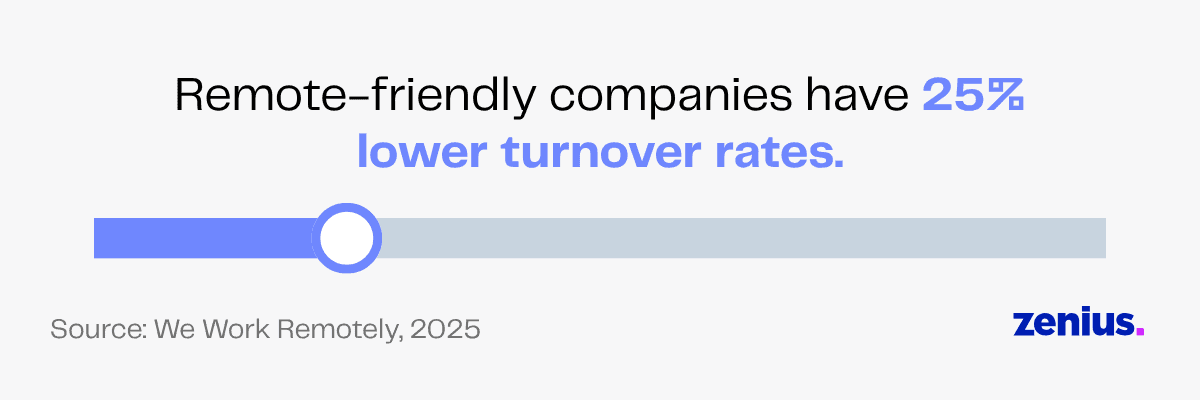
In fact, organizations with remote policies have higher employee retention and 25% lower turnover rates.
Generally speaking, remote employees report a much higher degree of job satisfaction than those who work in a central office space.
Neil Khaund, CEO, The New Standard
Satisfied employees tend not to jump ship to other opportunities as frequently. As a result, it can reduce your employee turnover as well as the expense of hiring, training and retaining new employees.
Freelancers
Freelancers are self-employed remote workers. Rather than working full-time for one company, they choose their own projects and clients.
Freelancers usually showcase their skills on digital portfolios and pitch their services through cold emails or job platforms.
If a company or individual likes their work, both parties draw up a contract and agree on details like deliverables, project timeline, compensation, cancellation terms and feedback process. These terms vary from project to project.
Some common services freelancers offer are:
- Content writing
- Script writing
- UI/UX design
- Photo/ video editing
- Graphic design
- Editing and proofreading
- Translation
- Web design
Benefits of Hiring Virtual Employees
You might be wondering, “Why should I hire a virtual employee when I could just find one to work at my office?”
In-office employees work right under your nose, making it easier to track their performance and productivity. On the other hand, virtual employees aren’t in front of you, so some doubts are perfectly reasonable.
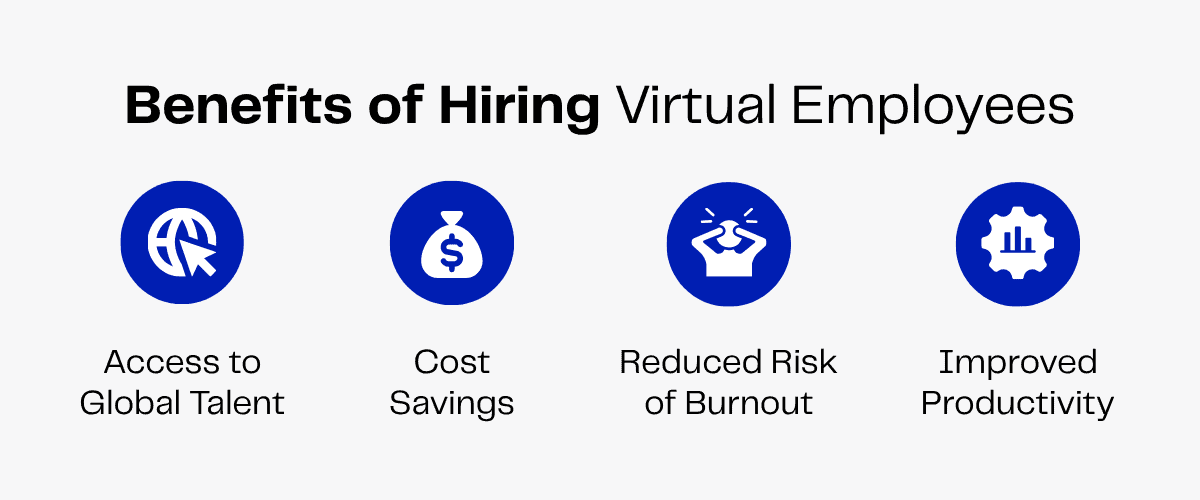
That said, virtual employees bring a powerful set of benefits, from lower costs to higher productivity.
Let’s take a closer look at why virtual employees are the smarter choice.
Cost Savings
In-office workers need essentials such as computers, furniture, electricity, internet and parking space. Hiring virtual employees can reduce these overhead costs.
For big enterprises, it may be impossible to function without in-office employees. However, some jobs are easily doable from home.
Start by determining which tasks demand physical presence and which can be performed from anywhere.
For instance, a content writer can comfortably carry out their responsibilities from home. Receiving topics, conducting research, submitting articles and working with editors can all be done through collaborative digital tools.
Of course, it would be impossible to hire a virtual chef to cook food for your restaurant!
Access to a Global Talent Pool
Hiring virtual employees lets you access talent from anywhere. You can get qualified and experienced professionals from across the globe.
Since they come from diverse backgrounds, these candidates offer fresh ideas and innovative ways of problem-solving.
They possess specialized skills your in-house talent may lack, saving you costs on extensive training.
Plus, virtual employees allow you to maintain an always-on presence in areas like customer service, where round-the-clock availability is a must. By hiring multiple candidates across time zones, you can ensure broader coverage and faster response times.
Best of all, without geographical limits, you’re free to scale your team as and when you need!
Improved Productivity
Productivity is one of the biggest concerns employers have about remote work.
Many worry that hiring virtual employees may invite incompetence and inefficiency. This fear stems from the lack of physical supervision and in-person connection with the workers.
But as Stewart Butterfield, CEO and founder of Slack, invites people to think,
Now that we’ve had the years of people working from home remotely, you have to ask yourself: What other assumptions do I have that aren’t necessarily true?
The idea that virtual employees are less productive is one such myth.
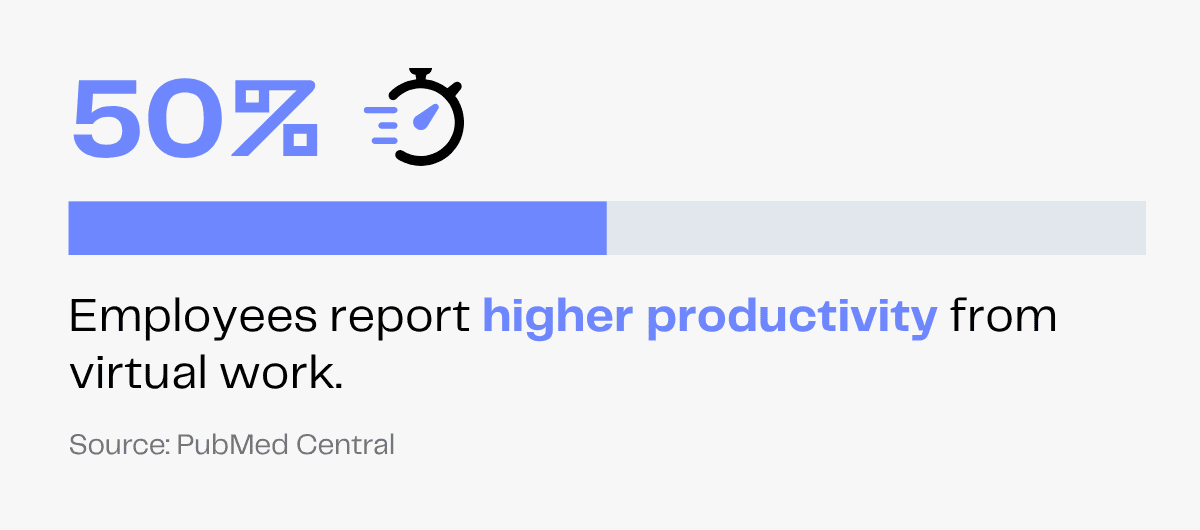
If anything, 50% of employees report higher productivity after working from home.
Plus, thanks to employee monitoring and time-tracking tools, you can easily keep an eye on how your virtual team is performing.
Reduced Risk of Employee Burnout
When employees spend long hours in the office and on the commute, it becomes difficult for them to find time for themselves.
By the time they are home, they are too tired for anything else.
Work stress, no personal time and hectic schedules combined lead to one thing—burnout.
Burned-out employees lose motivation, miss deadlines and deliver lower-quality work.
Such risks are much lower with virtual employees!
Remote work allows employees more control over their day. They can spend time on hobbies and being with loved ones, creating a healthier work-life balance.
92% of virtual employees say remote work improves mental health, while 93% say it boosts physical health.
How does this benefit you as an employer?
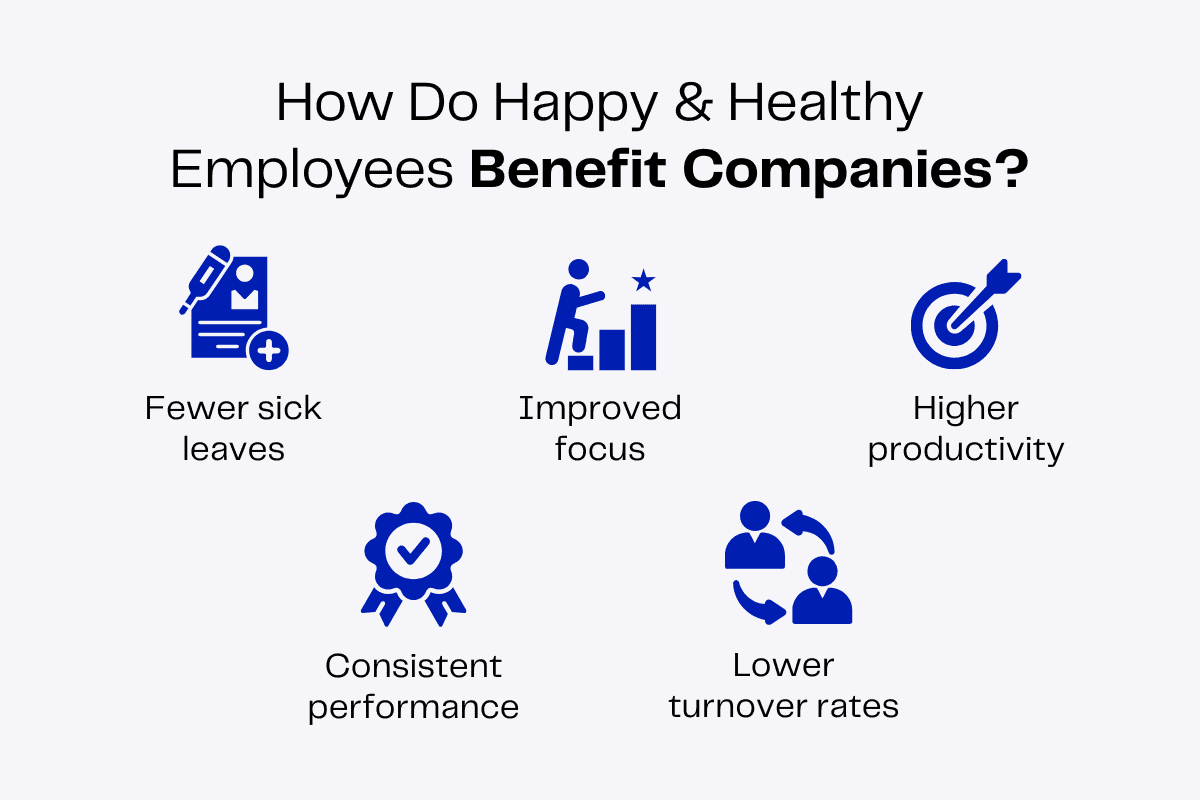
When you have employees who are healthy, both mentally and physically, it can mean fewer sick leaves, improved focus and consistent performance.
Moreover, employees are more likely to stay with an organization if they think work isn’t interfering with their personal lives, which lowers turnover.
Challenges of Hiring Virtual Staff
Like everything else, virtual hiring has its challenges.
Deciding to hire virtual staff for your organization is a huge step. As such, it’s important to weigh the pros and cons and make an informed decision.
What issues may you face with virtual employees? Let’s find out.
Culture Differences
Work culture varies across countries and regions. When you assemble a global virtual team, each employee will have different expectations, communication styles and work habits.
One team member may value honest, direct feedback while another might find it harsh. While some employees thrive with regular check-ins, others could see them as intrusive.
If left unaddressed, these differences can cause misunderstandings and disrupt work.
So how do you avoid conflict and foster a unified and respectful team environment? We have some pointers:
- Create cultural awareness programs to prevent unintentional bias.
- Provide time off for all religious holidays and cultural celebrations.
- Host virtual team-building activities to help teammates bond.
- Ensure seamless onboarding to help new employees feel welcome.
- Set clear communication and meeting guidelines to avoid confusion.
James M. Citrin, Author and Leadership Expert, also advises appointing a “culture buddy”.
Assigning an individual whom the new employee can go to with questions about the culture can be especially effective.
The buddy might debrief after an important group discussion, flagging to the new employee on actions that aren’t in line with the culture or how his or her style may be perceived by others.
Communication Gap
Face-to-face conversations are the best form of communication. They allow you to understand the other person through facial expressions, body language and tone.
Such conversations are more effective in conveying the speaker’s attitude and intent.
However, communication in remote workplaces is mostly text-based, which is harder to interpret.
To prevent misunderstandings, you need extra effort.
Encourage employees to communicate more effectively by keeping messages to the point, avoiding abbreviations and using emojis wherever appropriate to show positive intent.
You can also improve communication by hosting regular video meetings over Microsoft Teams.
Video calls will help remote employees understand each other better and build stronger connections.
Collaboration Difficulties
When virtual employees work alone, it’s easier to manage daily tasks. If they’re only responsible for their own share of the work, they can resolve issues independently.
However, working in virtual teams can be challenging.
To collaborate effectively, remote teams need clear communication, coordination and structure.
Using the right digital tools is also vital, since it’s impossible to streamline work without them.
Here are some ways to improve collaboration and keep your teammates aligned:
- Hold regular Scrum meetings to discuss project updates and bottlenecks.
- Use a centralized platform for instructions on workflows and expectations.
- Offer constructive feedback and encourage teammates to share their ideas.
Technical Problems
Virtual workplaces rely fully on technology.
As a result, any technical issues can throw remote employees off track, whether it’s an unstable internet connection, power outages, computer failure or app glitches.
These problems are often beyond anyone’s control, but they derail workflows, especially in collaborative projects.
While some issues are unavoidable, you can reduce downtime by requesting that your remote employees:
- Have a backup power source
- Regularly update their software
- Learn basic troubleshooting steps
Qualities To Look For in Virtual Employees
The right candidate should have the technical skills and expertise to add value to your business.
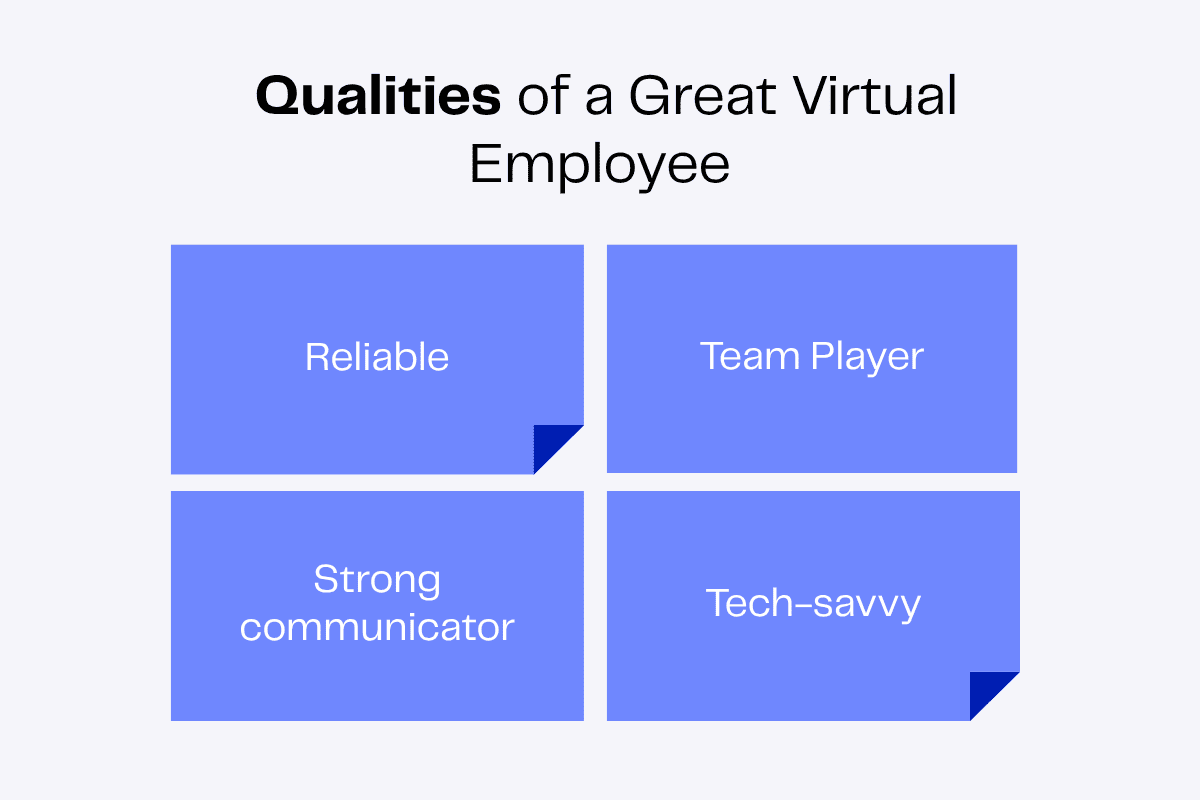
But that’s not enough. You should also look for certain interpersonal skills and qualities in a virtual employee.
Reliability & Responsibility
In remote teams, managers can’t physically supervise employees. That’s why it’s crucial to hire candidates who understand their responsibilities and take them seriously.
The right employee should be able to complete tasks with minimal intervention, meet deadlines consistently and communicate in advance in case of delays.
Ideally, virtual employees should also be self-starters who know how to manage their time and follow instructions accurately.
Teamwork
To lead a high-performing virtual team, you need team players.
Collaboration is much harder in remote teams where coworkers are unfamiliar with one another. Therefore, virtual employees must know how to communicate, cooperate and contribute to group efforts despite the physical distance.
In global workplaces, cultural awareness and sensitivity are also a must.
Look for open-minded candidates who actively participate in group discussions, respect different perspectives and show an eagerness to learn from others.
Strong Communication Skills
As we’ve already discussed, communication is key in remote teams.
A good virtual employee should be able to articulate themselves clearly, voice their concerns and maintain transparency.
They should also know how to listen attentively and express their ideas effectively, both verbally and in writing.
Most importantly, virtual employees must communicate with professionalism and respect to maintain healthy working relationships.
Technical Knowledge
Virtual employees use various types of software to complete their daily tasks. As such, the perfect candidate should be technically sound.
They should be comfortable with basic project management and collaboration tools like Google Workspace, Zoom, Notion, Slack and similar tools.
Since remote employees don’t have access to IT support like in-office workers, they should also have basic troubleshooting skills to solve common technical issues on their own.
Tips for Hiring Virtual Employees
Hiring virtual employees can feel overwhelming. Where do you find top talent? How do you vet candidates? What are some red flags to watch out for?
The process is time-consuming and full of uncertainties. Outsourcing is the ultimate solution to these struggles.
When you partner with virtual staffing companies like Zenius, your hiring headaches disappear.
From screening candidates to interviewing them, we do it all for you. All you have to do is tell us what you need!
Here are a few tips to find the right virtual employee for your business.
Understand Your Needs
Before you start hiring, think about what you’re looking for.
Determine factors like daily responsibilities, project timelines, required skills and expected work hours.
This will help you outline the necessary qualifications, define your ideal candidate and narrow down your search during screening.
Evaluate the Candidate’s Skills
When you hire from Zenius, we handle the entire screening process—from checking candidates’ professional history to conducting technical assessments.
Of course, you can interview them yourself, too! Ask candidates what they expect from the job. Allow them to be transparent and voice their doubts.
Some questions to check a candidate’s eligibility and intent are: Why do you want this position? Where do you see yourself in 3 years? Does this role align with your career goals?
For best results, avoid sounding intimidating and create an easy-going environment.
You can also ask virtual assistants to send previous work samples to make sure they’re the right fit.
Conduct Comprehensive Onboarding
Onboarding helps virtual employees integrate smoothly into your team. It includes preboarding, orientation, training and a gradual transition into the role.
A seamless onboarding process can boost productivity and help employees settle in faster. It also allows new hires to understand their responsibilities and get a feel for your company culture.
For effective onboarding, start small and don’t overwhelm them with too many details.
Schedule interactive virtual meetings and icebreakers to introduce new employees to their teammates and make them feel welcome.
Create a Feedback Loop
Feedback helps employees improve their performance, but it should always be constructive.
Instead of being accusatory, point out issues clearly, explain why it’s a problem and offer practical suggestions to fix them.
And don’t just give feedback—ask for it too.
Questions like “How do you like the job so far?” “ Are you facing any challenges?” or “Was the onboarding process helpful?” can give you valuable insights.
Their responses will help you understand how they feel about the job and where your processes could improve.
FAQs
What does virtual employment mean?
Virtual employment is a way of working where people work from a remote location. They can be full-time employees, virtual assistants or freelancers. Instead of going to the office, these virtual workers rely on digital tools for collaboration.
What are the disadvantages of a virtual office?
Some disadvantages of virtual offices are communication gaps, technical errors, cultural differences, feelings of isolation and collaboration difficulties.
What is an example of a virtual team?
Buffer is a social media management company that operates fully remotely. They have no headquarters. Instead, teammates are distributed across countries and time zones. Buffer relies heavily on asynchronous communication and tools like Slack and Zoom.
Final Thoughts
Since the pandemic, virtual employees are more common than ever.
Many organizations have embraced remote work and continue to hire virtual employees, thanks to their scalability, cost-efficiency and high productivity.
While occasional challenges may occur in virtual teams, they’re easy to manage.
Using the right digital tools, setting clear communication guidelines and hosting regular team-building activities will help overcome these hurdles.