
Key Takeaways
High-quality, accurate data is necessary for financial forecasting, resource planning, customer retention and other critical business operations.
44% of business owners want data to help them make better decisions.
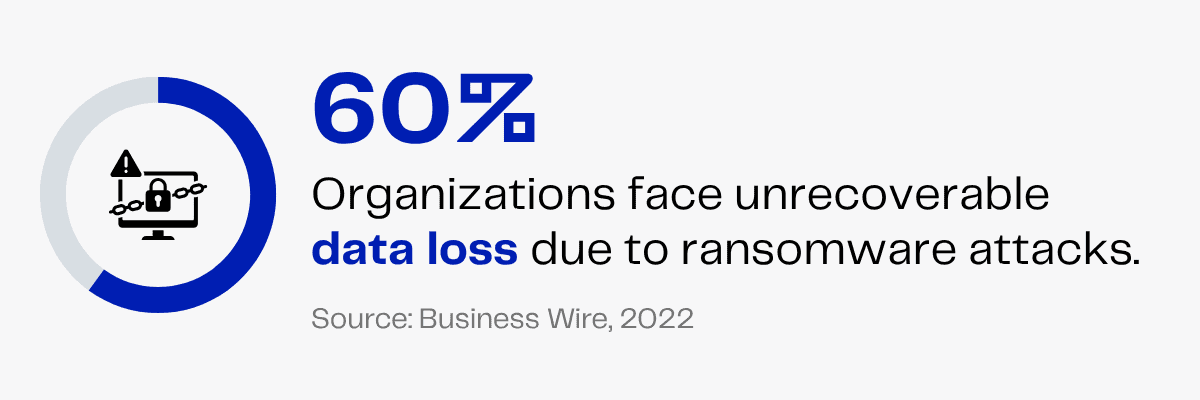
With 60% of organizations permanently losing data due to ransomware attacks, it’s important to keep regular backups and monitor access.
Data is the new oil for businesses! It helps you make decisions, improve performance, acquire customers and hit business goals.
But you can’t gain these benefits without effectively managing your database.
Dealing with databases isn’t easy. You’ll have to collect and enter data, organize it, fix inconsistencies and keep it updated all the time.
These tasks make managing a database a full-time job. It’s not something you should do on your own unless you want to cut your productivity and increase your stress!
That’s why you should hire a virtual assistant for database management.
They are remote workers who maintain your databases, ensuring safe data storage and accessibility.
Why Do Businesses Need a Database Virtual Assistant?
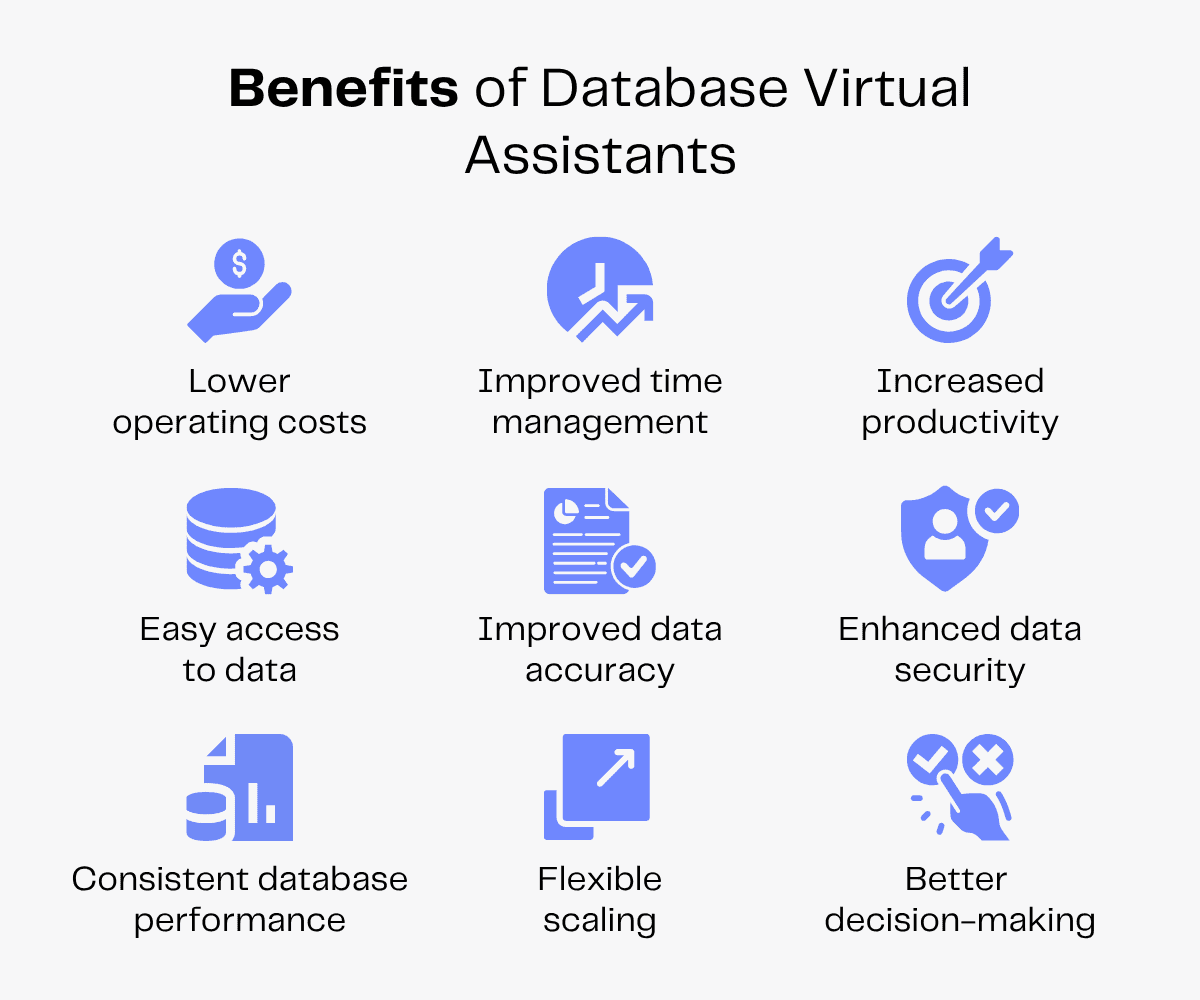
Virtual assistants for database management keep data accurate and up to date, empowering you to make data-driven decisions.
Their skills save your time, money and reputation, helping you run your business optimally.
Easy Access to Data
You can’t spend hours sorting through messy records to find the data you need. Quick access to data is necessary for efficiency.
Database virtual assistants can organize your database so everything from sales data to real estate records is easily accessible.
They can structure data with clear folders, tags and tables, ensuring you can retrieve any information in a few clicks!
Improved Data Accuracy
Accurate data offers many benefits for organizations, such as higher customer trust and improved business performance.
Database management virtual assistants can screen your data and conduct regular quality checks. No matter how big your database is, they can help you find errors, fix data inconsistencies and improve accuracy.
They’ll enhance your data integrity by keeping information updated and error-free.
Enhanced Data Security
IBM reveals that a data breach can cost businesses as high as $5 million. It takes organizations ages to retrieve lost data. And sometimes, it’s unrecoverable.
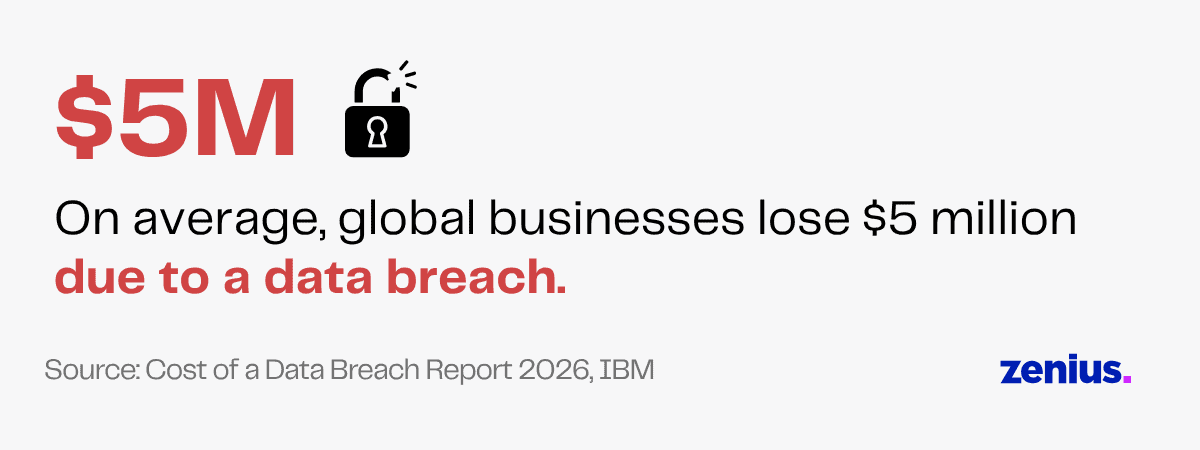
If that is something you fear, a database virtual assistant can help.
They can improve data security by enabling multi-factor authentication, encrypting important data, monitoring your database activities and more.
Database management virtual assistants can also schedule timely backups to prevent data loss even if your records get deleted.
Consistent Database Performance
In an age of speed, a slow database is super inconvenient.
For instance, you may frustrate customers because you can’t access their purchase records quickly during a support call.
A virtual assistant can boost database performance by reviewing data structure, adding indexes and rows, implementing caching and continuously checking for updates.
This ensures your database performs reliably without lag.
Better Decision Making
You can’t make good business decisions without the right data. For example, keeping neat financial records of revenue and expenses can help you make smarter budgeting and investment decisions.
A survey by Oracle revealed that business owners want data to help them:
- Make better decisions (44%)
- Make faster decisions (39%)
- Plan for unexpected scenarios (29%)
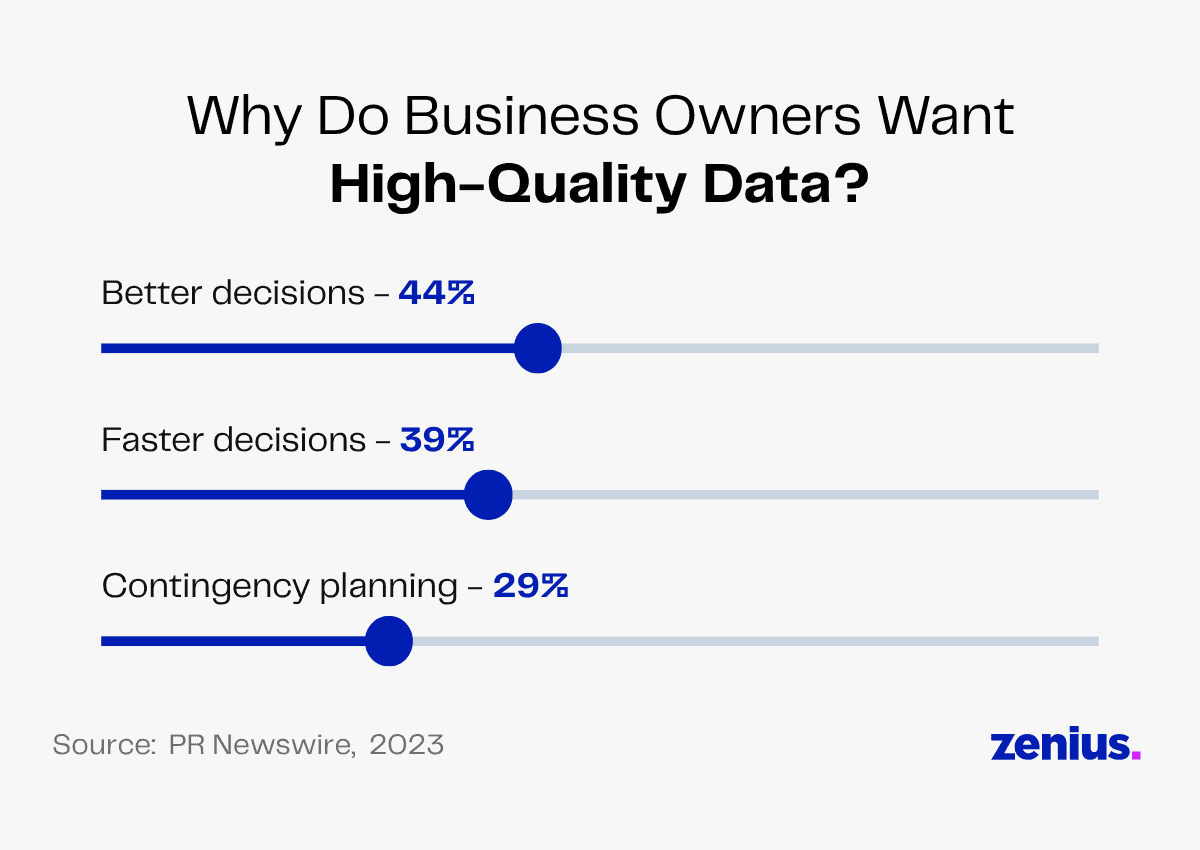
Your database virtual assistant can ensure your database has relevant and high-quality information to support reliable decisions.
They can organize and structure data with proper attributes and classification, adding clarity for clearer insights.
An entrepreneur said,
The core value of data-driven decision-making is the reduction of uncertainty. By grounding decisions in observable evidence, organizations improve forecasting accuracy, resource allocation, and operational efficiency.
Improved Time Management
Data management tasks can be time-consuming. That’s why it’s smart to delegate tedious tasks like data entry and quality checks to your VA.
People don’t realize just how much data they deal with every day. It shows up in almost every function and because it must always be carefully organized, it takes a lot of time. In such ad hoc situations, your VA can take over data tasks,
For example, if your customer support team is bogged down with other tasks, your VA can collect data from them and upload it to your CRM system. Such support can enhance time management and work-life balance for your employees.
Database VAs also save time by making databases navigable so you can find the right information quickly.
Lower Operating Costs
Hiring a database virtual assistant means lower operating costs for your organization.
Recruiting them costs less, sometimes nothing, when compared to full-time database management employees.
And since they’re legally employed by agencies, you’re also not legally required to provide them with benefits like health insurance, 401 (k), etc.
Because they’re remote, you won’t even have to expand your office or invest in more equipment for them.
Such cost-effective support that also increases efficiency will increase your profit margins.
What Tasks Can a Virtual Assistant for Database Management Do?
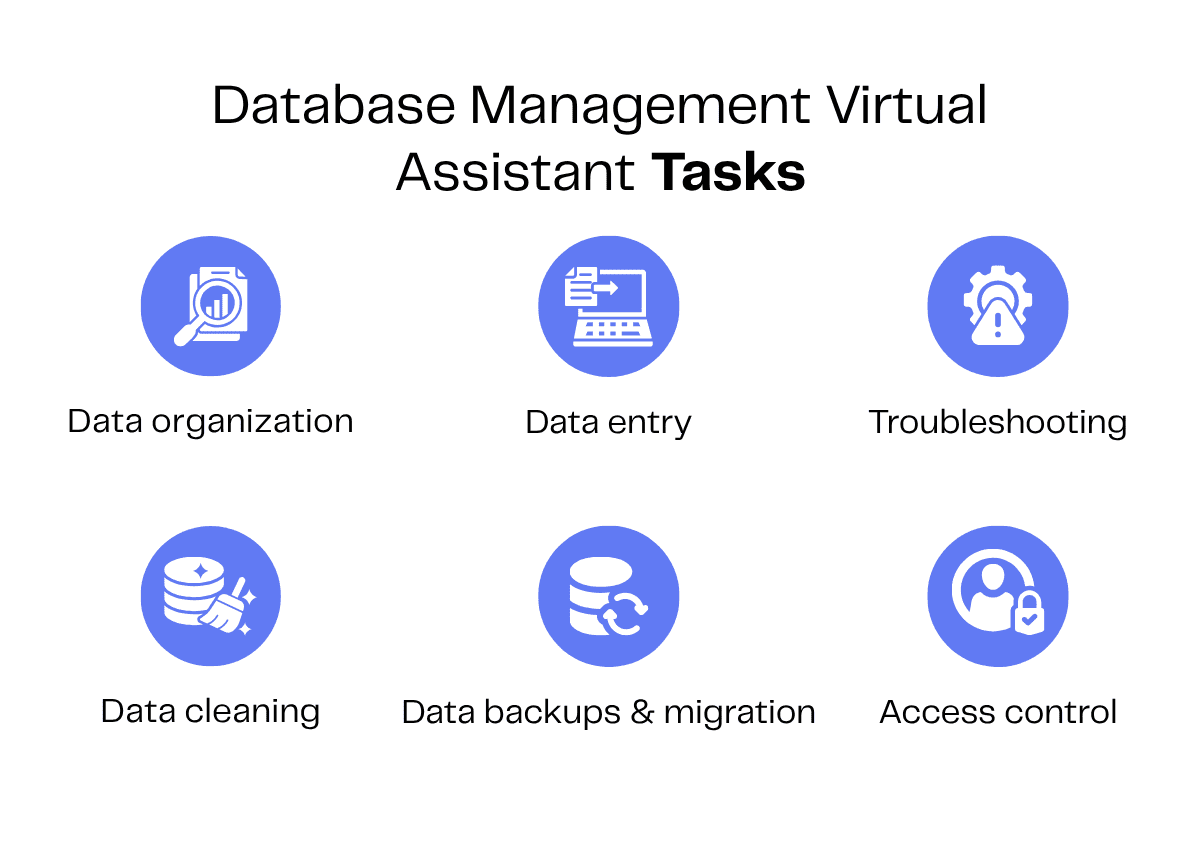
Database virtual assistants input raw data into spreadsheets or CRM platforms, fix errors, structure information and schedule regular backups to avoid data loss.
They keep your data accurate, updated, organized and secure.
Data Entry
A database virtual assistant can handle the time-consuming data entry and data collection process for you.
They’re skilled in database design, data cleaning, data validation and other routine tasks.
Your VA can collect and review all necessary information before storing it in your database to maintain accuracy.
Data Organization
Organized, neatly structured data enhances efficiency and helps you make more informed decisions.
Sometimes, business owners are so overwhelmed with high volumes of data that they completely ignore this task and rely on guesswork for decisions.
People are tempted to throw out the confusing, and sometimes conflicting, data and just do what feels right. But this can be a big mistake.
Seth Stephens-Davidowitz, Data Scientist
It has been proven over and over again that our instincts can lead us astray and the best decision-making is done with a proper understanding of the relevant data.
A database virtual assistant can organize your database for you.
They can structure raw data by classifying and categorizing it in a logical order. Your VA can also use clear, consistent naming practices to boost data accessibility.
Data Screening & Cleaning
In databases, even a single error can be disastrous. That’s why consistent data cleaning and screening are crucial.
Database management virtual assistants can check for data errors and inconsistencies like misinterpreted values. They can also delete duplicate and irrelevant data, remove deviations or outliers and spot gaps.
Speaking on the importance of data cleansing, Cristian Randieri, Professor at eCampus University, says,
Data quality requires periodic audits and data cleansing to help sustain high standards over time. This ensures data remains accurate, complete and consistent as new information is collected and processed.
Without errors in your data, you can improve decision-making and execute effective marketing campaigns.
Read more: Why Should You Outsource Data Enrichment Services?
Data Backups and Migration
Without robust database management services, your data is at risk of loss. A 2022 whitepaper even revealed that ransomware attacks led to unrecoverable data for 60% of organizations.
To prevent such disasters, database virtual assistants can back up your data regularly or safely migrate it to another database.
Access Control
When sharing data with your team, you must ensure you disclose sensitive information only to trusted people. To prevent unauthorized access, you have to monitor who accesses what information.
A database virtual assistant can help you manage access control. They can use role-based access control (RBAC) to limit access to “view only” based on an individual’s position in your company.
They can also track all login activities to boost data security and keep sensitive information in safe hands.
Who Needs a Virtual Assistant for Database Management?
All organizations need database management to efficiently store data.
From customer information and sales records to financial transactions and employee details, a database virtual assistant can help you keep your data organized and safe.
Here’s how different businesses can benefit from a database management VA.
| Businesses | Why They Need a Database VA |
|---|---|
| E-commerce | Leverage data for customer retention |
| Startups | Organize large volumes of data |
| Finance | Maintain clear financial and sales records |
| Real estate firms | Keep records of buyers, sellers and tenants |
| Healthcare companies | Store patient records and medical history safely |
Skills of a Virtual Assistant for Database Management
Databases are a crucial asset for businesses. They store valuable information about customers and finances, without which you can’t run your operations.
That’s why you need someone reliable, attentive and skilled to manage your database. Here are the skills a database VA should have.
Analytical Skills
A database virtual assistant must have analytical skills to keep up with their daily routine of entering data correctly, structuring it and minimizing errors.
If you hire a VA via outsourcing companies like Zenius, you won’t have to worry about finding the right people with the right skills.
We do it for you by finding global candidates, interviewing them and assessing their skills. We also take logistics like payroll management and tax compliance off your plate.
Organizational Skills
Working remotely and managing databases require organizational skills like attention to detail, time management, multitasking and decision-making.
Your VA needs strong attention to detail to spot errors and ensure higher data accuracy. A strong sense of organization will also help them sort messy data into clear folders.
Meanwhile, time management helps them complete tasks on time and multitasking skills enable them to work well under pressure.
Technical Proficiency
Virtual assistants need to understand everything about database management software and CRM systems.
They must have profound knowledge of database design concepts, planning and the principles of data integrity.
Additionally, your virtual assistant needs to know how to manage different types of data like structured, unstructured, numerical or temporal data.
FAQs
What challenges do businesses face in managing databases?
The main challenges businesses face in database management are high volumes of data, inaccurate or duplicate data, lack of proper organization and risks of data breaches.
Why should businesses hire virtual assistants for database management tasks?
By hiring VAs for database management, businesses can save time while still getting access to accurate, organized and high-quality data. This is essential for making informed, data-driven decisions.
How can I ensure data safety when hiring a VA for database management?
You can use role-based access control when assigning tasks to your VA, set up multifactor authentication and share passwords via password managers instead of directly via text.
Final Thoughts
Managing your database is never easy! If your in-house team is struggling to do all the tasks by themselves, you can make the process less frustrating by hiring a database virtual assistant.
They can handle everything from data entry and organization to cleaning and collection, enabling faster data access and better data quality.
This means you’ll save time and make important decisions more effectively.