Key Takeaways
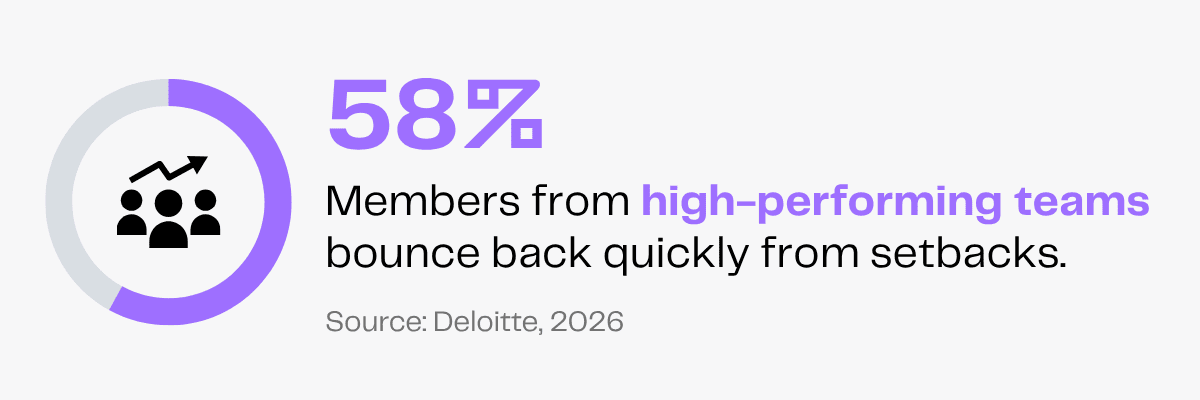
High-performing teams are not immune to failure but resilient to it. 58% of members from such teams bounce back quickly after setbacks.
It takes 6–8 months of consistent teamwork for a team to become high-performing. Team-building events can help in this.
Trust and autonomy are key in high-performance teams. Leaders must avoid micromanaging and instead communicate expectations beforehand and provide clear feedback.
Which is nature’s best example of a highly coordinated and specialized team?
Your answer can be anything—from the buzzing bees to the mighty elephants! A virtual team, when managed well, can work just as efficiently.
A high-performance remote team consists of professionals who work towards a common vision and are committed to your organization’s success. They achieve their goals by using digital tools and staying connected.
In a high-performance team, specific work is delegated to each member based on their strengths. Everyone works to their full potential to take your business through any storm.
Keep reading to learn how you can build a high-performance virtual team and drive your business down the highway to success.
Frameworks for Building High-Performing Virtual Teams
Tons of research has been done to analyze how to build the most functional team.
Bruce Tuckman, an American psychologist, developed the Tuckman model in 1965, which describes group dynamics.
This model was devised after he observed a trend in the team formation process. It has proven to be a roadmap for managers who want to lead power squads.
Every team has to go through the following stages to ultimately reach a place where they can work with intense focus and high productivity.
1. Forming
This is the first stage of team formation where the members meet each other for the first time. All new members start from this stage when they join a team.
In this stage, relationships form when members attempt to get to know each other. Conversations are held on business goals and purposes while cooperating with the team.
Members can be polite or anxious during this time and everyone starts trying to gauge each other’s personality.
2. Storming
As they step into the next phase, things start to get a bit rocky.
Everyone is agitated, analyzing their environment and sharing their thoughts. There is more internal competition as everyone is trying to shine and get the team’s approval.
Heated discussions can follow as team members start moving in different directions, which can look a bit chaotic. There can be power struggles and personality clashes while debating ideas and opinions.
This stage is very crucial and the team must be led in a positive direction or they won’t be able to move past this stage.
3. Norming
Everyone gets familiar with each other’s strengths as they reach this stage. They start moving in the same direction as they feel a sense of belonging in the team. They get comfortable asking for help and giving feedback.
They can understand the roles and tasks and how they can contribute to the team’s success. The discussions mostly revolve around building better strategies to accomplish the common team vision.
Inclusive norms are set to ensure maximum productivity. Team conflicts get settled quickly and collaboration becomes better.
4. Performing
This is the ideal stage where every teammate wants to consistently maintain a state of high productivity.
A fully functional team is established at this step, which performs like clockwork. Members start accomplishing their goals with commitment and perform to their full potential.
Everyone looks after each other and members work on projects with high confidence.
5. Adjourning
After a project is completed, the stage of adjourning or mourning arrives. The team is dispersed or the members whose role is completed part ways.
The team’s efforts are recognized and rewarded. Achievements are celebrated and after this, the team is dissolved.
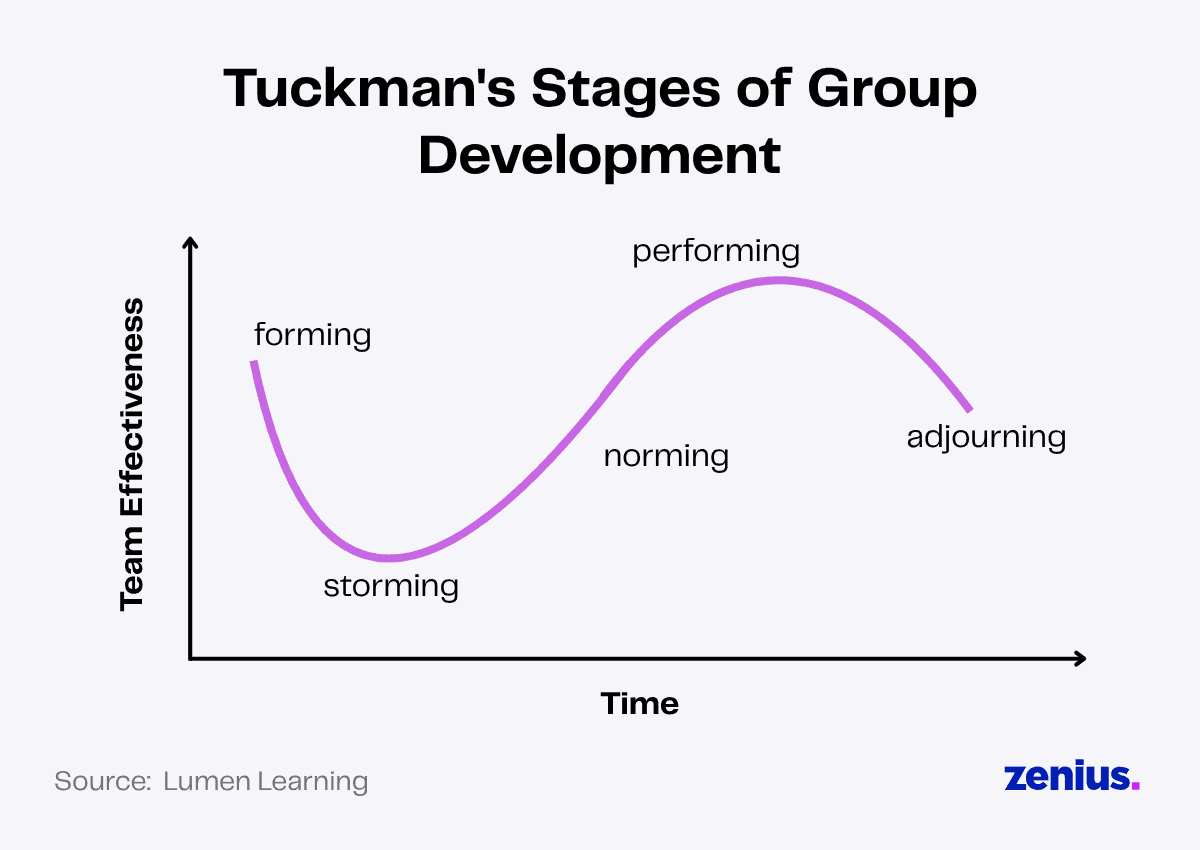
This is the general route every team has to take to function seamlessly. But one model doesn’t fit every business. After this, you may come across issues that you will need to address and look further into your organization.
Here are a few more models you can choose for your team, depending on the requirements:
| Name of the Model | Use of the Model | Benefits of the Model |
|---|---|---|
| GRPI Model of Team Effectiveness | Identifies the area where teams have lost their direction. | Helps find their way back to working efficiently. |
| Tuckman’s FSNP Model | Explains the various stages of group evolution. | Helps the team maximize process and productivity. |
| Katzenbach and Smith Model | Spots members with difficulty working in a team. | Transforms individual working mindset to a team working mindset. |
| T7 Model of Team Effectiveness | Directs towards the elements that impact team effectiveness. | Decides focus elements and invests energy and resources to build a stronger team. |
| Hackman Model | Provides insights on the best team structure. | Guides teams to become self-sustaining. |
| Lencioni Model | Highlights team dysfunctions. | Provides a planned map to improve effectiveness. |
| Robbins and Judge Model | Identifies lacking dimensions. | Creates actionable programs to resolve issues. |
Virtual Team Strategies for High Performance: Tips for Leaders
Building a high-performing virtual team is not just about bringing highly skilled members. It is also about cultivating behaviors that foster trust in virtual teams and push employees to perform at their best.
The only way to maintain a good, high-performing team is to demonstrate good team leadership.
The science of team building is clear: high-performance teams don’t happen by accident—they are intentionally designed and nurtured. By focusing on psychological safety, shared purpose, complementary skills, mutual accountability and trust, you can create a team that is not just productive but truly extraordinary.
Lynda Silsbee, Founder, Alliance for Leadership Acceleration
In a remote working setup, keeping employees connected is also a must. You need to bridge the gap between team members working virtually from different locations.
Plus, you need to be patient with your employees and guide them instead of micromanaging them.
Here are a few tips on managing global virtual teams for high performance.
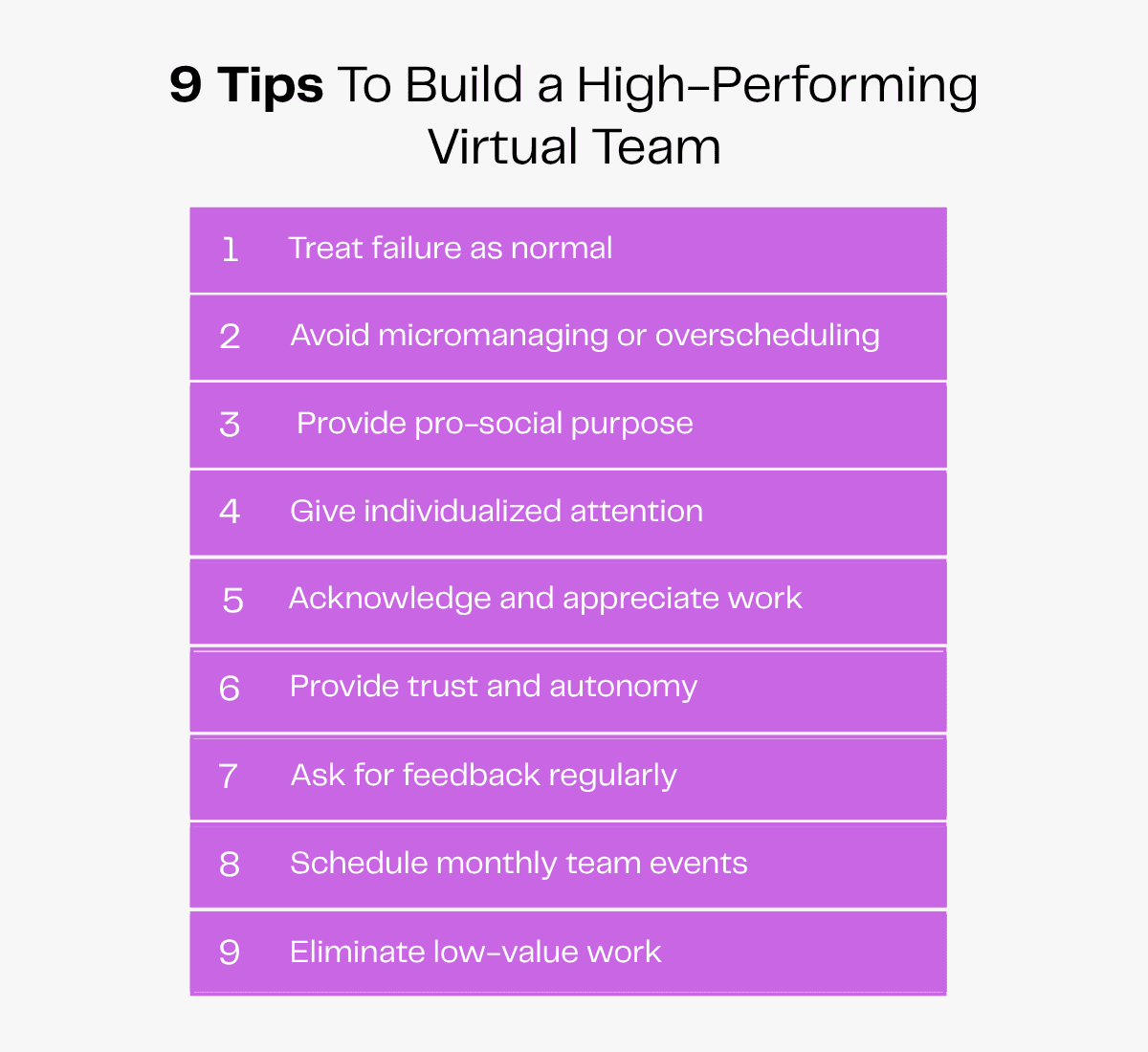
Treat Failure As Normal
Failures are a part of progress and stepping stones to success. It is especially important to understand this when you are leading a high-performing virtual team, as they are not alien to failure either.
In fact, 58% of respondents from high-performing teams say they bounce back quickly from setbacks.
Instead of getting trapped in the blame game, analyze what went wrong and take steps to rectify it. Document your answers and celebrate the success of finding solutions at the correct time.
Create a safe space for everyone to share their failures openly and give them resources to learn from their mistakes.
Avoid Micromanaging or Overscheduling
You must treat your team members as coworkers instead of bossing them around, as everyone is in the same boat working towards the same goal. They just need to feel supported to be more productive.
Give your team the autonomy to work without getting on their nerves. They are hired not to follow the tiniest rules but to give you their expert input so your organization can perform optimally.
It’s also important to respect your team’s time so they can focus on remote work. Instead of scheduling meetings for everything, use chat for small updates.
For meetings, provide clear agendas beforehand so the team can prepare.
Keep a fixed time so you don’t end up extending and wasting your time as well as theirs.
Provide a Pro-Social Purpose
It gives your team a magical push forward when they know who they are working for. This reason can be a person, an organization, a cause, your clients or even another team in your business.
Make sure your team knows the impact they make in the real world. You can do this by reading testimonials or forwarding emails of positive feedback to individual team members.
This solidifies their belief that they are contributing their time and energy for something greater than just paychecks.
Give Individualized Attention
Having one-to-one conversations can help you understand your team members at a personal level. These meetings don’t have to be too long. Even a 5-minute quick video call can do wonders for their motivation!
Make sure you ask them good questions, which fosters trust between you. You can also offer a helping hand to them, asking if you could resolve any of their issues.
Read more: 8 Unique Ways of Connecting With Employees Virtually
Acknowledge and Appreciate Contributions
Gratitude is a powerful tool when it comes to managing virtual teams.
When you appreciate your employees, make sure to add a line about how their contribution helped your cause. It adds a lot more meaning than just a thank-you note.
Regular recognition boosts engagement and makes workers feel motivated to continue putting their best foot forward.
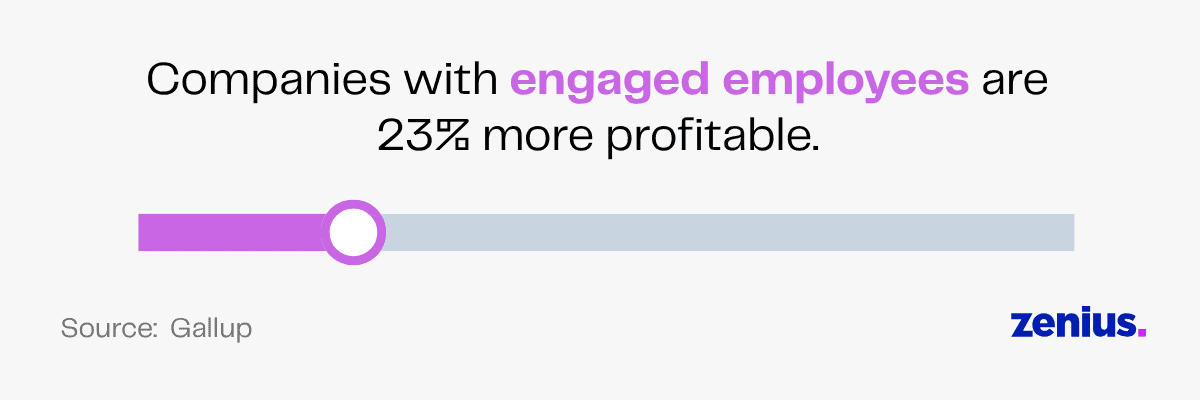
Companies with engaged teams are also 23% more profitable!
Provide Trust and Autonomy
Autonomous individuals are motivated individuals who help form a self-sustaining business.
If you don’t foster trust between you and your employees, it can damage their morale and even harm your business.
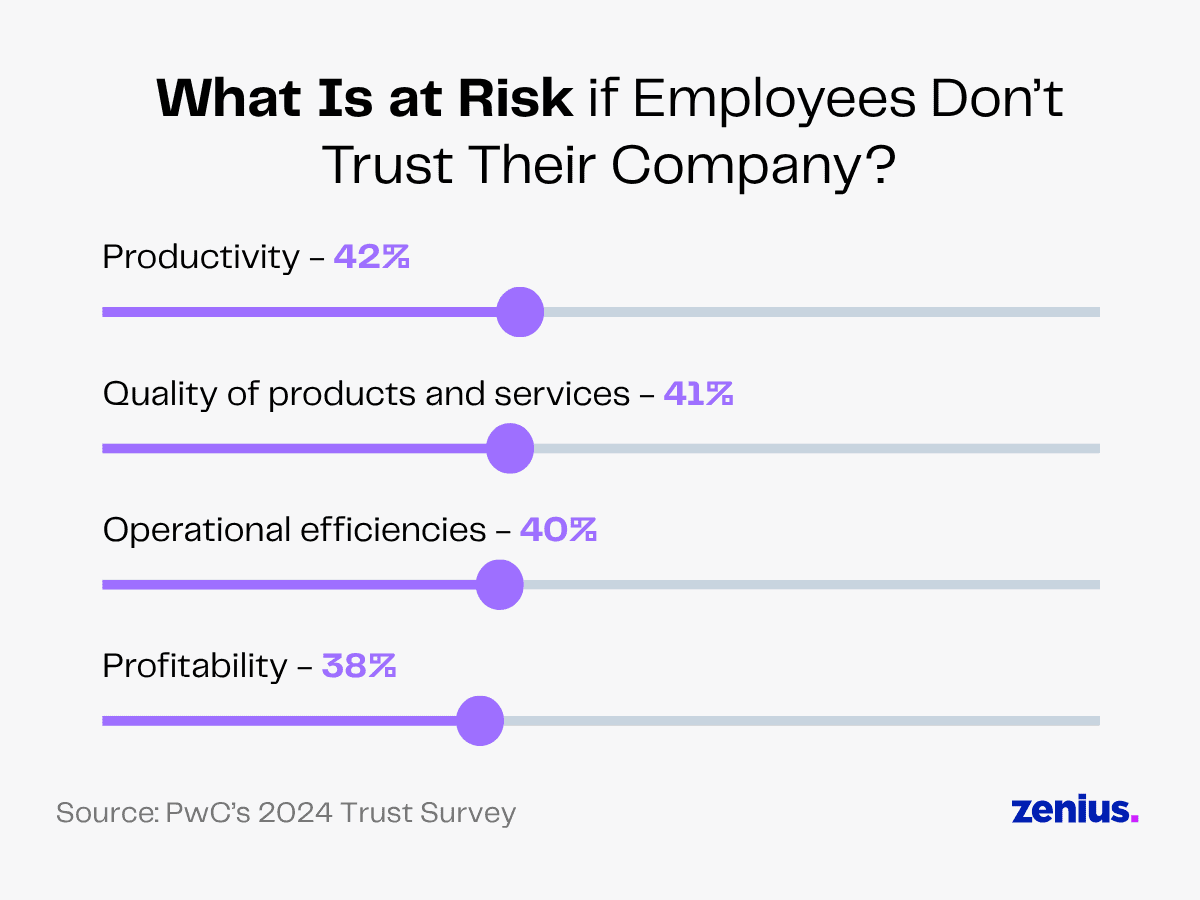
42% of executives say lack of trust from employees lowers productivity, while 41% say it affects the quality of products and services.
Breathing down their neck right after you delegate is not ideal for high-performance virtual teams. You need to trust them and let them come to you when issues arise or when they need help.
This inculcates responsibility in the group, which fosters growth.
Ask for Feedback Regularly
You can ask for constructive feedback on how to improve certain operations. You can also have group calls and have everyone comment on at least one thing they could do to make things better.
Building high-performing teams requires leaders to prioritize the human side of teamwork and invest in the relationships that underpin success.
Daria Rudnik, Leadership Coach
It means creating an environment where everyone feels valued, heard and empowered to bring their best selves to work every day.
You can also have debriefs discussing the progress of projects and how future tasks can be made simpler.
This makes the members feel valued and you get solutions to issues quickly too.
Schedule Monthly Team-Building Events
In an office setting, colleagues get to bond automatically through casual chats, events and team dinners.
But in remote work, such instances don’t occur naturally. That’s why you need to create opportunities for your team to interact outside of work.
These non-work meetings, where members can have a normal chat and get to know each other on a personal level, are core to an elite team.
You can also host monthly team-building events such as scavenger hunts, virtual karaoke nights or online team quizzes.
This also helps in managing conflict in virtual teams since members who get along are less likely to clash.
People feel more connected to each other and are motivated to work when they have good personal connections with the team.
However, it can take 6 to 8 months of teamwork for a team to become high-performing, so be patient and consistent in your efforts.
Eliminate Low-Value Work
All employees want to contribute to meaningful outcomes. By delegating high-value work, you increase your team’s job satisfaction.
Low-impact tasks like meetings and routine admin can get redundant and time-consuming, which reduces productivity. It also distracts the team from the task at hand.
This can give a direct hit on the finances and reduce profit for your business too.
High-Performance Teams in Action: Google’s Project Aristotle
Google started Project Aristotle in 2012 to analyze the characteristics of high-performance teams.
This project was named to honor Aristotle’s quote,
The whole is greater than the sum of its parts.
They researched which behaviors supported the formation of high-performing groups and which sabotaged them.
The dynamics and composition of 180 teams were studied, which comprised a mix of low- as well as high-performing teams. The research delved into what makes a good team and what teammates can do to be more effective.
Results revealed that team performance is more about how teams are rather than who they are.
The most important factors that make a team function like a well-oiled machine are:
- Psychological safety
- Dependability
- Structure and clarity
- Meaning
- Impact
Google’s Project Aristotle, which studied what makes teams successful, found psychological safety to be the top factor in high-performing teams.
Paola Cecchi-Dimeglio, CEO, People Culture Data Consulting Group
By fostering open communication and allowing team members to express concerns or pitch ideas without judgment, Google has created a space where innovation thrives.
This was crucial research that helped Google understand what makes a team effective, which fueled further investigation into techniques that can empower such a team.
Google also created a system called Objectives and Key Results (OKRs), which suggests setting actionable goals and scoring members based on task completion.
The range is from 0 to 1, where 1 signifies the goal was too easy and 0.6 to 0.7 is considered a good score.
However, these grades in no way dictate the performance quality of the members.
Managers can review the OKRs and adjust goals as required to create practical milestones. If an employee’s score doesn’t reach 60–70%, it suggests the team requires improvement to achieve the goals.
This has pushed the organization to move faster toward its purpose while correcting goals before it is too late.
This allows teams to become highly productive, focus on a clear mission and give their best performance.
Characteristics of High-Performing Virtual Teams
When you put time and effort into nurturing your remote employees for high performance, you’ll have a truly exceptional team in your hands.
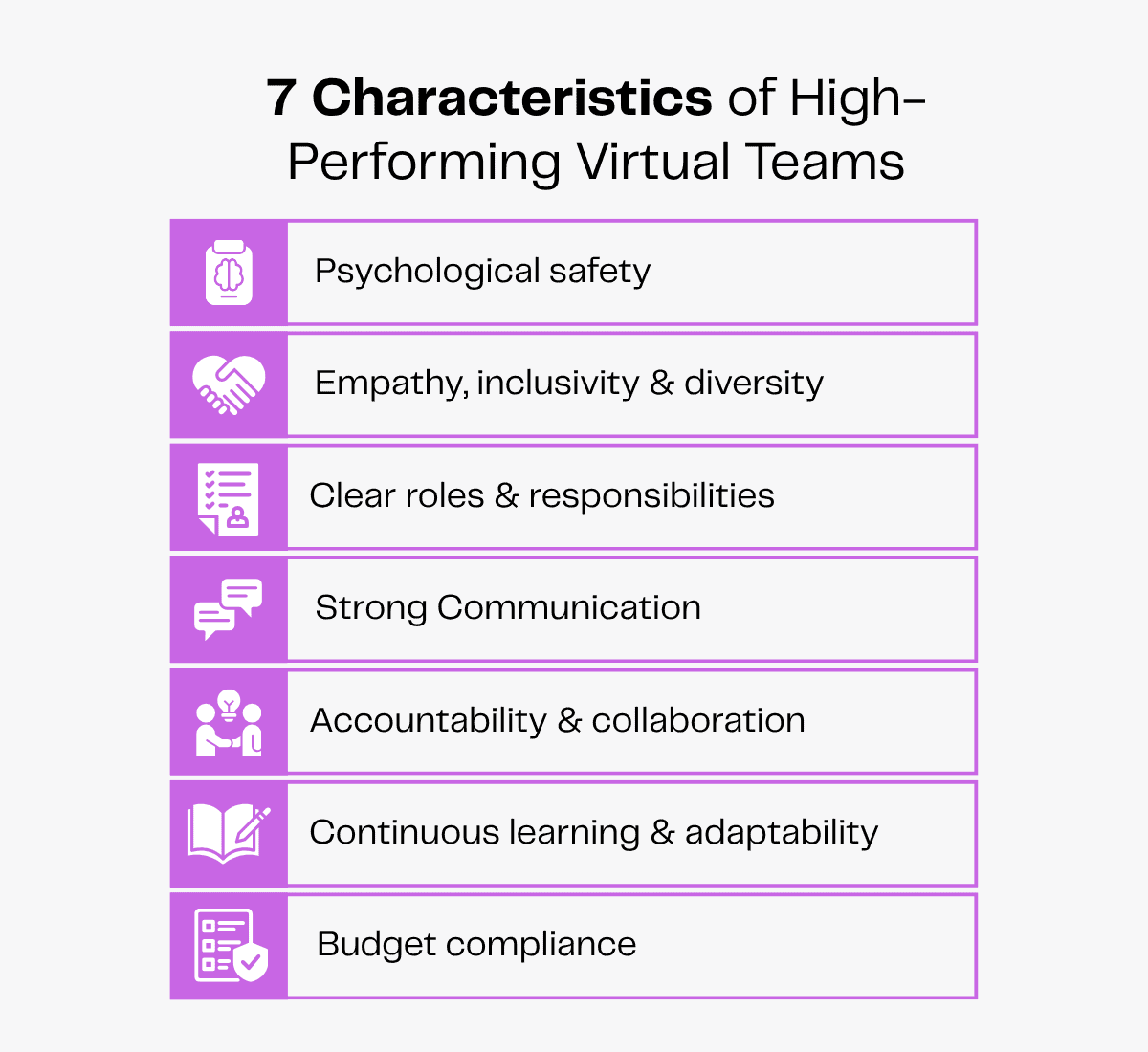
They’ll exhibit valuable traits like strong communication, adaptability, empathy, accountability and inclusivity, all of which are necessary to drive a successful business.
If you’re managing virtual teams for high performance, the following are some results you can expect.
Psychological Safety
As Amy Edmondson coined in 1999, psychological safety is a shared belief held by team members that the team is safe for taking interpersonal risks, making mistakes, speaking up and asking questions without any fear of humiliation.
Shared thinking and psychological safety have a huge effect on the team performance of any organization.
In a high-performing team, all remote team members feel comfortable asking questions and everyone feels heard.
This promotes inclusion and people feel comfortable taking risks.
Empathy, Inclusivity and Diversity
In remote work, teammates come from different countries and diverse backgrounds. While this brings unique perspectives and contributes to creative solutions, it also poses cultural differences.
But high-performing virtual teams have zero tolerance for discrimination and all members feel seen, resulting in better collaboration.
Inclusivity is a vital force in team management that helps a company foster an all-star team.
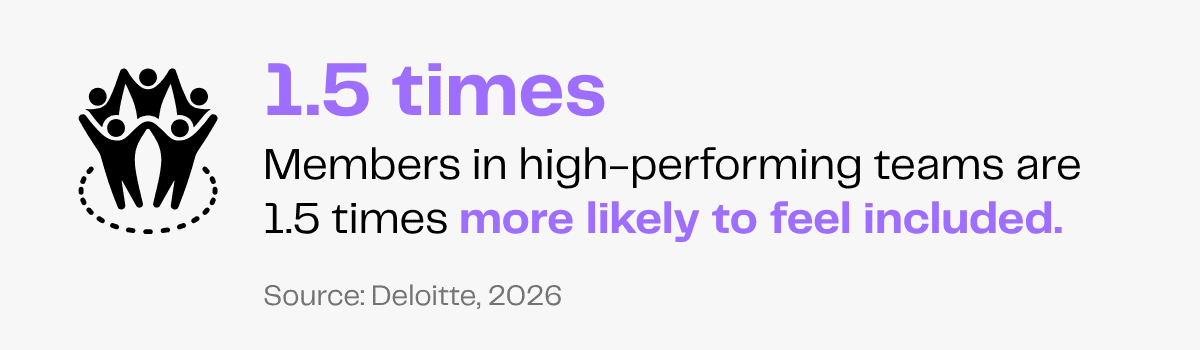
In fact, members of high-performing teams are 1.5 times more likely to feel included.
Clear Roles and Responsibilities
In a high-performing team, big goals are simplified into small tasks and the team works collaboratively to achieve its objectives.
Everyone is accountable for their tasks and all members understand their individual objectives.
With greater clarity of their roles and responsibilities, they ceaselessly strive to deliver remarkable outcomes. This enables everyone to submit quality work consistently.
Strong Communication
High-performing teammates host frequent virtual meetings to stay aligned with one another. They also share updates on instant messaging platforms.
This helps avoid misunderstandings and clarify all doubts beforehand. Managers can also provide constructive feedback, building a strong organizational culture in the company.
All members of the team listen actively, making sure that every opinion is heard and appreciated, even if not implemented.
Since the lack of facial expressions and tone in virtual communication sometimes creates misunderstandings, we at Zenius also encourage emojis in chat.
Using emoticons while chatting on messaging apps helps humanize the conversations. A smiley can make the difference between coming off as angry and sounding friendly.
Accountability and Collaboration
Team members of a high-performing team take ownership of their work and learn from failures as a unit.
They maintain open communication about progress and reevaluate project expectations whenever required.
Even though they are located in different time zones, various collaboration tools and project management platforms help them collaborate smoothly.
They submit projects on time and ensure quality work every time. This reduces the chances of rework, which again saves everyone’s time and energy.
Continuous Learning and Adaptability
High-performing team members leverage the latest information and brainstorm innovative solutions to improve the quality of projects.
They are always excited to learn new skills and deliver the best results to your business.
Such teams are agile and flexible in responding to internal and external changes. They refine their strategies to derive the best results.
Budget Compliance
High-performance virtual teams set realistic budget goals and efficiently utilize resources.
They use tools to track actual spending and compare it with the planned budget regularly.
They identify any deviations early and take corrective action. They can investigate causes if the expenditures exceed the budget and reexamine their plans for the future.
FAQs
What’s the difference between a high-performance and a low-performance virtual team?
In high-performance virtual teams, members understand their roles, communicate clearly, welcome diverse opinions without conflict and take accountability for their responsibilities. In contrast, low-performance teams suffer from miscommunication, confusion, lack of mutual trust and frequent clashes over differing opinions.
How can I monitor my virtual team without micromanaging them?
Establish clear expectations so your teammates know exactly what to do. Set and track KPIs, focus on outcomes over work hours and provide constructive feedback rather than criticizing your employees harshly.
How do I foster trust in my virtual team?
To foster trust in your virtual team, focus on honest, transparent communication, encourage autonomy, create a safe space for employees to share their concerns and ideas and check in with your teammates via one-on-one calls.
Final Thoughts
High-performing virtual teams help your business outshine competitors.
But building and managing a high-performance team requires patience and consistent effort.
As a leader, you have to ensure clear communication, psychological safety, inclusivity and a culture of appreciation are non-negotiable.
That way, you can create an environment where each employee thrives and your team remains engaged, motivated and in constant pursuit of growth.