Key Takeaways:
The global virtual team building market is projected to grow at a CAGR of 12.3% between 2026 and 2035, reflecting the increasing focus on fostering collaboration in distributed workplaces.
Organizations that prioritize diversity are 75% more likely to report a pro-teamwork culture.
Remote collaboration benefits businesses! In a survey, 61% of employees said they’re more productive when they work from home.
The era of flexible work is here to stay.
As Mark Lobosco, VP of Talent Solutions at LinkedIn, has said, “Now that companies have built the framework—and experienced the cost and time savings associated with it—there’s no real reason to turn back.”
Virtual workers and remote teams are becoming an increasingly common part of businesses. Backed up with technological advancement, this remote team strategy works for both job seekers and employers.
Companies that are quick to move with the virtual workforce trend are discovering its unique benefits and gaining significant ground in the global marketplace.
And if you want to match the changing pace of the market, you need to adapt.
But what exactly are virtual teams and how do you build them?
Don’t let these questions scare you from leveraging the strategic advantages that come with hiring remote teams.
Explore all these questions and more and be prepared to hire the best virtual team on the first try!
Why You Need To Build a Virtual Team
A virtual team is a group of remote talents who work from diverse locations and connect over the internet. These teams leverage the latest online communication technologies, such as video conferencing tools and team chats, to stay in touch and collaborate in real time during work hours.
Remote work is not a new concept. Outsourcing and remote work models have been around for decades now. But the state of remote work and the communication tech that facilitates it have come a long way since then.
Remote communication has evolved to become faster and smoother than ever before. The widespread adoption of online platforms like Zoom, Microsoft Teams and Google Meet has made remote or hybrid work more accessible and people want it to stay that way.
The global virtual team building market is projected to reach $2.55 billion by 2035, growing at a CAGR of 12.3% between 2026 and 2035. This reflects the increasing focus on fostering collaboration in distributed workplaces.

As remote and hybrid teams become the norm, virtual team building helps strengthen communication, boost employee engagement, build trust and improve overall productivity despite geographical distance.
Remote collaboration benefits businesses, too! In fact, in a survey, 61% of employees said they’re more productive when they work from home.
Here is a list of advantages that prove you need to build a virtual team today.
1. Get Access to Global Talent
The biggest benefit of hiring remote staff is that you are not limited by geographical boundaries. This means you can broaden your approach and get access to a global talent pool.
Hiring is all about investing in the right people.
You get to explore competitive markets, find the exact talent and skills your business needs and also welcome diverse perspectives.
2. Reduce Operational Costs
Speaking of investing, you also need to make smart financial choices when hiring. Hiring any employee comes with a long bill. From insurance to benefits, there are several additional costs to hiring.
Building remote teams allows you the opportunity to save costs without sacrificing the quality of your work.
With virtual teams, you can avoid major overhead costs. You won’t need to hire additional office space and spend more money on rent. You can also save on office utilities, amenities, equipment and other costs.
Hiring overseas talent as part of your team can have additional cost benefits. You can take advantage of competitive prices and reduce the financial burden of your business.
3. Increase Overall Productivity
By creating virtual teams, you commit to unmatched productivity.
Every member of the virtual team has specialized tasks and is an expert in their respective areas. This means every virtual team can function independently and doesn’t need your constant supervision.
In specialized remote teams, every member has a defined role and can conduct focused work without confusion. This means the day-to-day workflow remains uninterrupted and the team meets its deadlines every time.
Besides, with your virtual team members working from different locations, there are no long coffee breaks, time-consuming water cooler conversations and distracting discussions.
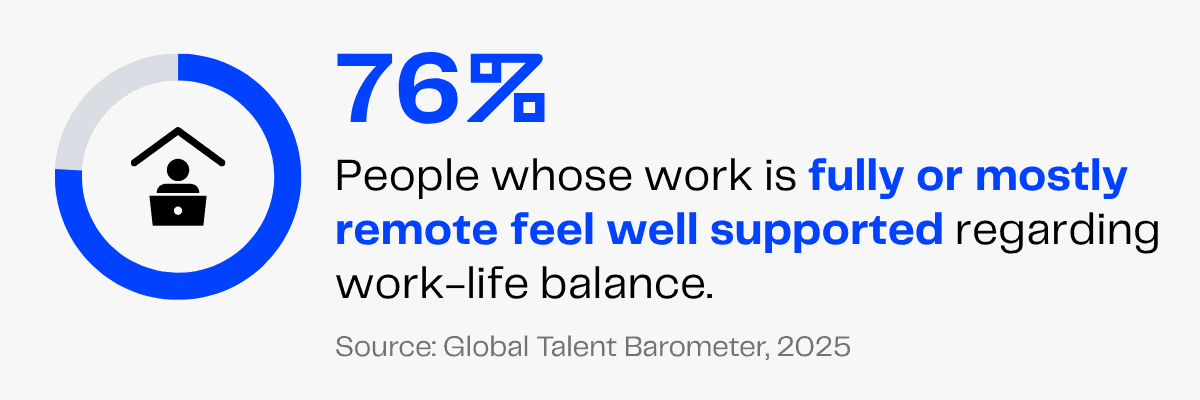
In a survey, 76% of people whose work is fully or mostly remote feel well supported regarding work-life balance. A healthy work-life balance supports mental clarity, sharper focus and increased overall productivity.
4. Make the Best Out of Your Time
There is an obvious reason why, despite the popularity and benefits of outsourcing and hiring globally, it has taken over two decades for it to become common. And that reason is—time zones.
Hiring across continents means you have to deal with time zone differences between your in-house employees and those in your virtual teams. While historically companies have seen this as a hindrance, companies now see it as an opportunity for flexibility and greater productivity.
With a slight change in your mindset, you can leverage time zone differences and turn them into a strength.
This starts with realizing that in most cases, the time difference is not as severe as it seems. For example, with Zenius, you can hire talented remote staff from India and get a guaranteed four-hour overlap with your working hours. This means for four hours every workday, you can actively communicate with your virtual teams and effectively assign future tasks for the rest of the day.
This model can help you make the best out of asynchronous timings and arrange your day for top-notch efficiency.
5. Personalize Your Scaling Strategy
When you are building a virtual team, you make every critical decision to create a workforce that suits your particular needs. Think of them as a tactical team focused on special tasks.
This makes remote teams highly personalized groups. You get to handpick every member, skill and qualification that goes into it. Ultimately, you create small self-sustaining units that can take care of every part of the project you assign them from beginning to end.
This also means you get greater flexibility in how you approach your projects. Whenever you need to reassign work or expand or scale down your workforce, you can make precise and informed decisions based on the team’s specialization.
6. Create an Enriching and Inclusive Culture
An inclusive team comes with many benefits. It facilitates different perspectives, which encourages creative and effective problem-solving.
Research shows that organizations that prioritize diversity are 75% more likely to report a pro-teamwork culture. Diversity in the workplace nurtures a team’s overall creativity and innovation.
It also attracts top talent to your business and increases existing employee retention. A diverse workforce also allows you to dip your toes in the global marketplace. With workers around the world, you can gather location-specific insights and plan strategically for future expansion.
It is also a welcoming relief for clients with various backgrounds. An inclusive business helps your international clients feel better heard and understood. It also amplifies your trust and credibility, making you seem ready to provide unique solutions.
Prep Work to Handle Before Creating a Virtual Team
Whether you need to build a team for marketing, software development or creative services, there are endless possibilities.
But creating one can be overwhelming. Where do you start? Whom do you hire? How do you handle the logistics?
Building a virtual team is a huge task, no doubt. But it doesn’t have to be intimidating. In fact, with the right resources, it can be easy.
So let’s take this one step at a time.
Every successful project starts with good preparation. Before you begin looking for remote staff and start hiring, you need to prepare yourself and your business to integrate the new team.
Here’s a checklist of tasks you need to complete before you start building your remote team.
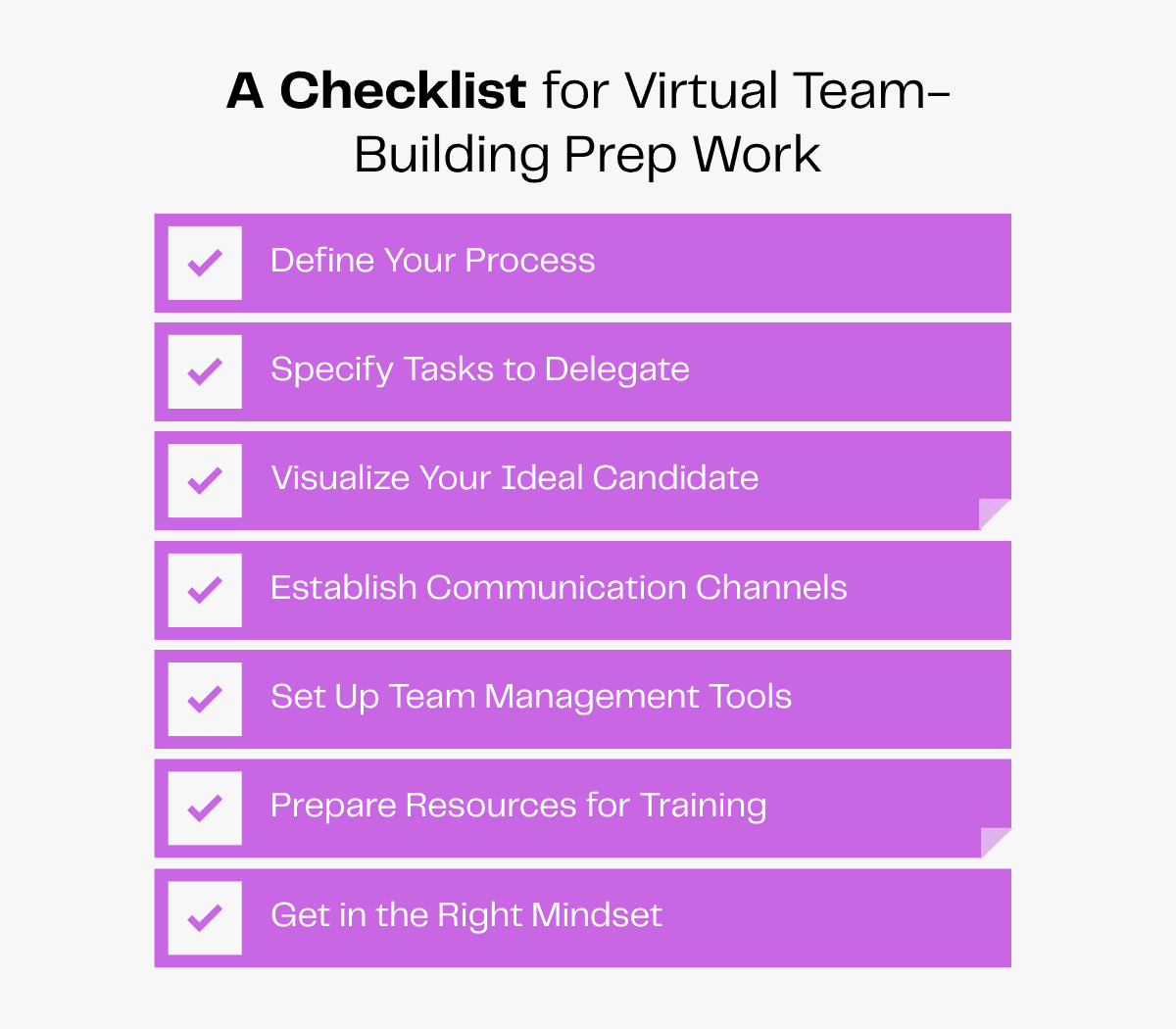
Define Your Processes
First and foremost, you need to take a close look at your daily processes.
Taking the time to understand your needs can reveal the weak points in your operations and identify where your
SOPs will ensure your team members understand how your specific processes work, follow the same guidelines and access faster training, enhancing their productivity and reducing dependency.
Specify Tasks To Delegate
Use your SOPs to make a list of all the tasks you want to delegate. Plan how your functions can best benefit from asynchronous timings. Set up systems to help manage the shift in routine.
By the end of your preparation time, you should have a visual of what your business and daily operations will look like with a virtual team.
Sketch Out the Ideal Candidates
Another task to prepare before you begin the hiring process is to get a clear picture of your ideal team and its members. Deciding the kind of candidates you are looking for now can help you cut back on the time spent on shortlisting candidates on job sites.
Now that you know what tasks you want to assign to your team, you need to write up a list of skills and qualities that you want them to have. This should include everything from qualifications and hard skills to tool proficiencies and soft skills.
Once you know what skills to look for, you can identify, research and prepare appropriate questionnaires and tests for the applicants’ interview process.
Set Up Clear Communication Channels
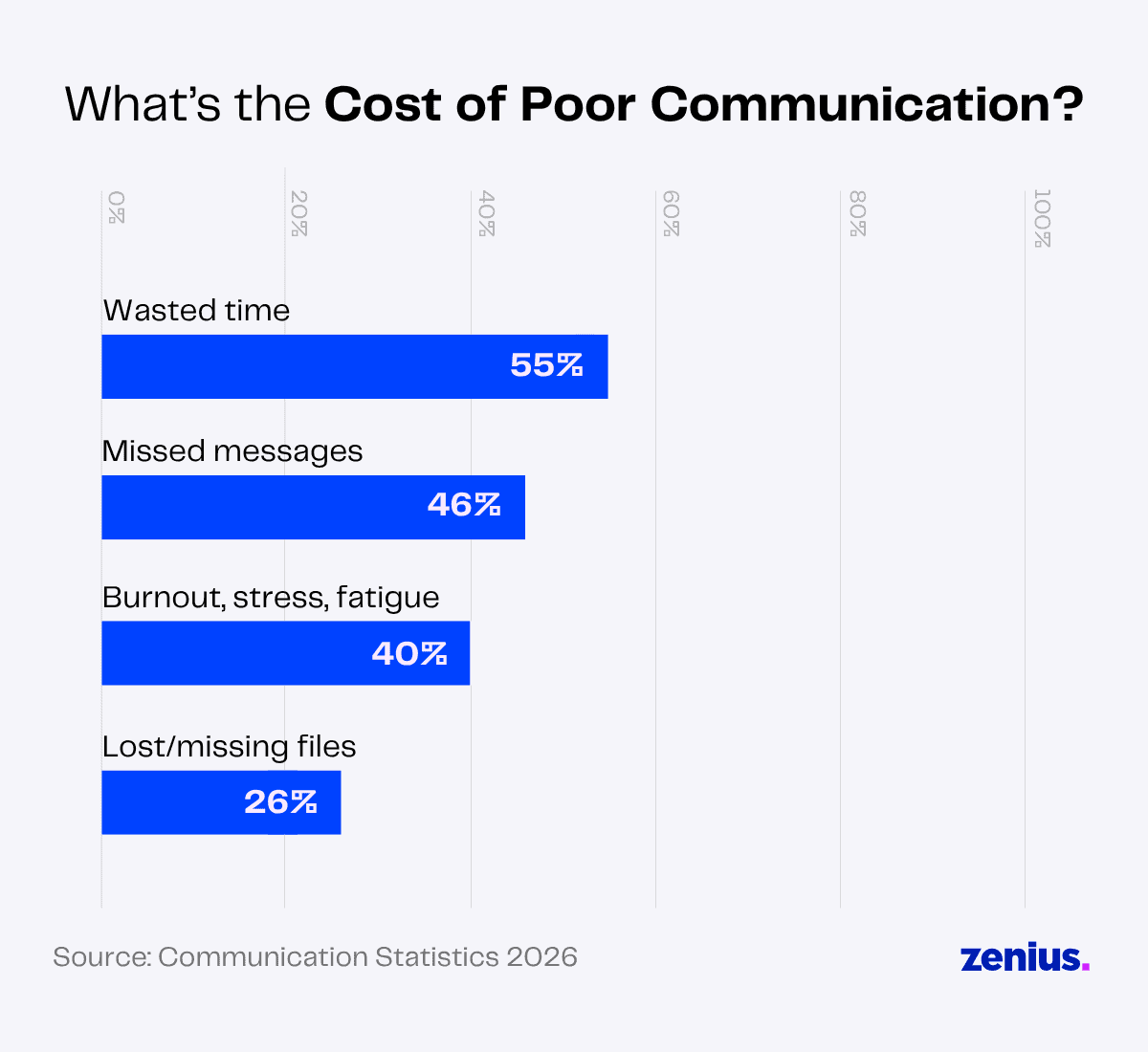
46% of surveyed business workers said poor communication in the workplace has cost them missed messages and for 40%, it’s cost them burnout, stress or fatigue.
Remote teams connect and share work through online platforms. So, before you start building a virtual team, you need to establish viable channels for communication to avoid miscommunication problems.
You need to explore tools and applications to conduct virtual meetings, secure data sharing and facilitate real-time collaboration.
Tackling this task early gives you time to explore and experiment with different platforms. Since it will support your daily communication, you must research and choose a platform that fits with your existing toolsets. You can even opt for a trial, gather feedback and discover any major problems in the initial testing phase.
So when you hire your virtual team, you can hit the ground running with a fully functioning communication strategy in place.
Read More: Must-Have Collaboration Tools for Virtual Teams
Establish Team Management Tools
There are many employee monitoring tools available online that can help you track, manage and supervise virtual teams.
Such tools include:
- Project management software to assign tasks, set deadlines and track progress.
- Collaboration and file-sharing tools to co-edit documents and access shared documents.
- Calendar or scheduling tools to create and manage work schedules and meetings.
- Time tracking tools to monitor employee work hours and productivity.
- Performance management tools to set goals and conduct reviews.
The right team management tools will keep your team organized, improve team collaboration and keep projects on track.
Read More: Best Virtual Whiteboard Tools for Remote Teams
Prepare Resources for Robust Training
Training is one of the most lengthy but important parts of the onboarding process. It helps you assimilate new teams into your existing operations.
Training involves introducing your new virtual team members to your business processes and their roles. It helps you guide them through routine work.
For successful training, you need to effectively distribute resources, explain tools and answer questions. Mistakes in this process can make the training process cumbersome for you and the remote worker. It can waste your precious time and keep you from performing focused work.
To save yourselves from operational mishaps and avoid last-minute hassles, you need to get your resources in order beforehand.
Whether you plan to give your new team SOPs or guide them through audio-visual courses, now is the time to prepare these materials. You can also create small tasks that can help them get used to the daily processes.
Good preparation can save time during training, maintain productivity and quicken the process.
Get in the Right Mindset
Finally, you must adopt a leadership mindset that prioritizes clarity, trust and long-term collaboration over simply filling roles.
Define your team’s purpose, expectations, workflows and success metrics in advance so you know what to expect when looking for a remote team.
Preparing mentally for proactive planning, open communication and effective delegation lays the foundation for a high-performing team from day one!
5 Steps to Building a Strong Virtual Team
To make it less intimidating and even easier for you, here is a step-by-step breakdown of the whole process of building a virtual team.
Building and sustaining a high-performance team starts with leadership. Great leaders are not just focused on the “what” (the goals and tasks) but also the “how” (the dynamics and culture within the team).
Lynda Silsbee, Founder of Alliance for Leadership Acceleration and Organizational Effectiveness Expert
Leaders who prioritize team cohesion, set the tone for psychological safety and provide clear direction are more likely to develop high-performance teams.
Step 1: Lay the Groundwork
Remember that checklist from the previous section? That’s it! That was the first step.
Iron out the details, test the platforms, add updated material to the training guides and set up a fallback plan.
In short, prepare for the future. When your remote team finally joins you, they can immediately tune into your processes and be connected with you from the get-go.
Step 2: Hire the Right People
Prepared and ready to start hiring? Now you need to look for your next remote staff on different platforms, screen hundreds of candidates, focus on skills, reach out to selected individuals, conduct countless interviews and tests, research statutory and employee compliance you need to meet and do it all again for each member.
If you think this sounds like a long and—frankly—an incredibly inefficient way to do things, then you are not wrong.
If you want to hire the perfect staff and tackle the hiring process in record time, you need to contact a staffing agency—like Zenius.
With Zenius, you get access to an extensive list of thoroughly screened, pre-vetted and talented virtual employees to choose and interview.
Step 3: Focus on Onboarding and Training
Effective onboarding and training will ensure your team members are clear about their roles and expectations. It will also help your team adapt quickly to the organization’s culture.
Some guidelines for onboarding and training your team include:
- Develop a structured onboarding program to help new hires integrate smoothly.
- Introduce company values, policies and expectations.
- Provide role-specific training and technical training to build job readiness.
- Assign mentors or peers to support new members.
- Set KPIs to provide an objective benchmark for goals and success.
- Offer continuous learning opportunities, such as workshops, to update your team’s skills.
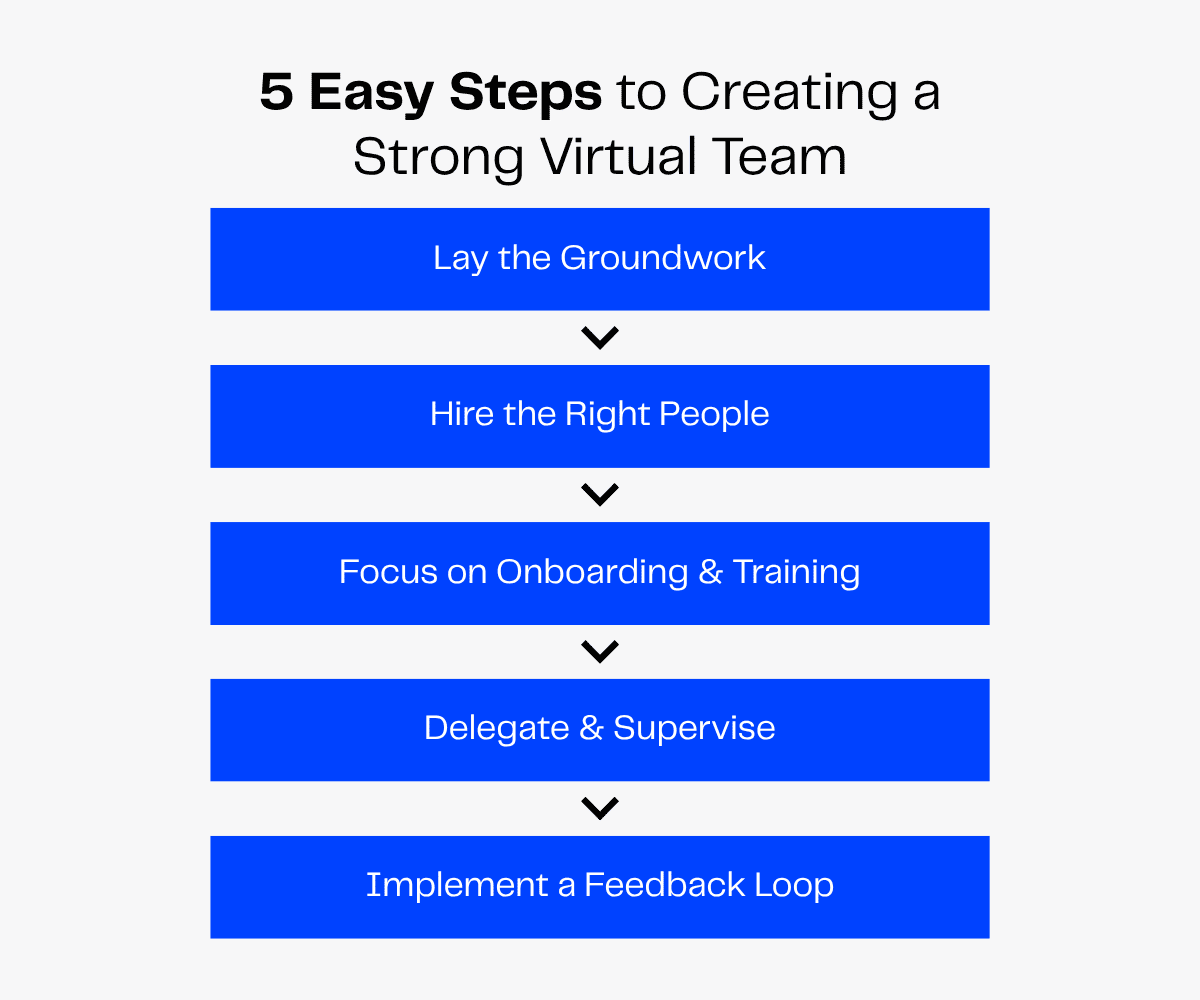
Step 4: Delegate and Supervise
With the virtual team hired and under training, you can finally assign them their project.
Start by assigning them a small task so they can get used to the various tools and channels. And don’t forget to check in at regular intervals and solve their queries.
Slowly start delegating tasks and make sure to supervise from a comfortable distance. With the right staff and a good project management system, you can avoid the micromanagement trap.
Step 5: Implement a Feedback Loop
Feedback is the quickest way to improve the effectiveness of your virtual teams. Having a consistent review and discussion can help you mitigate communication and productivity problems.
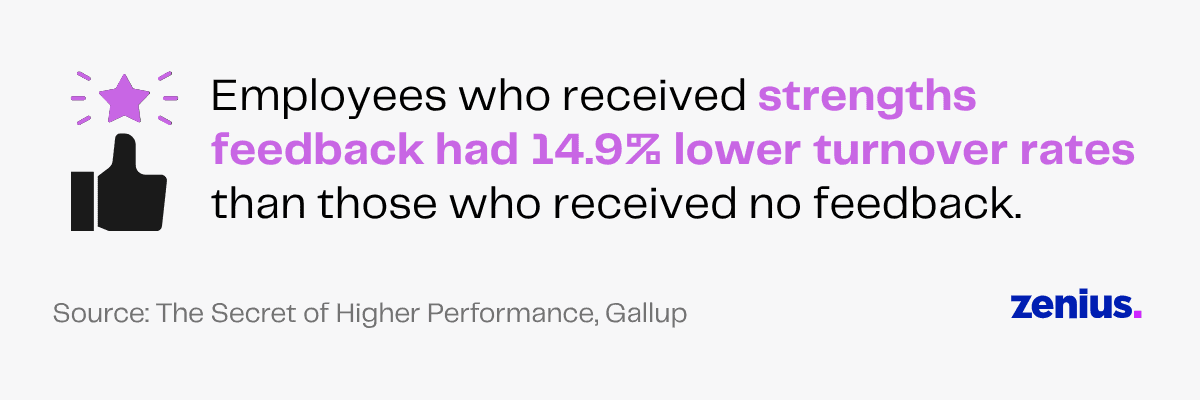
Feedback can also be motivational for virtual teams. When you don’t have in-person meetings anymore, it can be hard for your remote staff to feel recognized and acknowledged. You can take the feedback time to establish a merit system, appreciate your team members and suggest improvements.
All these can encourage your virtual employees, build a team spirit and reduce the turnover rate by 14.9%.
Read More: Management Strategies for Global Virtual Teams
How Can Virtual Teams Be Improved?
Leading virtual teams is slightly different from working with in-house employees. Adopting a new system comes with its own challenges. The physical distance can force managers to rethink what actually matters to team members.
Here are the best practices you can follow to level up your virtual teams.
1. Foster Good Communication
There is never a better time than now to start enhancing your workplace communication.
Research shows that on average, 60% of a person’s time is spent on work about work and not skilled work. This means most of your employees’ time is lost to ineffective meetings and your business activities are not working at maximum productivity.
Investing a little time initially to refine your approach, holding meetings that teach effective communication and exploring top options available online to elevate communication can help you establish a solid system.
Effective communication shows respect for time, increases trust and improves your virtual staff’s overall engagement.
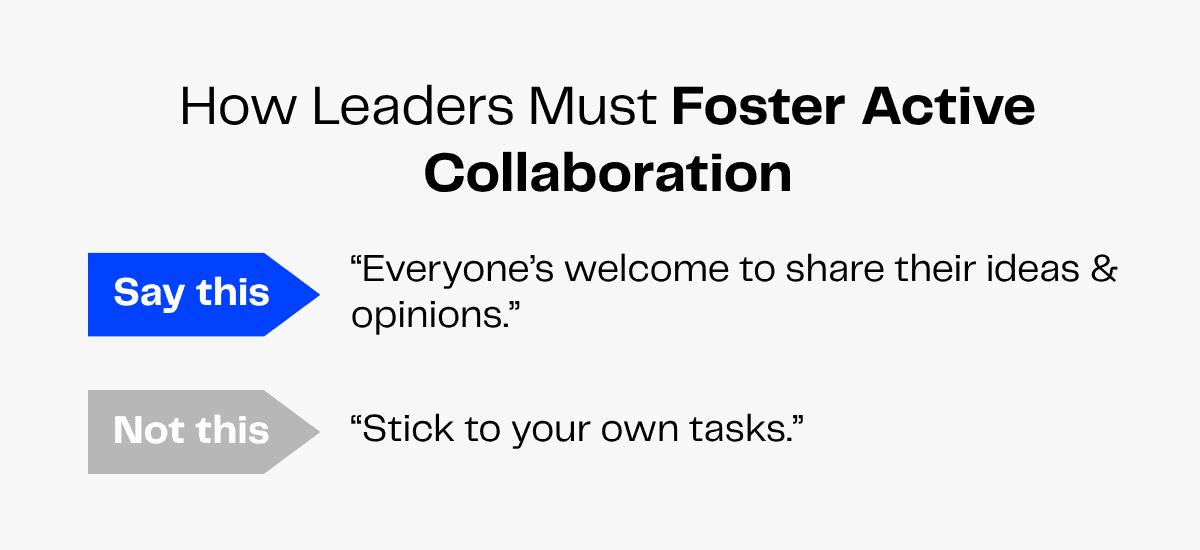
2. Encourage Active Collaboration
Collaboration encourages your virtual staff to actively participate instead of sitting on the sidelines with their work. It also helps enrich your virtual and in-house teams on multiple levels.
For one thing, cross-team collaboration increases productivity and supports inclusivity. It can lead to lively discussions and brainstorming sessions that facilitate innovation and open sharing of ideas.
Another benefit of dynamic collaborations is that they keep your team members motivated. It helps them interact with the company at large and feel like they are part of something big.
By introducing a collaborative system, you can foster creativity, eliminate general miscommunication and reduce conflicts between team members.
3. Build Trust
The best way to ensure consistent productivity and operational efficiency is to keep your employees happy.
This also means you need to foster trust between team members and the company. When your employees have confidence in the company and their goals align with yours, they are more inclined to be enthusiastic and contribute.
And it’s easy to achieve. You can start with small steps like scheduling meetings ahead of time, respecting their time and empathizing with their lives.
These efforts encourage casual conversations among the teams, acknowledge their work, give credit to individuals and instill credibility on smaller team levels.
4. Prioritize People
In the age of the internet and virtual work, the biggest productivity killer can be something you didn’t expect. Recent studies show that loneliness and isolation that come with remote work can cause mental health issues affecting your remote staff’s performance.
When you work online, you bypass all the usual distractions, but you also miss out on the human connection that comes with unscheduled chit-chat.
Just like any other team, your remote teams can also benefit from a bustling and supportive environment that prioritizes them.
Weekly check-ins, casual conversions, icebreakers and creating connections can help you focus on your employees’ health. Empathy can help you recognize burnout patterns, show genuine interest and create a helpful collaborative environment that ensures long-term productivity of your team.
5. Invest in Work Culture
Investing in a strong organizational culture helps create a positive team culture where remote employees feel connected, valued and aligned with shared goals.
Team-building activities, open communication, recognition programs and clear company values will help you strengthen trust and collaboration across teams.
The result? High engagement, improved employee retention and better teamwork that support business goals.
FAQs
What qualities make a successful team?
A successful team thrives on trust, shared goals, mutual respect, open communication, accountability and the willingness to grow together.
What are the 5 Cs of team building?
The 5 Cs of team building include Common purpose (shared goals and mission), Connection (interpersonal bonds), Communication (transparency), Collaboration (team culture) and Celebration (recognition of individual contributions).
How do I make virtual team building fun?
You can make virtual team building fun and engaging by incorporating icebreaker activities, interactive virtual games, virtual coffee chats, creative challenges and meaningful recognition (personalized thank-you notes or e-gift cards).
Final Thoughts
Virtual teams are a powerhouse for productivity and efficiency when done right. This is why successful businesses are going virtual.
They know that building remote teams brings focus and concentrated productivity to daily processes. So if you want to keep up with your competitors, you need to build remote teams today.