Key Takeaways
96% of businesses report improved team performance after team-building activities and 57% say it boosts collaboration.
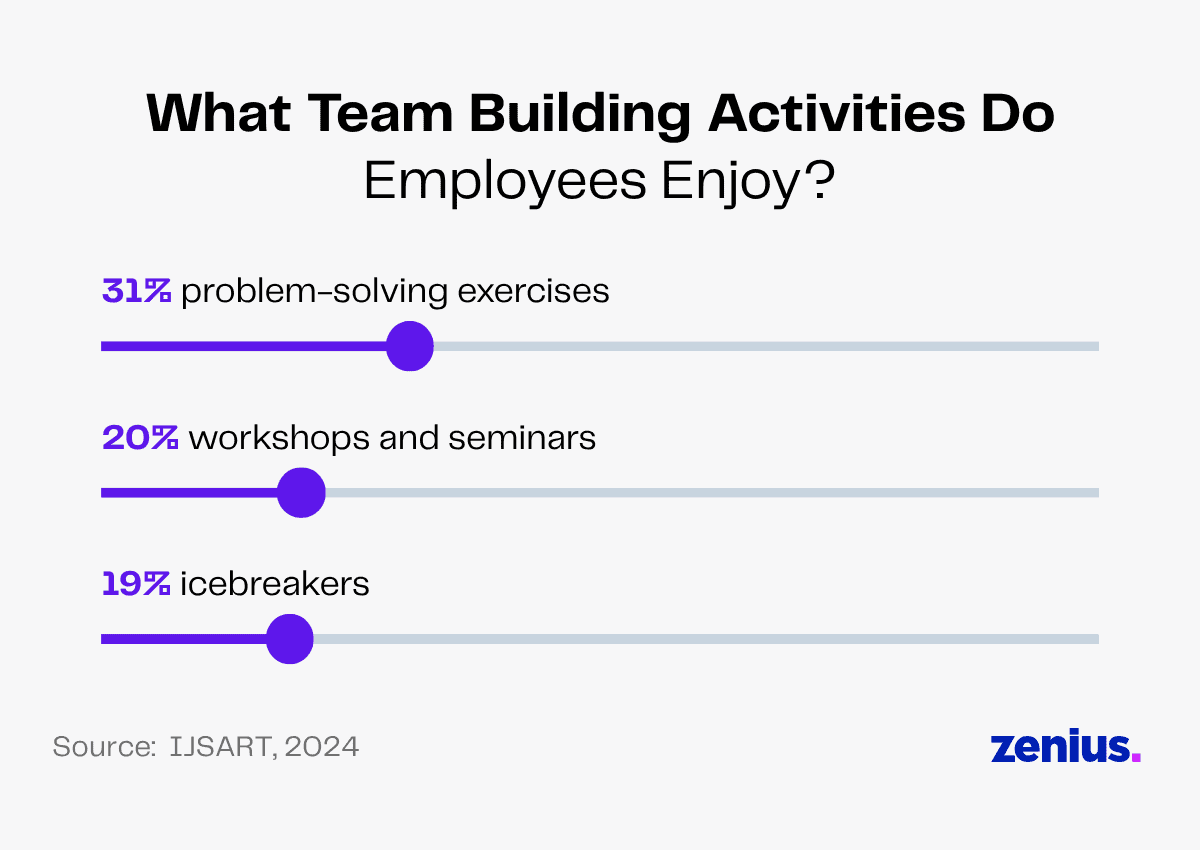
31% prefer problem-solving activities during team-building sessions, 20% like workshops or seminars and 19% enjoy icebreakers.
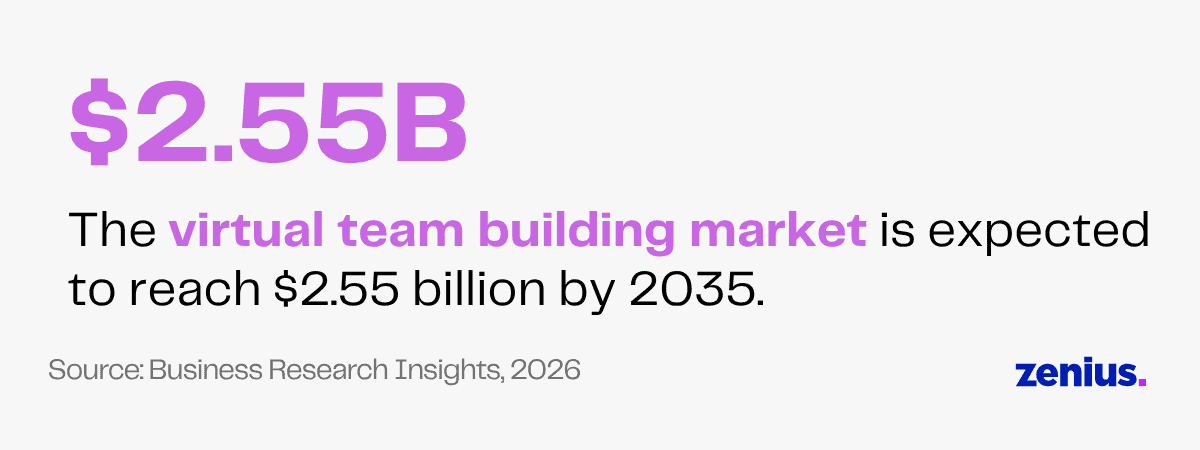
Driven by the rise of remote work, the virtual team building market is expected to reach $2.55 billion by 2035
In a remote team, workers are scattered all over the world. Everyone works independently, with no face-to-face interactions or in-person collaboration.
It takes team-building initiatives to transform isolated remote workers into a unit of well-connected individuals.
But virtual team building is more than just occasional online meet-ups or a few casual conversations.
It’s an ongoing strategy to foster trust among your virtual employees and instill a sense of team spirit, ultimately fueling your company’s growth.
In this article, we’ll discuss why virtual team building is not a mere afterthought but a necessity for an organization’s success in the age of remote work.
Why Is Virtual Team Building Important?
Remote work is not the future, but the present. Companies that fail to adapt to virtual teams will lose out on top talents.
However, people from different countries and diverse backgrounds come together to form a remote team. Physical distance and cultural differences sometimes lead to conflict, hampering professional relationships between employees.
To bridge such gaps between remote workers, virtual team building is essential.
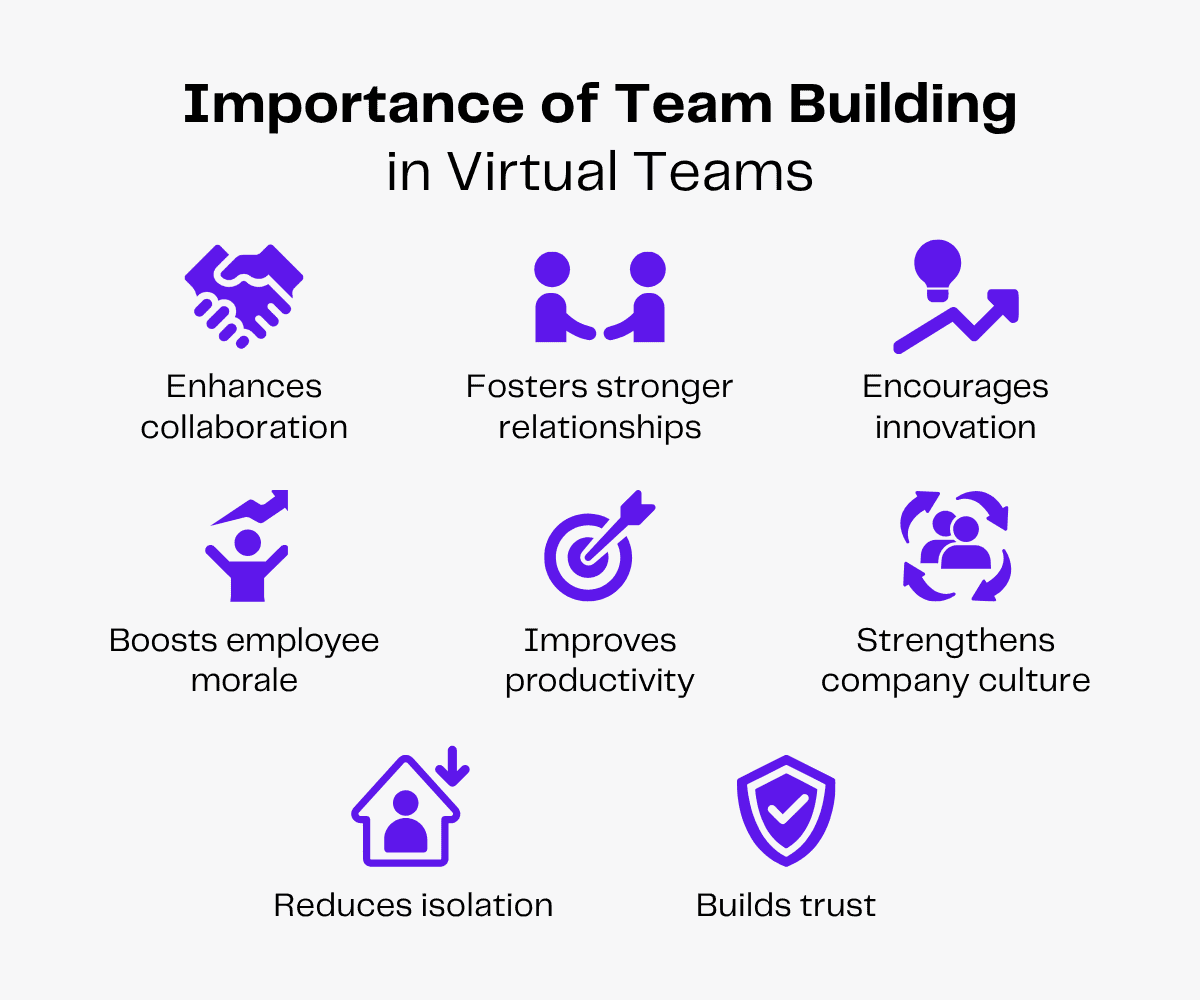
Enhancing Collaboration
In any organization, employees are not meant to work in silos.
But due to the lack of face-to-face interactions in remote teams, workers often struggle to collaborate efficiently.
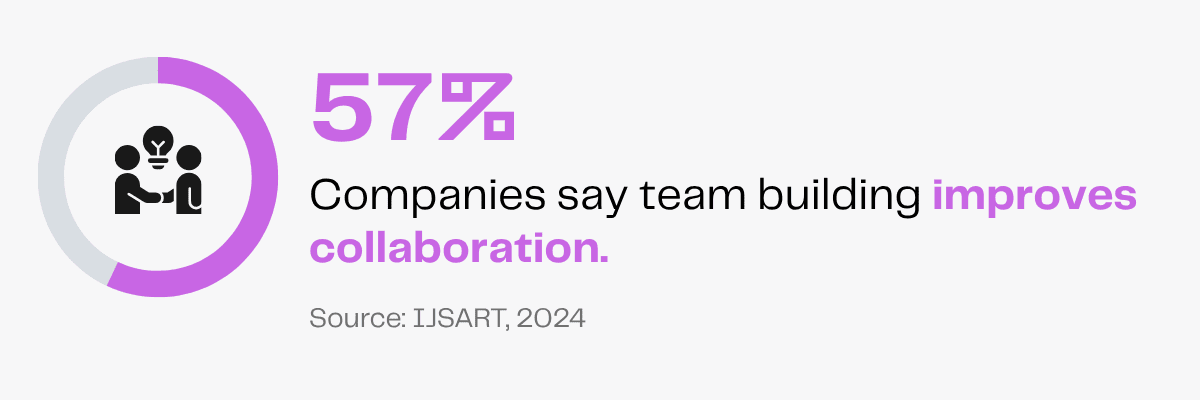
Virtual team building plays a crucial role in breaking down silos and improving communication among team members. 57% of professionals agree that team building sessions improve collaboration.
By integrating structured team-building activities, companies can create stronger interpersonal relationships that enhance collaboration.
From virtual escape rooms to regular brainstorming sessions, such measures can improve coordination and synergy in your team.
They help your remote team work as a single unit to achieve common organizational goals.
Fostering Strong Relationships
Workplace relationships often grow through casual chats and shared lunch breaks. Since that option is not available in remote teams, regular virtual interactions and activities are the only way forward.
Virtual team-building activities help turn random remote colleagues into meaningful connections. It bridges the gap by creating structured opportunities for employees to interact, bond and build trust.
Such minute efforts foster stronger connections and humanize remote teams, creating a more positive work culture in the organization.
There is nothing more important in a group remote project than casual communication. Not just official emails and work updates, but the ability to sit back and chat, says David Rabin, VP of Global Commercial Marketing, Lenovo
Encouraging Innovation
Innovation doesn’t happen in isolation.
It’s only possible in a culture where thoughts are freely exchanged, diverse perspectives merge and there’s a strong team sentiment.
Virtual team building helps break down existing barriers and foster an environment where new ideas can flourish.
Using virtual whiteboard tools, teams can visually map out their ideas and discuss them together. A cohesive team is more eager to take creative risks than a team of detached members.
Plus, when a team is comfortable in each other’s company, innovation and creativity can be nurtured effortlessly.
Boosting Employee Morale
Disengagement and isolation are the primary causes of burnout in workplaces. They often take a toll on an employee’s morale as well.
But when a team’s bonding and culture are strong, the spirits remain high.
Virtual team building acts as a morale booster by creating moments of connection, recognition and shared experiences.
Team activities like scavenger hunts, online trivia or virtual happy hour inject energy and foster a sense of belonging among team members. This makes employees feel appreciated and valued.
With small acts of teamwork, remote teams can stay engaged and committed to your organization’s growth.
Strengthening Company Culture
A company’s culture is more than just office perks and mission statements. It’s about how employees connect, collaborate and embody the organization’s core values.
Virtual team building is the best way to strengthen organizational culture. It helps employees feel connected to your identity and purpose. A strong culture has been proven to help businesses thrive.
Through team-building sessions, companies reinforce their values and ensure all employees are actively engaged. It helps translate corporate values into daily interactions.
Doing so ensures that your organization’s culture is not lost in the remote setting but evolves and thrives instead.
Improving Productivity
Productivity is the natural outcome of a motivated team. But what fuels motivation is cohesiveness. When team members gel well, they become an unstoppable force.
The higher the team spirit, the better the productivity. Ideas flow more freely, problems are solved faster and the collaboration becomes seamless.
But this isn’t easy with a remote team. Miscommunication, lack of alignment and feelings of isolation can slow workflows down, hampering the efficiency of your remote staff.
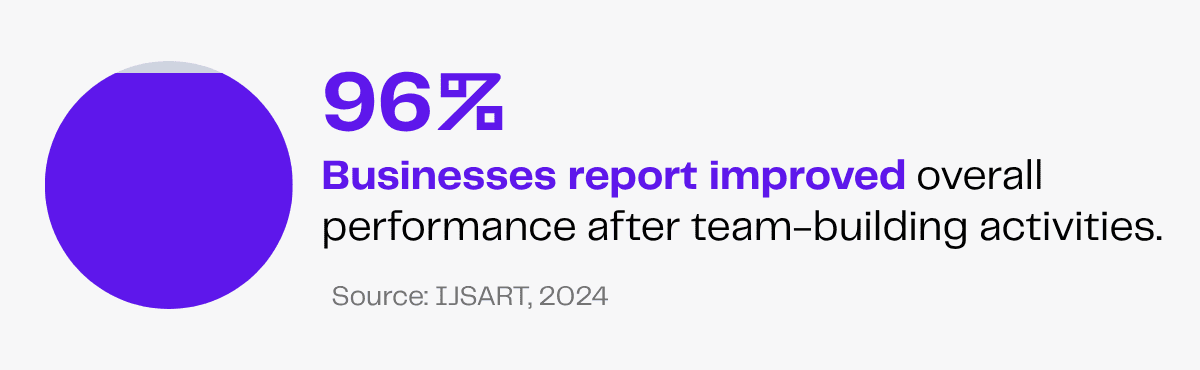
Virtual team building removes such roadblocks and fosters stronger relationships among team members. 96% of businesses saw improvement in overall performance after team-building activities!
By instilling a sense of camaraderie between remote employees, you can keep them committed and more accountable.
You’ll be able to lead an efficient virtual team where workers stay engaged, communicate regularly and collaborate seamlessly.
Read more: Discover the Best Leadership Style for Your Virtual Team
Reducing Isolation
We can all agree that working remotely is isolating. Without coworkers at a desk next to you, work often starts to feel mundane.
And when feelings of loneliness feel overpowering, it’s impossible to focus fully on the work at hand. That’s why it’s a good idea to break the monotony of remote work with casual virtual coffee chats and spontaneous brainstorming sessions.
You can also promote structured wellness initiatives like mental health check-ins, mindful meditation sessions and virtual hobby clubs.
When remote employees feel socially connected, they experience higher job satisfaction and lower stress levels.
This leads to a healthier and happier workforce in your organization.
Building Trust
Trust is the fundamental force that binds a remote team together. Employees separated by miles can only feel connected when they trust one another.
Virtual team building helps by creating opportunities to connect, rely and grow with each other.
Activities like collaborative storytelling or roleplaying can sharpen communication skills, active listening and empathy in your virtual team, deepening trust.
You’ll be able to create a collaborative environment where employees don’t just work together but support, challenge and push one another towards excellence.
Additionally, fostering trust and a sense of belonging boosts employee retention.
Without team building, you may lose promising talents just from failing to tap into their collaborative potential.
How To Effectively Implement Virtual Team Building
Effective virtual teams are built on strategy, structure and inclusivity.
By implementing thoughtful initiatives, companies ensure that virtual team building strengthens relationships, boosts productivity and aligns with their work culture.
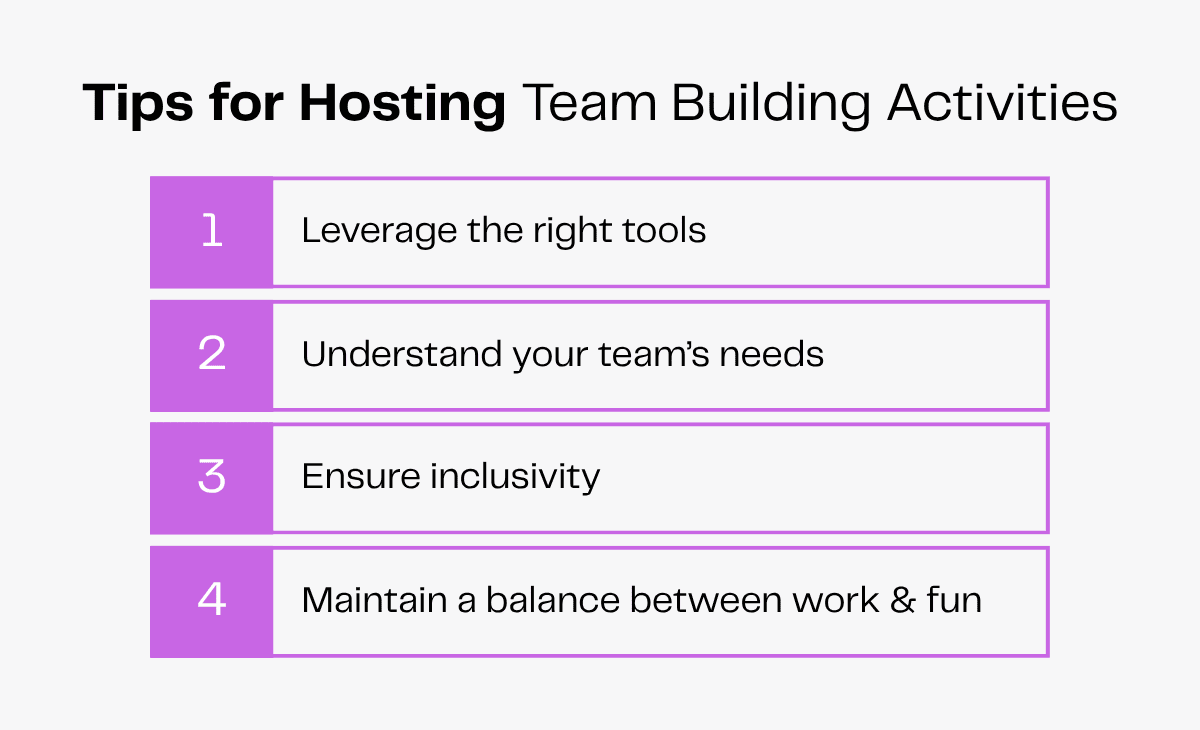
Leverage the Right Tools
Digital infrastructure has a big role to play when it comes to virtual team building.
From unified communication platforms to project management tools, a robust digital ecosystem enables seamless workflows.
The right tools can determine how well your virtual team works together.
For instance, you can use Donut—a team-building tool that integrates with Microsoft Teams and Slack, to set up spontaneous watercooler chats between colleagues.
You can even use virtual office platforms like Gather or Kumospace to simulate a real-life office environment for your remote workers.
Interacting and collaborating in such a space would feel more natural and less forced.
Understand Team Needs
A one-size-fits-all team building approach won’t work since each individual has different styles of communication and engagement preferences.
While some may want fun games as a means of bonding, others may prefer peer-learning programs so they can socialize and upskill at the same time.
To consider everyone’s opinions, you can release a form asking employees to choose their preferred team-building activities. Keep it anonymous to ensure everyone feels free to share openly.
By actively acknowledging the diverse needs of a virtual team, companies can create a more inclusive and productive virtual work environment.
For instance, Meta wanted to host a virtual team-building activity for a team of 450 employees spread across time zones. They started off with Music Bingo—a simple, universal game that could be enjoyed by everyone.
And afterwards, based on results from previously conducted surveys, employees joined breakout rooms based on their interests. Some attended a chocolate truffle making workshop, whereas others engaged in interactive team games.
This way, Meta was able to strike a balance between both group engagement and individual interests.
The key is not just implementing the ideas but adding genuine value to employees’ overall experience.
Only when a team’s comprehensive needs are met can they function effectively and deliver the best for your growth.
Ensure Inclusivity for Higher Participation
In a virtual team where employees are from different parts of the world, it can be challenging to work together.
But you can help remote members connect with one another by creating an inclusive work culture.
Imagine ideas from multiple worlds fusing! That’s only possible when all team members feel equally seen, heard and valued.
As a company that encourages inclusive participation, make sure to plan activities that cater to all engagement styles.
While some employees enjoy high-energy games like virtual karaoke, others may be comfortable with something low-key, like online quizzes, so adjust accordingly.
This is important because if employees aren’t comfortable, they may not participate in team-building sessions. In fact, when asked about the biggest obstacles to team building, 36% cited lack of participation from team members.
Another important aspect of inclusive participation is cultivating a safe space for employees.
When you ensure psychological safety, people tend to open up more and contribute effectively towards team building.
Create a Balance Between Work and Fun
All work and no play will make your team dull. Just because a virtual team can’t go on office retreats, doesn’t mean they can’t have their own break from the monotony!
A healthy organizational culture should blend engagement with efficiency. And the best way to make that happen is by strategically integrating fun activities into work.
However, it’s important to ensure you don’t end up disrupting everyday workflows.
Unplanned activities can seem intrusive and inconvenience your team, so schedule team-building activities in advance and notify your team a few days prior.
Fun Virtual Team-Building Activities for Remote Teams
From quick icebreaker sessions during virtual meetings to weekend yoga workshops, there are loads of virtual activities to choose from.
Depending on how many members you have and how much time you’ve got, here are some fun team-building ideas.
Icebreakers
19% of companies say icebreakers are effective in enhancing teamwork.
One of the best ice-breaker ideas in any team setting is to discuss favourite books, movies or sports.
It’s a universal topic since everyone usually likes something or the other from these categories.
Bonding over their treasured writer, actor or sportsperson can ignite the camaraderie necessary to kickstart the team-building process.
Quiz & Trivia Competitions
Quizzes add a knowledge-sharing element to team-building activities.
The themes can vary from entertainment and history to general knowledge. Such friendly trivia competitions will spark engagement and help teammates bond.
Online Puzzles
Logic puzzles and riddles challenge employees to think critically, thereby strengthening group dynamics.
31% of professionals prefer problem-solving exercises like these for team building.
Such activities encourage better decision-making and foster creative collaboration among virtual team members.
Wellness Activities
Integrating guided yoga and meditation workshops into virtual team building will enhance the mental and physical well-being of your employees. 20% of workers enjoy workshops and seminars.
Having a calm, connected workforce can magically improve collaboration across virtual teams.
How Is Virtual Team Building Changing in 2026?
The virtual team building market is expected to reach $2.55 billion by 2035, growing at a CAGR of 12.3% between 2026 and 2035.
The rise of remote work and virtual teams is the key driver behind this growth.
At present, companies are focusing on mental health initiatives, gamified workflows and AI-powered team-building to bring their remote employees together.
Greater Focus on Mental Health
U.S. Surgeon General Vivek Murthy, MD, remarked that
A healthy workforce is the foundation for thriving organizations and healthier communities. As we recover from the worst of the pandemic, we have an opportunity and the power to make workplaces engines for mental health and well-being.
Mental health entails the emotional, psychological and social well-being of an individual. It heavily influences the way in which someone thinks, feels, acts and copes with external stress.
In a peer-reviewed research study published in the National Library of Medicine, eight categories of best practices were identified to foster mental health at the workplace.
- Culture
- Robust mental health benefits
- Mental health resources
- Workplace policies and practices
- Healthy work environment
- Leadership support
- Outcomes measurement
- Innovation
It’s indeed great that companies have finally begun to address and combat the stigma associated with mental health.
When employees are psychologically healthy, they tend to be more motivated, engaged and productive in their work too.
To ensure your team’s mental well-being, check in regularly, offer PTO for mental health days and enforce no-communication policies beyond work hours.
Rise of AI-Powered Communication Methods
In the last couple of years, the way we communicate has changed dramatically.
From personalized chatbots to speech recognition systems, AI has magnificently altered the way people interact with each other.
This phenomenon is all the more apparent in virtual workplaces. Today, team building across remote teams has become easier—all thanks to the AI-driven communication methods that feel intuitive, personalized and deeply engaging.
These include:
- Smart AI-generated meeting summaries with tools like Microsoft Copilot and Otter.ai. These tools also provide real-time transcription and intelligent analyses of the discussions.
- AI live translation services for multilingual teams by Boostlingo and Wordly have enabled seamless collaboration. These automated real-time translators break down language barriers.
- Immersive 3D collaboration spaces like Omniverse, Meta Horizon Workrooms with virtual avatars have also transformed the way people interact. Instead of passive collab behind the screens, employees can have their avatars engage in 3D workplaces.
As AI-powered communication methods evolve, virtual teamwork only becomes smarter and more engaging.
Gamification of Team Building Virtual Activities
Virtual team building in today’s world is not just about icebreakers. It’s about making collaboration fun, rewarding and immersive. That’s possible through gamification!
But what’s gamification?
Gamification refers to integrating gaming mechanics into otherwise boring tasks to improve team performance in virtual environments.
This boosts engagement and makes teamwork feel more fun than obligatory. Some examples include:
- Platforms like Kahoot and Mural AI generate customized team-building challenges based on the organization’s scope of work. When challenges are personalized, the work dynamics feel less mundane and more engaging.
- Virtual escape rooms are another way teams can foster collaboration. From solving puzzles to cracking codes, platforms like Escape Rooms VR ensure critical thinking in a fun way!
- Real-time leaderboards, digital badges and award systems are other ways to gamify team-building activities. With platforms like Spinify, you can create teamwork exercises and enhance collaboration among remote teams.
- Habit-building is hard when done alone. But when you have it as a challenge with your entire remote team, it can be exhilarating! Platforms like Habitica gamify the wellness experience while simultaneously making team growth more engaging.
More Emphasis on Cultural Inclusion
Virtual team building in the 21st century is all about creating an environment where employees from diverse cultural backgrounds feel valued.
When you have employees scattered across multiple time zones, team building is an effort to make them feel included.
You can start by acknowledging the cultural heritage of team members.
From celebrating global festivals together to sharing trivia about respective cultures, the experience can be enriching.
Some companies also promote cross-cultural exchange programs where knowledge-sharing and cultural appreciation are part of the team agenda. This makes collaboration more natural and participatory.
FAQs
Why is so much importance given to virtual team bonding activities nowadays?
In diverse remote teams, communication problems and feelings of isolation are common issues. Companies prioritize team bonding to combat these and make remote workers feel more connected, so they can collaborate efficiently.
How does virtual team building improve employee collaboration and communication?
Team building exercises give remote employees a chance to interact beyond work. They get into discussions, play games together and get to know each other. This bridges cultural differences and strengthens interpersonal relationships between workers, helping them work better as a team.
What metrics can organizations use to measure the effectiveness of virtual team-building initiatives?
Metrics like event attendance, participation rate, employee engagement and productivity scores can help you track the effectiveness of your team building initiatives.
Wrapping Up
Companies that promote team building not only employ happier and healthier employees but also boost team performance.
Even small games like icebreakers, online quizzes and scavenger hunts can have long-lasting effects on a remote team.
They can bring remote employees together, improve communication and build trust, helping them work together as a single unit towards common goals.
At Zenius, virtual teams are built on a solid organizational culture in which distance is no barrier to teamwork.