Key Takeaways
With a strong team culture tied to core values, it becomes easy to carry out cross-functional collabs.
While it’s good to be optimistic, positivity should never be used as a reason to overlook genuine work-related concerns or work-life balance issues of employees.
Ever since the COVID-19 pandemic, organizations across the world have undergone a metamorphosis.
While some companies embraced the idea of working from home for a while and later mandated return-to-office, others engraved WFH into their policy forever.
In the current remote-first world, office walls are no longer opaque. Many employees are now thriving behind their screens and engaging in digital interactions with their colleagues.
This has got leaders wondering—can they build a company culture among their employees while working remotely? Can their teams stay aligned on organizational goals and also stay engaged with each other and the company?
While the answer is a resounding yes, there are follow-up questions that ask how to foster that organizational culture.
In this article, we understand what essential role team culture plays in an organization, what challenges they encounter and how to overcome them.
Why Is Team Culture Important in Any Organization?
Team culture is the heart and soul of any organization. In today’s fast-paced business environment, a solid team culture will dictate how high the business can scale.
Upholds the Company’s Core Values
A company’s value is not merely restricted to its website or tagline. It is woven into the fabric of their organization. Core values are what can make or break a business.
A strong team culture becomes a living embodiment of a company’s core values. The team members demonstrate how they work together based on the guiding principles of the company.
Adhering to the business’s core values gives the team a purpose and keeps them on the same page. It strengthens their team culture, helping them stay united and driven towards achieving their shared goals.
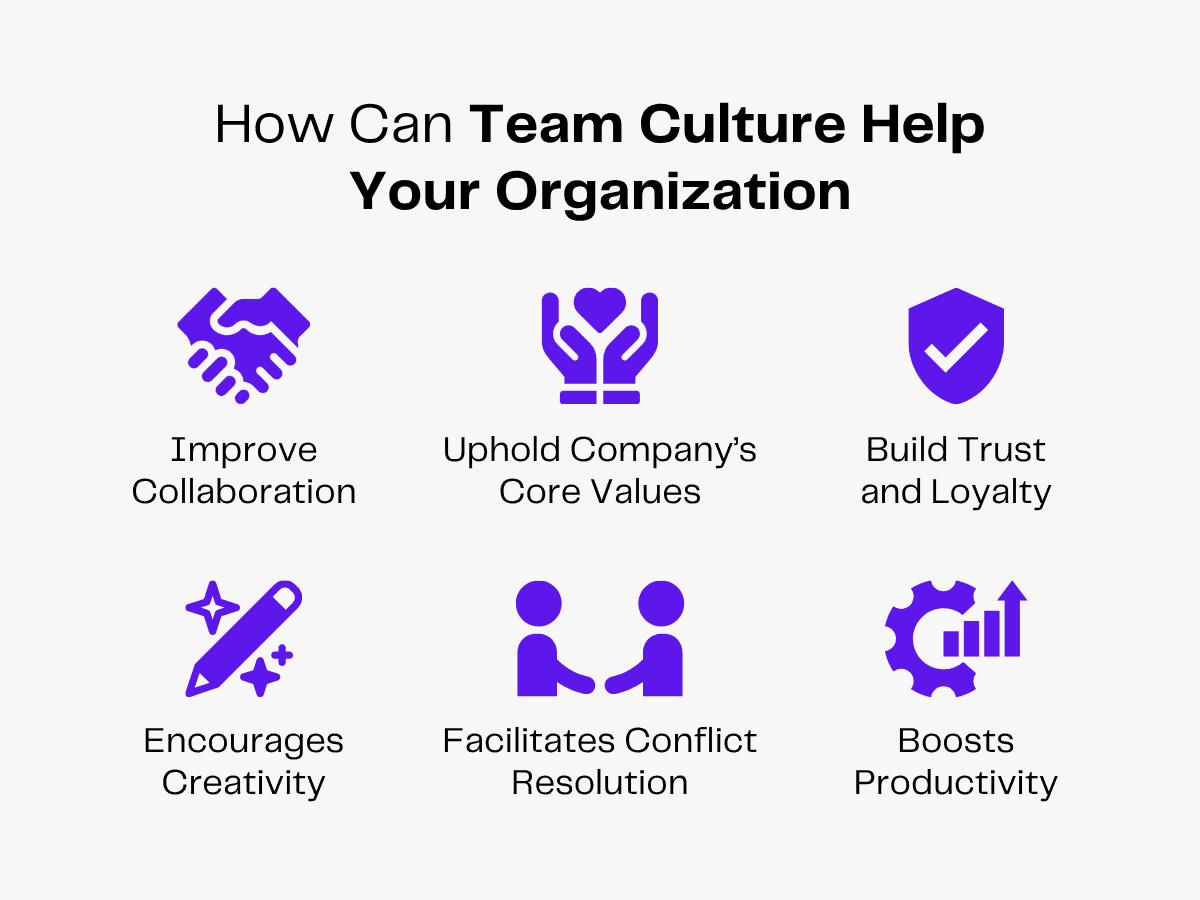
Improves Collaboration
Do you know the secret to transforming the functioning of an organization? It’s team culture.
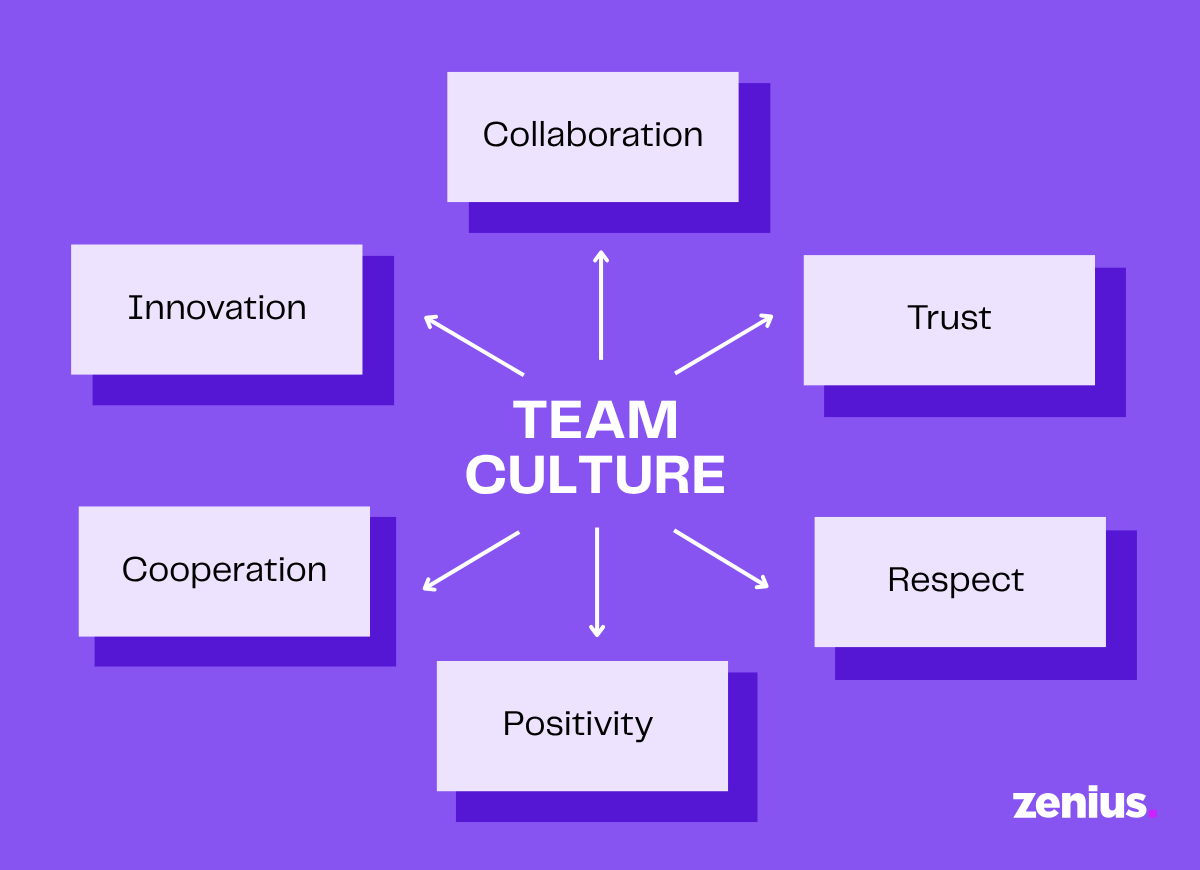
It cultivates a sense of trust and respect among team members. It creates an environment where all members feel empowered to contribute their ideas and thoughts. It fosters positivity across the board.
With a strong team culture, it becomes easy to carry out cross-functional collabs. Team members mingle with each other and are able to delegate tasks and assign roles and responsibilities across departments.
There is no hesitation to engage with one another, no ego trips, no roadblocks. Everybody works with the same spirit of cooperation as any healthy team should.
Such an encouraging work environment sparks innovation. The best ideas thrive and give the organization direction towards success. That’s precisely why team culture is foundational to improving collaboration in the organization.
Builds Trust and Loyalty
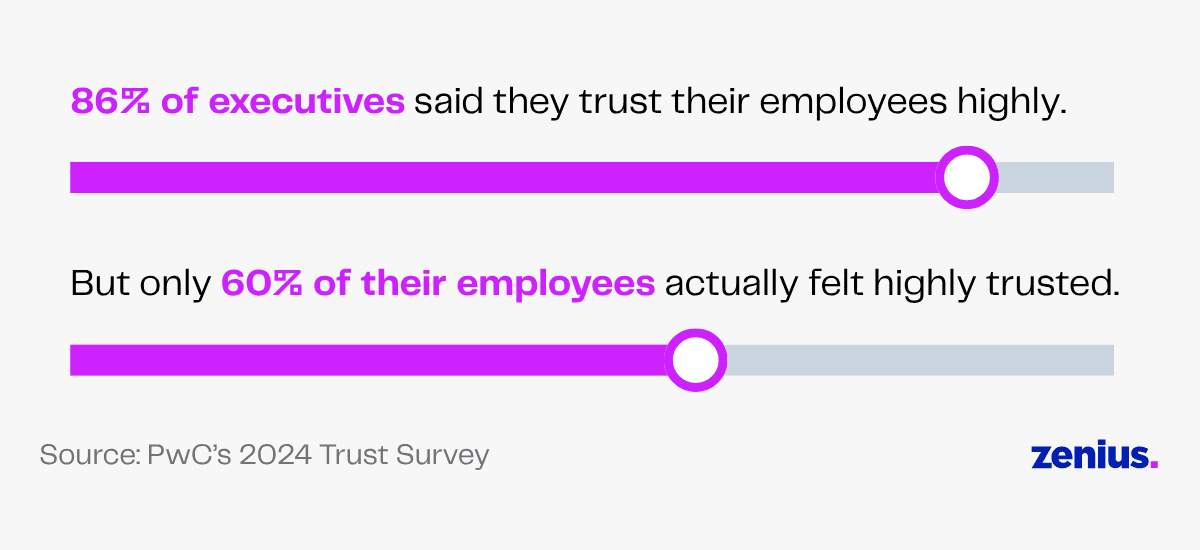
According to a study by PwC, 86% of business executives said they trust their employees highly. But only 60% of their employees actually felt highly trusted. This contradiction speaks volumes.
There is a body of research that proves that whenever there is a high level of trust in the company, it drives its business performance. That’s obvious. The greater the trust, the better the efficiency!
With a strong team culture, there is organizational alignment that builds trust and enhances decision-making in the business. When teams feel aligned and integrated in the decision-making process, they become more loyal.
A positive team culture fosters trust and loyalty, enabling stability in the organization.
Encourages Creativity
Creativity takes courage. And courage comes when there’s mutual support, collaboration and the psychological safety to voice opinions respectfully. Team culture is one of the greatest determinants of whether a novel idea can take shape in the organization or not.
The concept of design thinking is a crucial element of business innovation that promotes a human-centred, solutions-based approach to problems.
Only with a great team culture can your business nurture such creativity and design thinking among the team members. It can be an interesting break from the monotony of ideas.
Facilitates Conflict Resolution
Contrary to popular belief, conflicts aren’t always negative. Some conflicts can have a positive impact on the workplace setting. They can promote critical thinking and foster new ideas.
A strong team culture plays a central role in conflict management. It ensures disagreements don’t turn into disasters.
When employees trust one another, they will voice concerns constructively and not let resentment take root. They will encourage active listening, empathize with one another and grow together. That’s how a healthy team thrives.
Boosts Productivity
Team culture becomes an essential way to embrace the dynamic and ever-evolving nature of business. It is one way to encourage the healthy exchange of ideas and find innovative solutions and fill market gaps.
With a strong team culture, the employees feel motivated to innovate and excel. And not just individually. They bring their best energy and creativity that transcends departments.
Such a team culture boosts the overall productivity of the organization.
… I’ve learned that the best companies—the ones that are most competitive and lead their industries decade after decade—put enormous emphasis on their core values and beliefs, says Robert Simons, Harvard Business School Professor
Challenges to Building a Strong Organizational Culture
Building a team culture is no small feat. It requires relentless effort and a deep understanding of team dynamics.
Lack of Clear Vision
Clarity fosters understanding. When your business vision is blurred, there is no way you can reach the goals you set out to achieve.
Without a shared vision, the team will operate in silos. Misaligned efforts eventually lead to employees losing motivation and not contributing to the organization.
Not just that, the team members start questioning their future in the company and start venturing for other options, affecting employee retention.
Communication Barriers
One of the greatest challenges for remote workers is communication. When people from different parts of the world work together, the challenges are multifold. In this language, time zones and connectivity are the most prominent barriers.
Without active communication among each other, the members can feel misaligned and left out. Wherever the culture of silence has bred, it has only amplified distrust and confusion in the team.
Isolation and Burnout
Workplace loneliness is real. The Covid-19 pandemic spurred multiple workplace maladies like isolation, exhaustion and burnout as employees turned to working from home.
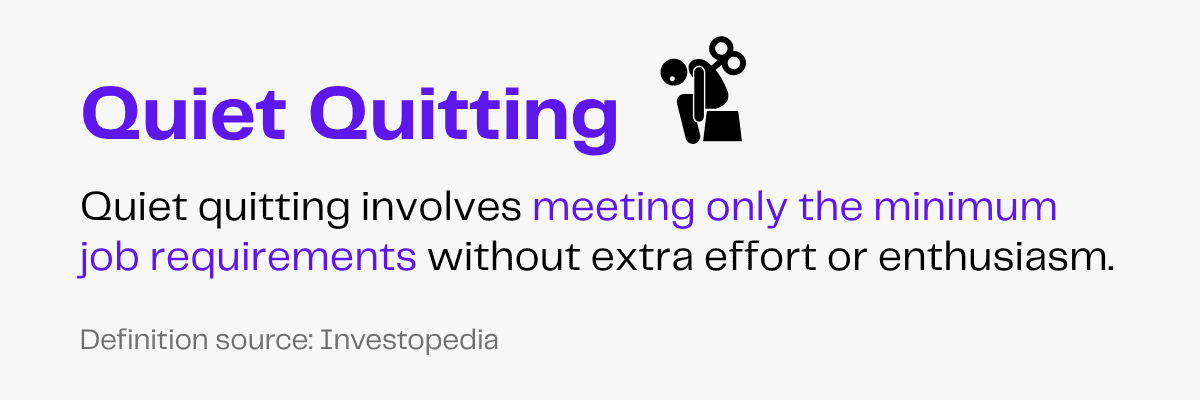
Without social bonding in a remote setup, engagement among employees dips and leads to emotional exhaustion. Emotional exhaustion eventually leads to employee burnout. All the isolation and burnout eventually result in quiet quitting.
Read more: Overcoming Challenges of Virtual Teams
Cultural Gap
A remote workplace allows the company to employ people from diverse backgrounds. While this has many benefits, leaders must be mindful to practice inclusivity properly.
Working remotely makes it difficult for employees to acknowledge or embrace the cultural differences. The difference in communication styles, work ethics and family values in a team might clash and become a cause of disharmony in the team.
Without adequate cross-cultural training and an inclusive mindset, these gaps will be tough for a company to bridge.
Ineffective Leadership
Without a good leader, especially in a remote environment, chaos is bound to ensue.
In high-pressure environments where results reign above everything else, leaders adopt coercive or unethical tactics to meet expectations. They harbour unrealistic expectations from their employees, disrupting the harmony in the team.
An ineffective leader lacks communication skills and emotional intelligence. Their poor leadership creates an environment of low morale. This proves to be detrimental for the company in the long run.
Resistance Among Employees
Not all employees are going to have the same personality as the company anticipates them to have. Some are going to be introverted and shy, while others are going to be extroverted and outspoken.
This makes adoption of any team culture a tad bit difficult. Some employees may resist change due to skepticism, fear of the unknown or even lack of confidence.
Such resistance among employees can keep them in isolation.
How To Build Team Culture Virtually
Building a great culture, especially in virtual teams, involves a lot of mindful effort.
Transparency, inclusivity and a people-centric approach can make way for a thriving culture in your remote organization.
Define Your Core Values
As a business owner, you know what values your organization should stand by. Without core values, your organization may drift apart like a ship without a compass. Core values become the foundation for building a team culture, even when the members are miles away.
In a virtual team, the casual office chit-chats are missing. So core values become the only way your company can create a sense of unity among the team members. Start by identifying what truly drives you.
Is it transparency or efficiency? Or is it the relentless pursuit of excellence? You know better. Ensure your behavior aligns with your company’s core values and lead by example.
When the leadership demonstrates these values in their action, it has a domino effect on the team!
Adapt Leadership Strategies
Great leadership creates value. In a remote setting, traditional leadership approaches won’t translate well enough. You must use modern leadership strategies to build a strong team culture.
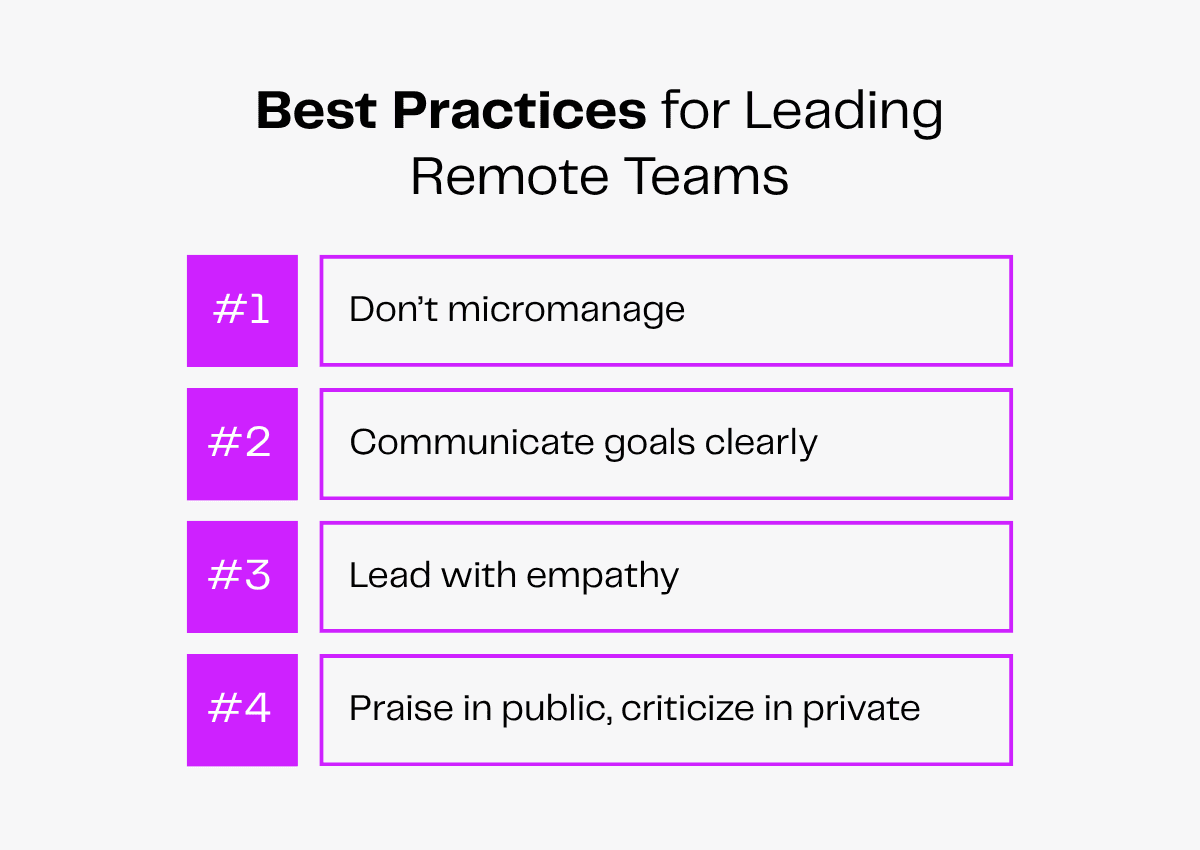
- Make sure you give the remote employees autonomy to innovate. Avoid micromanaging.
- Communicate goals clearly. This will keep the entire team aligned.
- Lead with empathy. This will make your employees feel heard and supported.
- Praise in public, criticize in private. Celebrating successes openly will boost the employee’s self-esteem and be a motivational factor for others.
An effective leader will foster a culture where remote employees don’t just function but thrive!
Read more: Performance Management in Virtual Teams
Establish Clear Communication Channels
However trivial it looks from the outside, office chit-chat and face-to-face meetings have a big impact on team bonding and collaboration. The absence of these in remote settings can create disconnection in teams.
That’s why clear communication channels are the way to connect with employees virtually!
Streamline your communication with separate platforms. Gmail for formal update emails, Chat for daily chit-chats, Meet, Zoom or Microsoft Teams for video calls and virtual meetings, Google Drive for file sharing and so on.
Having designated platforms for different types of communication will keep the conversations organized and prevent miscommunication.
Increase Opportunities for Team Collaboration
In a Harvard Business survey, 71% leaders said their organization’s leadership gave high priority to collaboration.
This is because great ideas don’t breed in isolation. A more engaged workforce will naturally render greater productivity and better customer experience.
Make sure you break barriers with cross-functional projects. From co-editing documents to brainstorming expansion plans, always encourage collaboration. Online co-working sessions and separate Slack channels can also build the casual camaraderie needed for a team to thrive!
Initiate Virtual Team-Building Activities
Virtual icebreaker activities can span from trivia sharing to fun quiz sessions to virtual games.
Anything that promotes cohesion among the virtual employees should be encouraged. This will harbour a sense of attachment and connection among them.
Without team-building activities and face-to-face interaction, remote employees will feel as if they work in silos. Regular team activities will create lasting bonds, enabling the company to scale better.
Promote Inclusivity and Diversity
The greatest perk of a remote workspace is that it can span geographic locations. Your business can be based in any corner of the world and your employees can be working from anywhere.
Distributed teams give people the opportunity to work with people from different cultures, languages, ethnicities and backgrounds.
Such inclusive and diverse teams can lay the foundation for a thriving team culture and enhance cultural awareness. You can promote their cohesion with team-building activities, timely catch-ups and casual meetings.
In a study by Pew Research, 54% of workers said their organization pays about the right amount of attention to diversity, equity and inclusion efforts or DEI.
Make sure you celebrate the diversity of your team with meaningful conversations. Recognize cultural holidays and accommodate them in your schedule accordingly. Rotate meetings that are in sync with the entire team’s work hours.
These small gestures will prove that your inclusivity isn’t confined to mere words but displayed in actions.
Read more: Essential Ground Rules for Virtual Team Meetings
Reinforce a Positive Work Culture
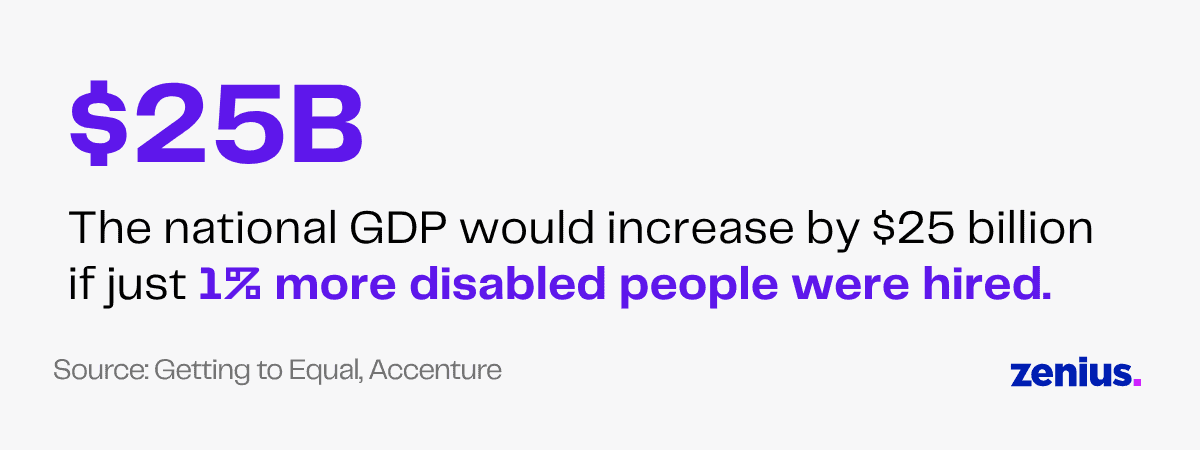
Positivity is crucial to make employees feel valued and motivated. It gives them a sense of belonging where they can voice their ideas and share challenges without fear of judgment.
Positive team culture improves employee performance by enhancing their productivity. By cultivating such a culture, organizations can unlock the full potential of their teams.
However, it is important to steer away from making positivity performative, as it then becomes toxic.
While it’s good to be optimistic, this should never be used as a reason to overlook genuine work-related concerns or work-life balance issues of employees. They should not be expected to have a relentlessly positive attitude regardless of stress, burnout or other issues.
This is important to ensure the workplace stays positive for their teams in the real sense of the term.
People often need to accept the reality of a situation before moving forward. Not all situations have a silver lining or a positive spin. Some things are just really, really hard, and that’s OK, says Whitney Goodman, Author
Foster Trust Through Transparency
Trust is the currency that binds a team. It is not built overnight or through casual handshakes. It is built with consistency and transparency.
When you set up a team, try to communicate openly from the start. Regular project updates, open dashboards, whiteboards and all-hands meetings foster transparency across the board. Only with such transparent interactions, trust strengthens among the team members.
To make transparency the norm, build a safe space for employees to register their protest and voice their complaints. Where transparency is paramount, trust automatically follows.
Promote Work-Life Balance To Prevent Burnout
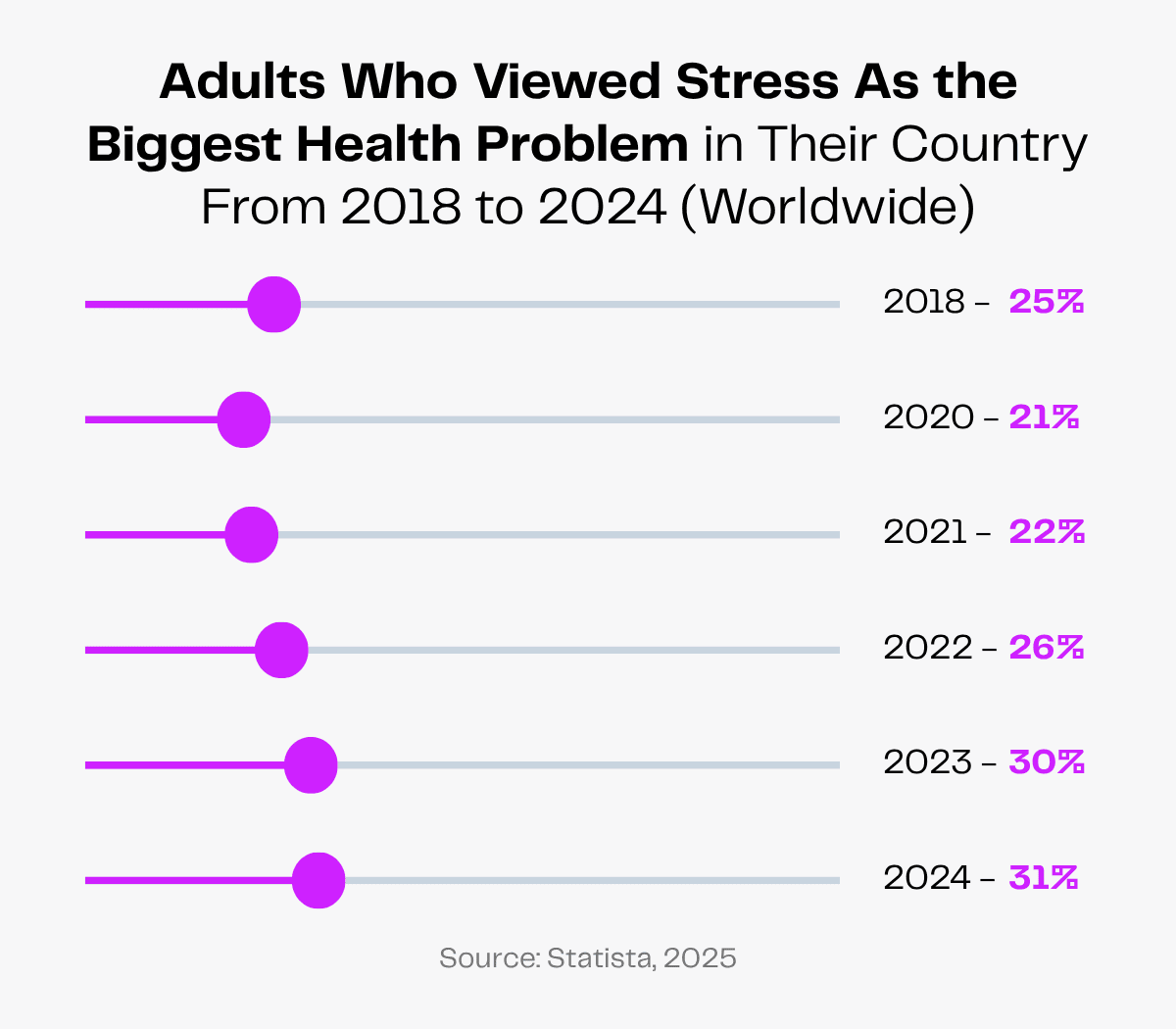
Remote work often blurs the line between one’s professional and personal life. And the hustle culture has long been glorifying overworking.
But the reality is different. Over-exerting oneself kills one’s productivity and causes stress. It also reduces their interest in working in the same organization. According to a study by Accenture, burned-out employees are 2.5 times more likely to leave their current employer.
You can prevent burnout among your remote employees by setting clear boundaries. Clearly define working hours of your organization, but also offer flexibility to the employees. Encourage regular check-ins to spot signs of burnout among the team members.
Breaks are an essential aspect of an employee’s wellness. Normalize breaks and promote work-life balance among the team.
Encourage Employee Engagement
Disconnection breeds disregard. When a team has to work together, there needs to be enough interaction among them. This will bridge cultural gaps and enable smooth collaboration.
The leadership has to take the initiative in virtual team-building activities like friendly competitions with virtual leaderboards. You can also organize programs to celebrate milestones of the company. This will keep them invested in the organization’s growth for the long term.
The intent behind such gestures is not to bring about complete uniformity. Rather, it is to ensure that the diversity in their approaches doesn’t create friction in the team.
Create Feedback Loops
A strong team culture thrives on open communication and constructive criticism.
Constructive feedback builds trust among employees that the leadership is invested in their growth and not just the company’s outcomes. It keeps the conversation flowing and motivates the employees to give their best performance.
And while you are at it, try making it a two-way street. Seek feedback from your employees and empower them to share their thoughts. This will improve accountability across the team.
Depending on the comfort level of all members, you can also explore options like anonymous surveys, open Q&A sessions, etc.
Elements of Team Culture
A strong team culture doesn’t happen by chance. It is a careful, deliberate attempt to improve cohesion among employees from a diverse set of backgrounds. Here are the fundamental elements that drive a team.
- Business values
- Company norms
- Communication style
- Leadership style
Business Values
Your business values are like the DNA of your organization. They give structure and direction to your virtual team.
Only when business values are deeply embedded in the team culture can a company drive towards success. With great business values, the team shows up every day with a purpose to achieve!
Company Norms
All companies have their own set of unwritten rules that shape their culture. From how employees should interact to how they should draw boundaries, the norms dictate everybody’s conduct in the team.
The best recipe for building a strong team culture is for everyone to adhere to the company norms—from interns to managers and even CXOs!
Communication Style
A remote workplace thrives on good communication. But there are directives attached to that as well.
Formal communication should be direct and transparent. Informal communication, while being casual, should be respectful and civil. A team that communicates well thrives!
Read more: Virtual Team Communication Tips for Proactive Collaboration
Leadership Approach
Team leaders play a fundamental role in shaping the team culture with their leadership.
When a leader encourages open communication and accommodates constructive criticism, employees feel motivated to contribute. Team culture starts at the top and only trickles down to the employees through effective leadership.
Best Practices for Virtual Team Culture
What does this really come down to? Building systems that scale with you, ensure the well-being of the employees and foster the growth of the company.
Hire the Right People
From the start, go for people you know will get along well with your team. Candidates with strong communication skills and a solid work ethic will be your best bet. They will integrate seamlessly with your team and help you foster a strong organizational culture.
By hiring global virtual teams from offshore staffing companies like Zenius, you can onboard qualified teammates without having to sit in on the assessments yourself. Our rigorous screening process ensures we hire only the top 1% of candidates for your team.
Set Your Expectations From the Start
Clarity fosters cohesion. When you get a virtual team on board, share your expectations and provide information about tasks within the onboarding period.
Communicate the core values of your company, share details about your communication channels and make sure everyone is on the same page about their work.
Establish Communication Protocols
All remote organizations have separate formal and informal communication protocols. Establish them with your virtual team.
All roads to seamless communication begin with effective use of technology. Use dedicated workplace chat tools for seamless and organized communication.
Use Collaborative Tools
Messaging apps, work management tools like Asana, survey platforms and employee experience hubs—all platforms can turn your workspace’s virtual environment into a powerhouse of creative collaboration!
Make sure you leverage the digital tools to your advantage.
Read more: Must-Have Collaboration Tools for Virtual Teams
Wrapping Up
The key to the long-term success of a virtual organization is team culture. Distance won’t be an issue in the management of a virtual team as long as the tenets of organizational culture are adhered to.
With the right leadership, right mindset and right culture, your virtual team can transform your organization into an unstoppable force.