Key Takeaways
When virtual team members trust their managers and feel valued and supported, they’re also less likely to switch jobs.
Collect employee feedback to identify and resolve common issues affecting them. This shows virtual employees that their experiences at the company matter to you.
When an employee messes up, managers are the first to face criticism. They’re responsible for ensuring their team meets goals and produces quality outcomes.
Managers must always show up and deliver, without exception or excuses.
But managing people is no piece of cake. You can’t force people to give their best, so ensuring that teams stay connected while employees stay accountable is tricky for team leaders.
Managing virtual teams is even more challenging. You’re always trying to bridge communication and collaboration gaps. These complications can delay, derail and endanger collective progress.
How can managers overcome these challenges? By building trust.
The following tried-and-tested behaviors can build trust in virtual teams and help you overcome virtual team challenges, including communication, collaboration, technology glitches and more.
Why Virtual Team Management Needs Unique Strategies
While managing a team, you must communicate clearly, collaborate consistently and inspire employees to achieve team goals. You must also prevent internal disputes and build a strong team spirit. However, your success depends on the type of team you manage.
The next table compares traditional and virtual teams based on five management factors.
| Management Factor | Traditional Teams | Virtual Teams |
| Communication | Face-to-face interactions facilitate immediate feedback and quick clarification. | Online conversations (via messaging and video conferencing tools) can cause misinterpretations and meeting fatigue. |
| Collaboration | In-person brainstorming sessions can help develop rich ideas and execute strategic plans effortlessly. | Virtual collaboration depends on deliberate coordination and efficient work handoff. |
| Supervision | Direct observation enables accurate guidance and fast resolution of emerging issues. | Lack of visibility can lead to incorrect assumptions, which hurts employee and team morale. |
| Motivation | Personalized praise and encouragement from peers can boost employee enthusiasm. | Inspiring virtual team members requires digital recognition (e-shoutouts, special badges) and consistent informal interactions. |
| Team Cohesion | Shared workspace and mutual practices (coffee, lunch, team events) can help develop trust organically. | Building a strong team spirit needs active participation from employees in virtual activities, which can frustrate and isolate them if not approached delicately. |
These differences highlight the difficulties of managing a virtual team. To overcome these challenges, managers must try unique and mindful strategies to create interpersonal connections and build trust.
But why is trust important in virtual teams?
Why Is Building Trust in Virtual Teams Important?
Researchers writing the Developing Team Trust paper explain how important trust is for remote teams:
Team members who trust one another can better communicate and coordinate behaviors, given their openness, familiarity, and reliability. Interpersonally, trust also enhances morale, engagement, and willingness to cooperate, both at the individual and group level.
When team members trust each other, they communicate politely, collaborate seamlessly and produce high-quality results consistently.
And a reliable virtual team provides various advantages to businesses.
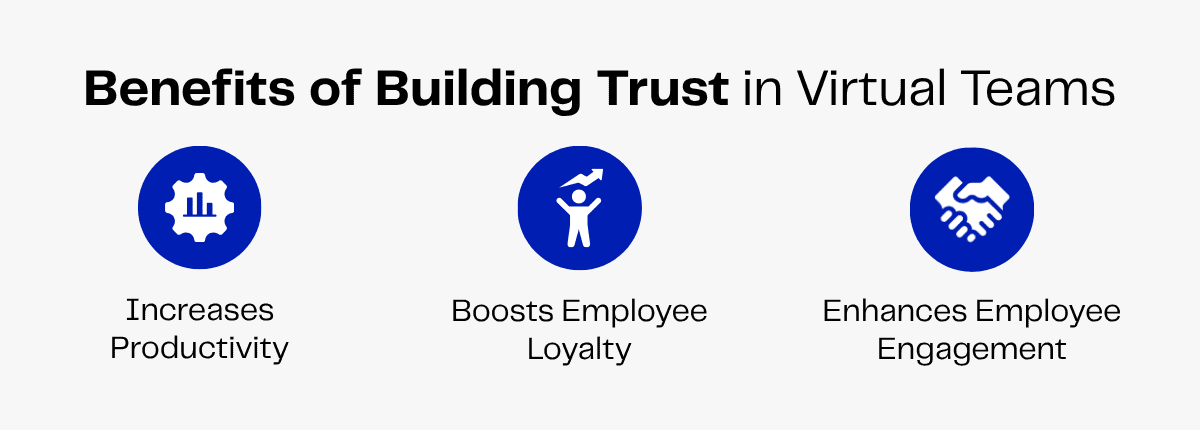
1. Increases Productivity
In trustworthy virtual teams, employees motivate each other and collaborate efficiently to solve complex problems. When you respect and encourage your team, they surpass your expectations.
Highly engaged employees can be 14% more productive than the average employee. They meet individual deadlines and contribute actively toward achieving company objectives—without constant supervision.
Trust also reduces misunderstandings and minimizes conflicts, improving teamwork. This efficient collaboration increases productivity.
Even diverse team members can gain extra motivation if they feel accepted and included. This inclusivity helps them connect emotionally to their work, ensuring quality outcomes.
Read more: Ultimate Benefits of Virtual Recruitment
2. Boosts Employee Loyalty
When virtual team members trust their managers and feel valued and supported, they’re also less likely to switch jobs.
With lower turnover rates, you also improve your company’s reputation in recruitment circles. This can help attract top professionals from across the world. Retaining talented employees also saves money, as you don’t have to reinvest in the hiring process.
A higher employee retention rate also means you can work with familiar team members on multiple projects. This way, you can also save the time you’d normally spend onboarding new members into your team.
3. Enhances Employee Engagement
By encouraging a learning mindset and offering support, you can build trust and enhance employee engagement. This strategy motivates employees to learn new skills for personal and professional growth. Their improved capabilities help you overcome crises and scale operations.
Enhanced employee engagement benefits the organizational culture by creating a judgment-free work environment, enabling future hires to settle quickly within your virtual team. This rapid onboarding boosts productivity, helping you increase your return on investment of future hiring.
Role of Trust in Remote Teams
Trust is essential for every transaction in life.
For example, you won’t share your credit card details with a stranger on the street. Even under duress, you’d probably provide them with false information to protect your interests.
But you might be more open to sharing financial details with your spouse or children who are going shopping.
You can learn two lessons about trust from this comparison:
- A clear and common purpose is essential for building trust. You don’t trust the stranger because you doubt their intentions.
- A personal connection can strengthen trust. Your strong familial bond allows you to share sensitive details without stress.
But how does a common purpose and personal connection influence virtual team management?
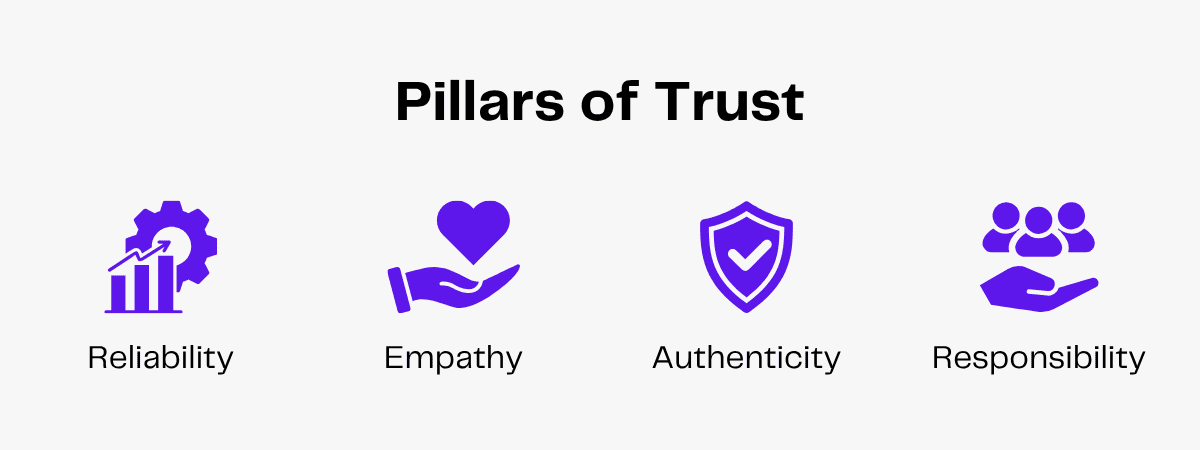
How a Mutual Purpose Affects Virtual Teams
A common purpose unites people. You’re more likely to help others, even strangers, if their purpose ties to your desires. Similarly, agreeing on ideas, rules or methods at work can help you build trust and collaboration in virtual teams.
A mutually beneficial objective can motivate employees to work together. And togetherness facilitates smooth collaboration. This same-page, same-team mentality can boost your virtual team’s performance!
How Personal Connections Influence Remote Work
A personal connection can relieve unnecessary pressure. This stress-free environment enables clear communication and creates a safe space, even when dealing with strangers.
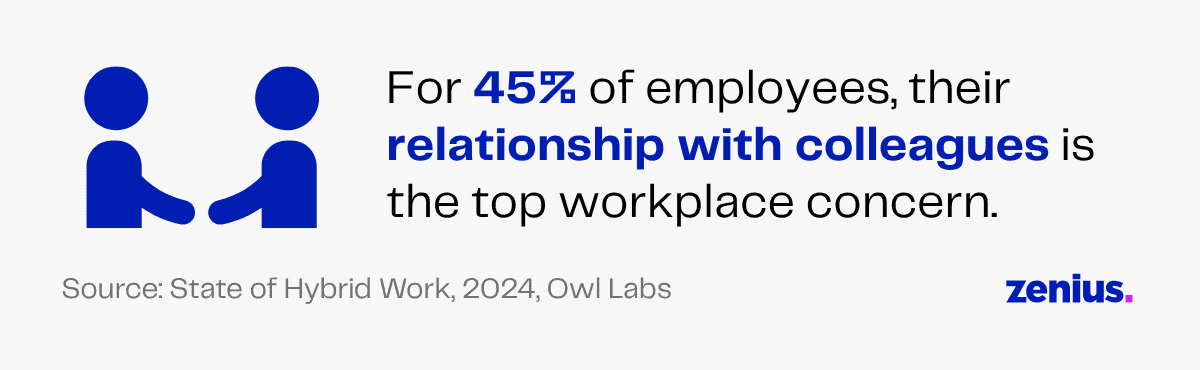
In fact, for 45% of employees, their relationship with colleagues is the top workplace concern.
Similarly, who are virtual team members, if not almost strangers?
Just like in-house employees, remote professionals also work toward company objectives. But without a personal connection, you distance yourself from virtual team members. This isolation can create a hostile work environment, affecting team cohesion.
Read more: 8 Unique Ways of Connecting With Employees Virtually
Common Challenges and Their Solutions for Building Trust
There is no single formula for creating and sustaining trust in virtual teams. Instead, some useful strategies can help you lead virtual teams to success. But these practices depend on the type of challenges you face.
Challenge #1: Communication Challenges
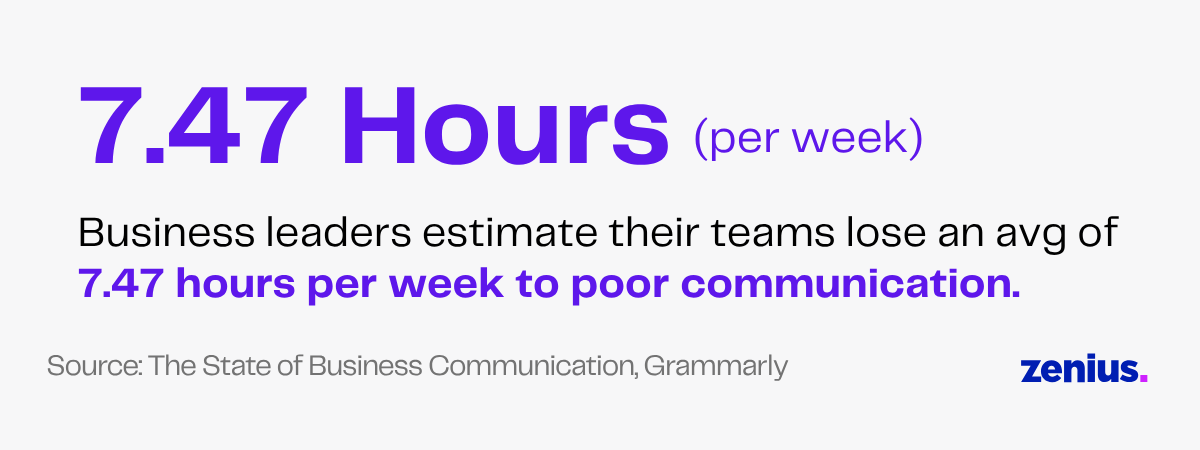
Business leaders estimate their teams lose an average of 7.47 hours per week to poor communication.
Working across time zones, virtual teams collaborate via communication tools, including instant messaging apps, emails and video call software. These communication channels lack non-verbal cues, which makes it difficult for remote employees to make sense of online conversations. This can cause complicated challenges.
Unclear Communication
Misworded messages are open to misinterpretation, leading to misunderstandings. Uncertain phrases and ambiguous technical terms confuse employees and affect team coordination. And without consistent collaboration, virtual teams can’t produce quality results.
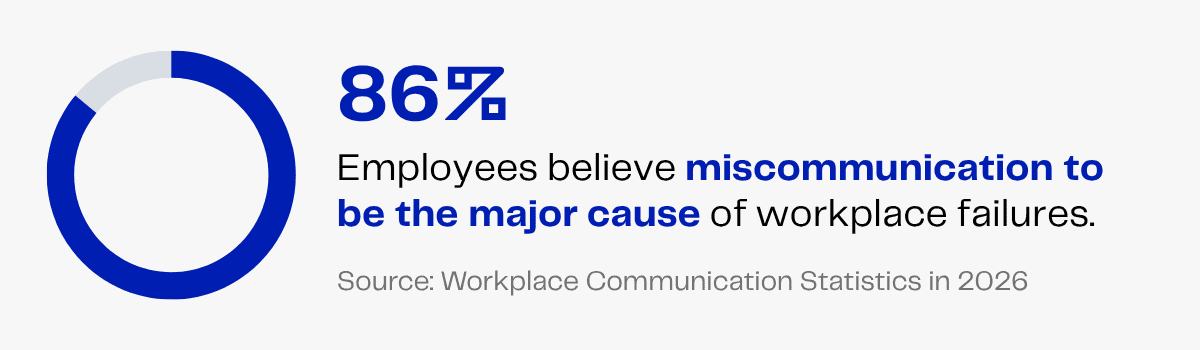
Unclear communication can impact employees from the start. If you don’t convey job expectations clearly, you leave them to their unfavorable assumptions. This creates unnecessary stress for team members. And if you’re the source of stress, they won’t trust you!
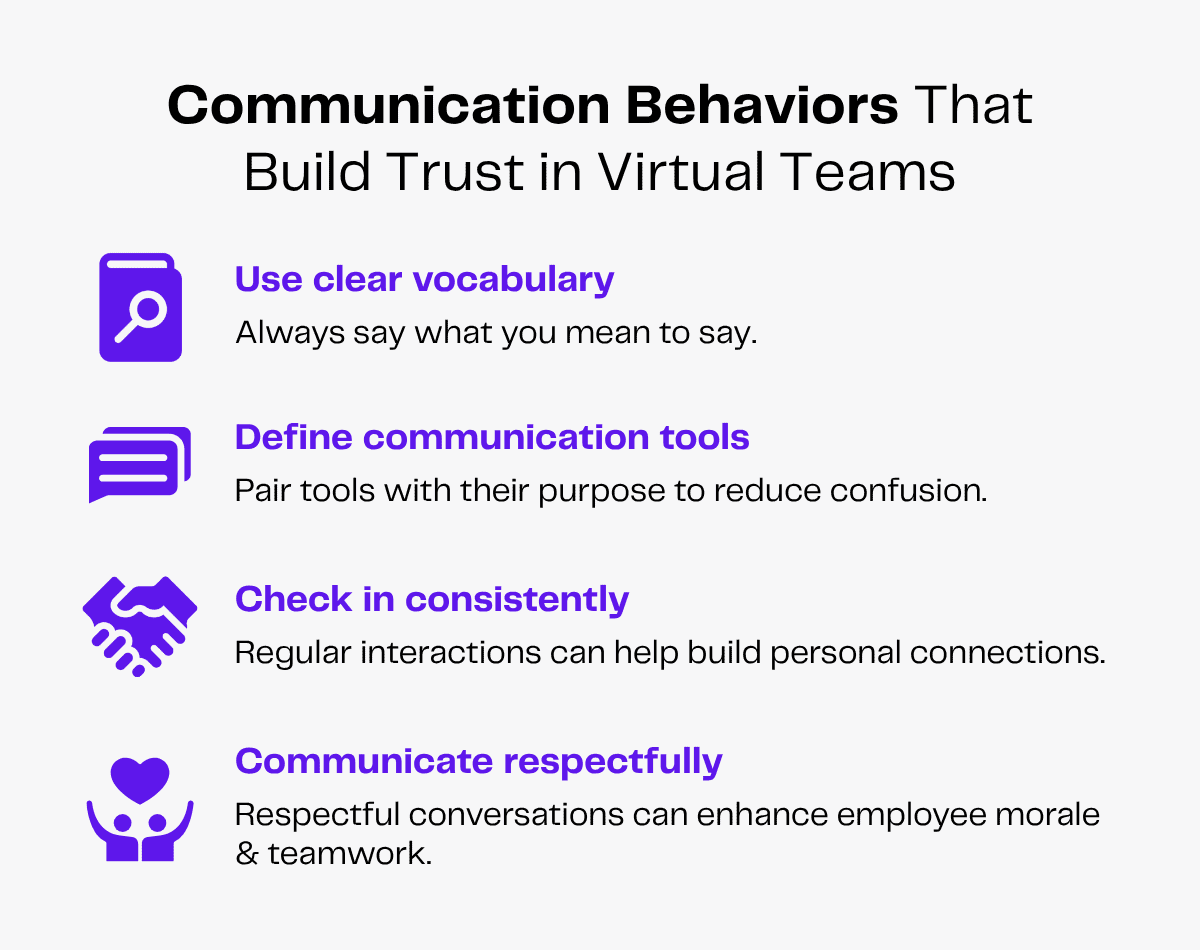
Communicating your expectations, plans and opinions clearly to team members is one of the best ways to build trust in virtual teams. To do this, you can:
- Use clear, concise vocabulary during conversations.
- Remain honest and humble in your messages.
- Avoid making harsh and inappropriate remarks, even if they’re factually accurate.
- Clarify technical terms when using them for the first time to prevent confusion.
- Answer questions with specific details instead of vague reassurances.
You can also designate particular collaboration tools for specific purposes to reduce confusion in virtual teams. The resulting clarity can improve response time while ensuring critical messages aren’t overlooked.
For instance, you can select:
- Emails for documentation and leave applications.
- Team messaging platforms (Slack, Zoho Cliq) for project-related communication.
- Zoom and MS Teams for virtual team meetings.
But clarity is only one side of the communication coin. What’s the other? Consistency!
Inconsistent Communication
Inconsistent communication can hurt employee morale. If you don’t respond to virtual team members within a reasonable period, they feel isolated, unsupported and unheard. This disregarding behavior can damage interpersonal connections in virtual teams.
Excessive, repetitive conversations create further complications. Your team members might feel overwhelmed if you constantly share extensive information without giving them time to process it. This also leads to constant context-switching, which affects your team’s workflow.
You can build trust in virtual teams through regular, respectful conversations. Informal interactions and personalized messaging can help you develop personal connections with virtual team members. You should also avoid yelling and swearing during conversations.
Challenge #2: Social Problems
Virtual work limits social interactions, such as water cooler conversations and team events. Without spending time with you, your employees don’t get to understand your personality. And people often fear and distrust what they can’t understand.
Employees working from home might be facing problems or issues affecting their performance that you’re unaware of. An absence of informal interaction restricts you from learning about their mental state. And you can’t build trust if you’re unfamiliar with them.
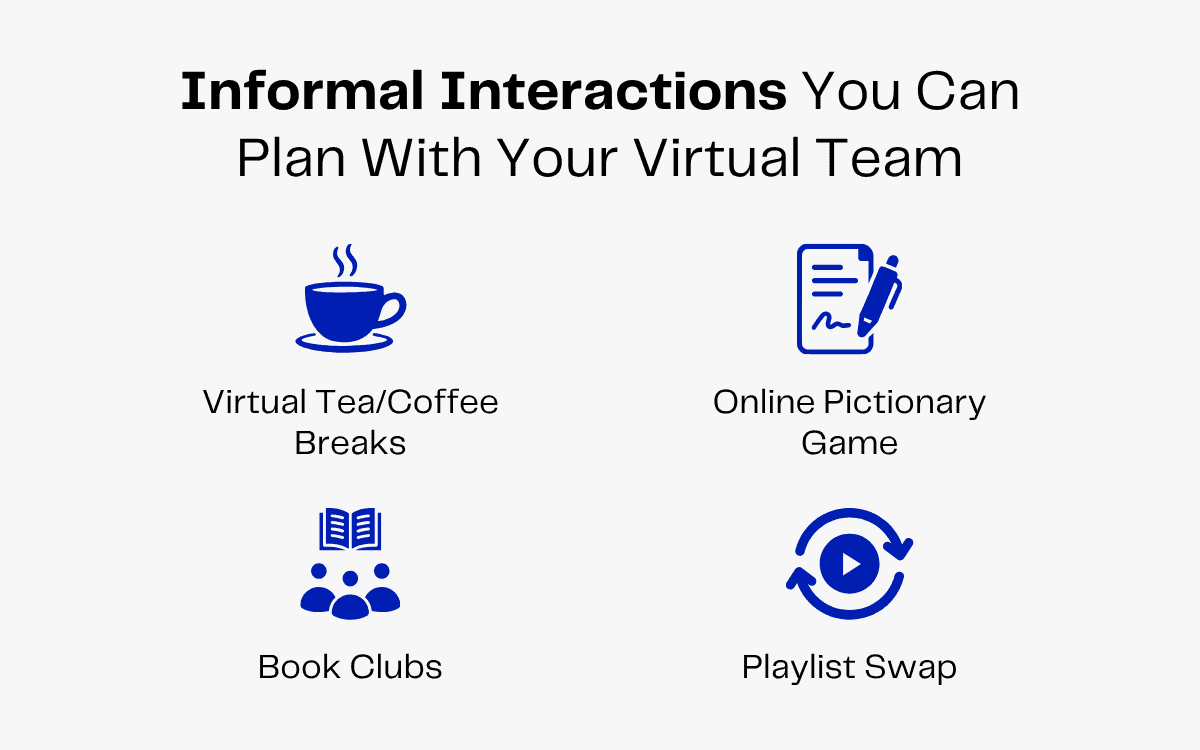
Plan More Informal Interactions
You can have regular informal interactions with virtual team members to help them feel comfortable and heard. You can also schedule informal team meetings or plan virtual team-building experiences to enhance team cohesion.
During informal meetings, you can use suitable greetings, appropriate emojis and funny ice breakers to start engaging conversations. By encouraging social interactions, you can motivate virtual team members to learn from each other, fostering a strong team spirit.
Some employees prefer to avoid team interactions. Instead of pressuring them to contribute, you should allow them to build their courage and enthusiasm for team meetings at their own pace.
Challenge #3: Transparency Issues
Virtual work lacks visibility, which reduces transparency. A lack of transparency leads to suspicion. You’re less likely to trust people if you can’t observe their behavior. You’re more likely to judge them based on their output than their efforts.
While you must facilitate work progress, you shouldn’t do so at the expense of employee enthusiasm. Unverified suspicions can influence decision-making and you might end up making false accusations. This can negatively affect team spirit.
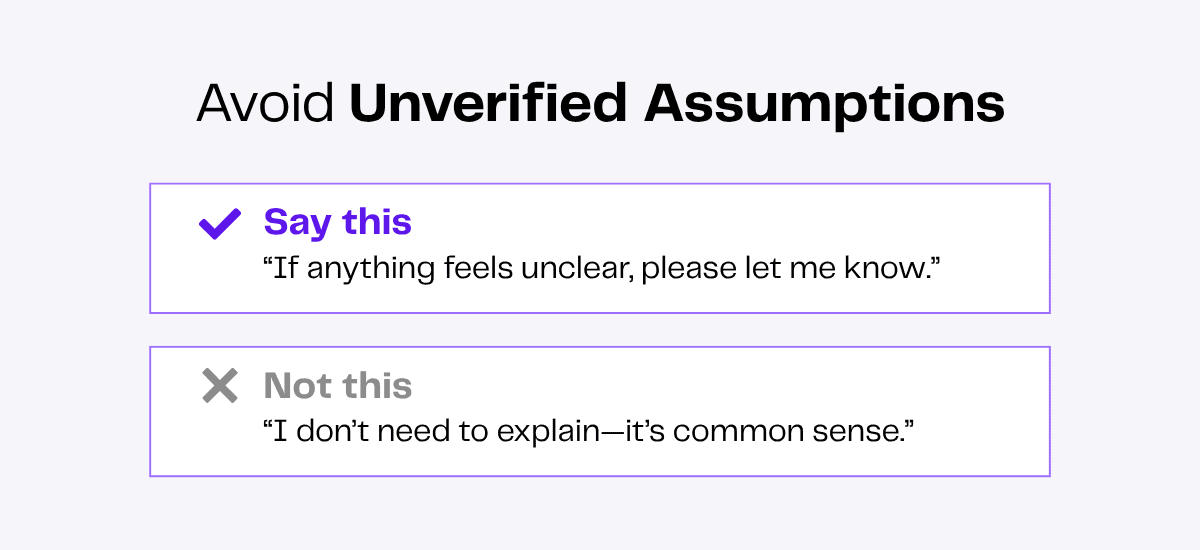
Avoid Unverified Assumptions
Avoid quick judgment based on unverified suspicions. Instead, prioritize work transparency by respectfully addressing your concerns to team members. One way to encourage honesty is by creating a team charter and allowing them to discuss their work progress via weekly updates.
You can also use monitoring software to track employees’ performance and progress. This will help enhance work transparency. But instead of using monitoring data to criticize employees, you should examine their problems and help them break poor performance patterns.
Challenge #4: Accountability Concerns
There are times when you have to hold your team accountable for their poor performance. Your approach at this critical moment can shape your team’s mentality for future issues.
If you set a precedent for accusation instead of accountability, your team members might feel disrespected and demotivated. They might even copy your behavior and blame others for inefficient work. This blame game can ignite a chain reaction, causing trust crises.
Set Explicit Expectations
You must establish clear job expectations with candidates during recruitment interviews. Inform them about your preferred delivery timelines, monthly targets and other key performance indicators. You can also promise them potential rewards for improved team performance, such as promotions and pay raises.
After onboarding virtual team members, ensure their workload isn’t overwhelming.
Challenge #5: Psychological Challenges
Overworking or mistreating employees can increase the turnover rate and lead to burnout.
If you focus solely on work requirements and performance improvement, employees may feel unrecognized as human beings. By treating them as task-performing machines, you risk diminishing their dignity.
Promote Psychological Safety
You can help your team members connect to their work by reassuring them that their input matters to the company. You can also collect employee feedback to identify and resolve common issues affecting them.
Treat your employees like they make a difference, and they will, says Dax Bamania, Entrepreneur.
You can also promote psychological safety in virtual teams to boost employee confidence and mental health. This process involves cross-cultural trust building, where people aren’t shamed or punished for their mistakes. Instead, they feel safe taking individual risks in team environments.
In a psychologically safe environment, virtual team members express ideas freely, admit their mistakes openly and collaborate effectively. This can also boost employee enthusiasm and loyalty.
Challenge #6: Employee Engagement Issues
A unilateral flow of communication that doesn’t include team members in the decision-making process can affect engagement. If you don’t invite questions and feedback from team members, you risk alienating people. This isolation also affects team cohesion.
It’s crucial to listen to your team’s concerns. If you allow team members to communicate but completely ignore their opinions, you won’t gain their respect. And they’ll distance themselves from you, creating a distrustful working environment.
Practice Active Listening
You can host team-building activities to enhance trust and employee engagement in virtual teams. This involves actively listening and responding to their queries, suggestions and concerns. This develops strong teamwork capabilities while progressing collective objectives.
You can also nurture a growth mindset to enhance employees’ work ethic. This process involves encouraging healthy competition. This way, virtual team members can learn from one another and improve their skills within a competitive yet wholesome workspace.
Challenge #7: Cultural Conflicts in Virtual Teams
Global virtual teams contain members from multiple countries. International employees speak foreign languages and hold varied cultural beliefs. This diversity can create conflicts, especially when team members with opposing views engage in heated discussions.
And if you’re responsible for de-escalating disputes, you must never disrespect people during conflict resolution. Your unchecked comments can hurt your team members and affect employee well-being.
Instead of creating a safe space for quality interactions, you will end up constructing boundaries that limit collective engagements.
Respect Individuals’ Beliefs
Use empathetic language and a calm voice to de-escalate cultural disputes. Avoid embarrassing and punishing employees in group calls. Instead, discuss sensitive issues in private, one-on-one meetings with all parties involved to find an amicable solution.
You can also plan diversity training for employees to create an inclusive work environment. Additionally, always respect their privacy during holidays, religious or otherwise. This will help minimize conflicts in virtual teams and enhance work-life balance.
You can also prevent cultural quarrels by practicing inclusive values. This means providing equal opportunity to each candidate and actively mitigating biases, ensuring you never have to worry about internal conflicts.
Cultivating Team Trust in 2026
Cultivating trust in your virtual teams is not the same as it used to be. As async teams become more popular, casual conversations and quick meetings aren’t enough to build trust with remote team members.
In 2026, trust indicators aren’t enough. Employees want concrete channels, so businesses need to strengthen trust brokers through AI-driven transparency.
While AI tools can hold clear records of work, neutral parties assigned to create a safe environment can bring empathy. Having a two-fold trust structure can build a foundation of accountability and visibility that records micro-actions and nurtures trust.
Plus, it can help leaders and employees connect to gamified rituals like “Nobel failure” celebrations or “Team hype” songs or sayings that have a positive correlation with trust building.
Final Thoughts
Building professional and personal connections can be challenging in virtual teams due to cultural, social, psychological and other factors. But building trust in virtual teams is not impossible.
You can foster strong interpersonal connections by respecting boundaries, encouraging learning efforts, nurturing psychological safety and enhancing employee engagement.
This, paired with the right leadership style, will reduce employee churn by creating a workplace that aligns the company’s values with those of the team.