Key Takeaways
65% of employees in companies that value coaching show high engagement.
Leadership coaching is one of the most popular types of coaching, with 72% of organizations investing in it.
With 75% of coaching sessions taking place virtually, coaching remote teams has become easier.
Due to the lack of face-to-face interactions, remote employees often struggle to communicate with one another. Feelings of loneliness and isolation also plague many of them, hindering overall productivity.
To battle these, you need to intervene and start coaching virtual teams.
Managers or virtual coaches can offer guidance about goal setting, team building and communication, helping teammates collaborate more effectively. This helps teams become productive, motivated and efficient at work.
Let’s get into how virtual team coaching can transform your workplace.
What Is Virtual Team Coaching?
International Coaching Federation (ICF), a global coaching organization, defines coaching as
Partnering with clients in a thought-provoking and creative process that inspires them to maximize their personal and professional potential.
In simpler terms, coaching enhances skills, develops workplace relationships and improves team performance through personalized intervention.
Coaching can be easily mistaken for mentoring or training.
It’s important to know the difference between the three. Here’s a comprehensive table to help you understand their distinctive features.
| Feature | Coaching | Mentoring | Training |
|---|---|---|---|
| Goal | Enhancing skills and performance through personal and professional growth. | Supporting and guiding junior employees in their roles at work. | Imparting knowledge and skills through structured programs. |
| Approach | Goal-oriented | Relationship-oriented | Structured knowledge transfer |
| Type of Relationship | Collaborative | Advisory | Informational |
| Communication style | Non-directive | Both directive and non-directive | Directive |
| Duration | Ongoing process | Often lasts several years | A few hours to weeks |
Coaching isn’t a one-time event, but an ongoing process. Typically, coaching sessions take place at regular intervals over a few months.
Virtual teams can use digital tools and online platforms to connect with a virtual coach.
There are different types of workplace coaching, such as executive coaching, performance coaching, team coaching and peer coaching.
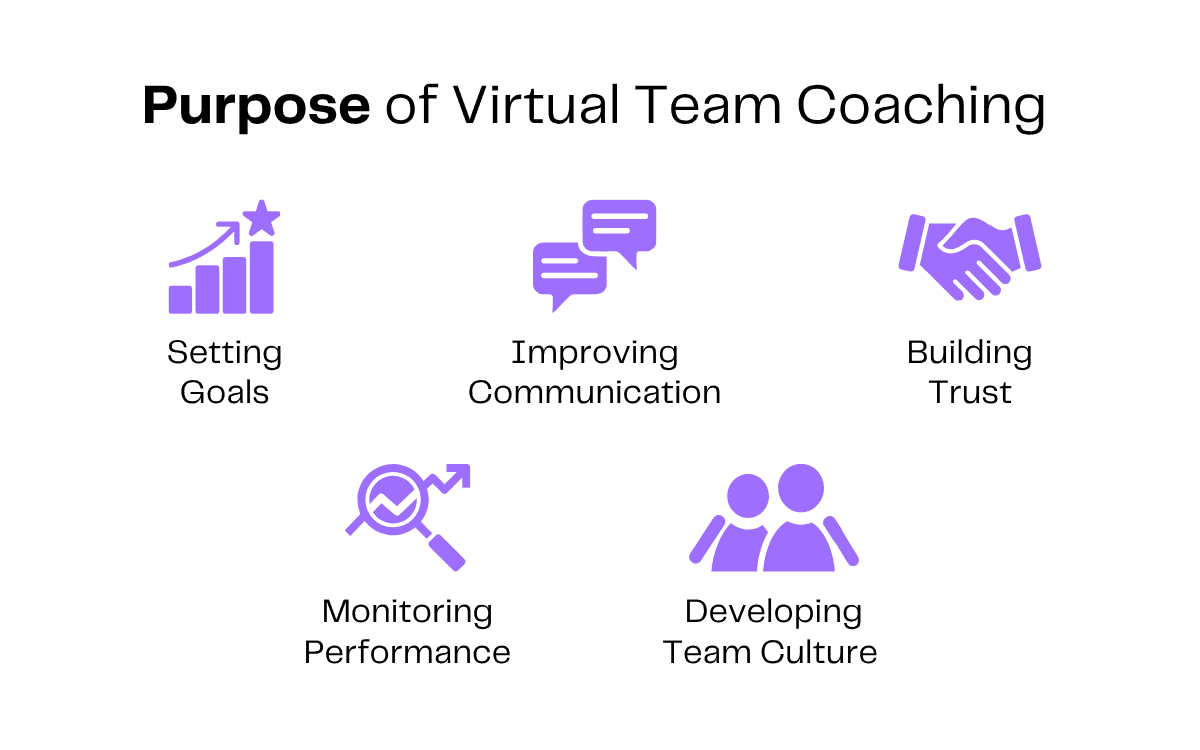
Purpose of Virtual Team Coaching
The ultimate aim of virtual team coaching sessions is to enhance team performance.
Factors like communication, collaboration and trust lay the groundwork to help achieve this goal. Let’s break them down.
Improving Communication
Effective communication is essential for working in a virtual team.
But in remote setups, the lack of face-to-face interactions makes this challenging. Online collaboration tools, communication channels and project management tools can help team members stay connected.
Coaches can also define communication protocols that suit the team. They create a space for teams to discuss their preferences and agree on response time expectations, virtual meeting etiquette and frequency of feedback.
Moreover, coaches guide teams in improving coordination and building a workplace culture of accountability.
This allows them to make better decisions, achieve goals faster and collaborate across time zones.
Building Trust
Mutual trust allows team members to rely on one another. But in remote teams, where interactions and bonding opportunities are limited, building trust can be a challenge.
Coaches help develop psychological safety in virtual teams by encouraging transparent feedback, setting clear expectations and promoting healthy communication practices.
They also host regular check-ins, one-on-one interactions and virtual team-building activities, giving teams more opportunities to connect.
When teammates engage in open discussions, they begin to understand one another better and gain confidence in each other’s abilities.
Building trust not only strengthens connections but also boosts employee loyalty and improves retention in the long term.
Setting Goals
Common goals bind virtual teams together, even when they’re divided by location.
By setting short-term goals, you can direct your team toward fulfilling larger organizational objectives.
Virtual coaches can help you define clear, measurable goals using the SMART method. This rule suggests that goals should be:
- Specific
- Measurable
- Achievable
- Relevant
- Time-bound
They also guide teammates on how to prioritize tasks and collaborate effectively to get the desired outcome. A structured approach helps your team progress without overwhelming them.
Monitoring Performance
Team leaders often worry that remote employees aren’t being productive.
It’s a reasonable concern since your team isn’t within sight. To compensate for the lack of visibility, many take the micromanagement route.
However, micromanaging is counterproductive. It’s time-consuming, demoralizing and sets an authoritarian undertone at work.
Think of when you were a newbie and were assigned a senior peer. Whether it was a new initiative or a task early in your career, didn’t you wish someone would coach you instead of micromanaging you?
That’s what virtual coaches can help you do.
They present ways to monitor performance in healthier, more effective ways, such as by establishing clear KPIs and feedback loops. This helps you build a positive virtual environment.
When employees feel trusted and involved, they’re motivated to work harder and improve on their own.
Instead of controlling your team’s every move, focus on reviewing their performance, offering constructive feedback and creating a roadmap for success with short-term goals.
A case study by Jacobs Consulting & Executive Coaching details how a company executive’s authoritative leadership style led to hostile work environments and frequent employee turnover.
However, after 4 months of leadership coaching, the executive’s approach drastically improved, resulting in higher team engagement and a striking 100% retention.
Fostering a Positive Team Culture
It’s a common misconception that organizational culture only matters in offices.
Some believe remote teams don’t need team culture, while others find it hard to build one virtually. But without a sense of belonging, virtual team members may struggle to stay engaged and motivated.
At Zenius, we’ve found virtual team coaching to be especially helpful with team building.
Our remote teams have established unique rituals that help them stay positive and communicative even during high-stress seasons.
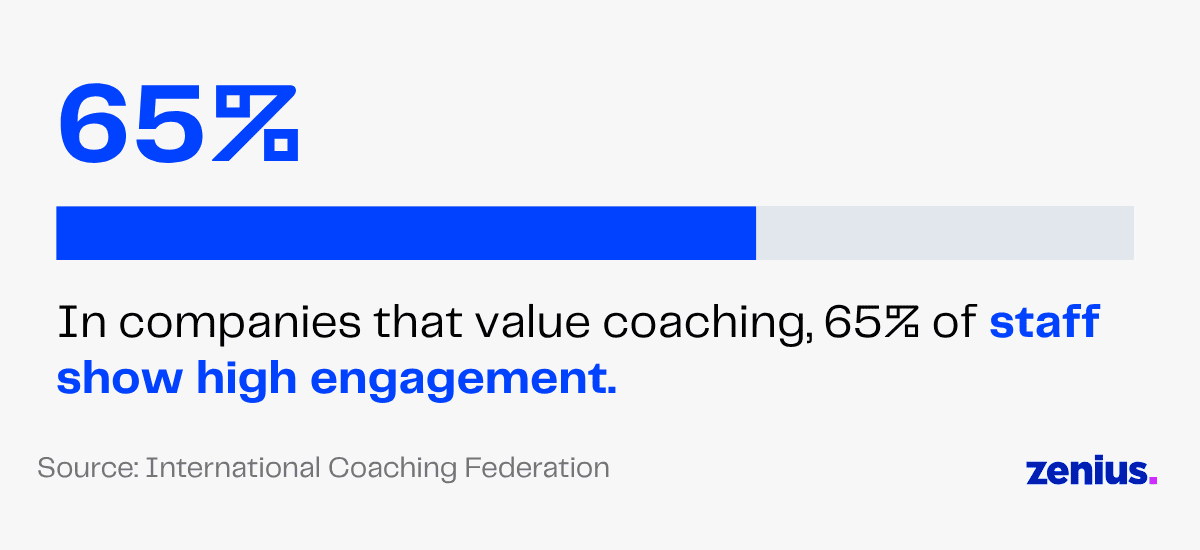
Research also shows that 65% of employees in companies that value coaching show high engagement.
Virtual coaches guide teammates to bond through efforts like exchanging daily pleasantries, appreciating each other for small wins, having non-work-related chats and organizing virtual game nights.
These initiatives create a positive, cohesive team culture, where employees feel valued, connected and more driven to do their best work.
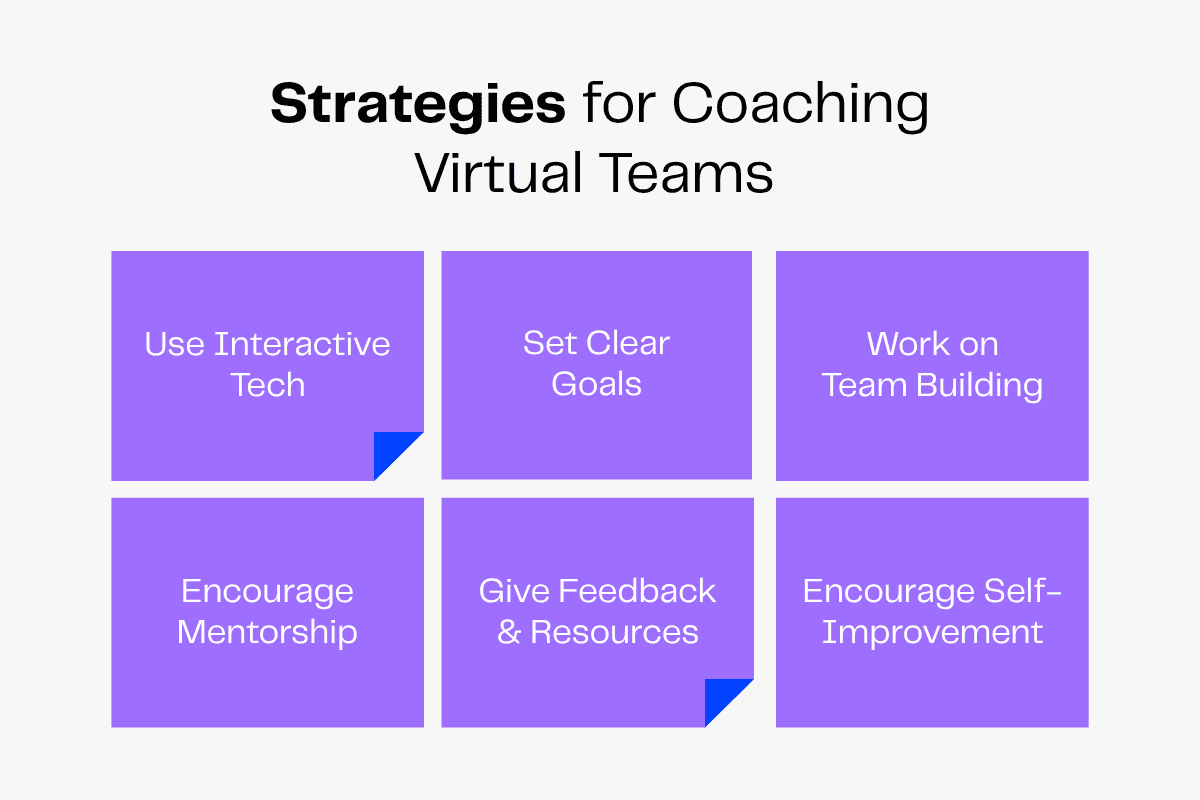
Best Strategies To Coach Your Virtual Team
Since coaching virtual teams is a continuous process, you need to create a long-term plan, take a systematic approach and track progress.
Let’s discuss the best strategies to coach your virtual team at a comfortable pace.
Use Interactive Technology
Interactive technology is less of a choice and more of a necessity in virtual teams.
It garners interest, retains attention and helps transfer information easily. It also provides more opportunities for team bonding.
Online polls, icebreakers, group discussions, trivia games and quizzes are some ways to connect with virtual employees. You can gauge your team’s engagement through these activities.
When explaining concepts, try visual media like videos, flowcharts and infographics. They’re more likely to catch attention than blocks of text.
Pre-recorded learning modules can also help. Team members will be able to go through the material at their own pace instead of feeling pressured to absorb all the information at once.
Here are some accessible interactive platforms to consider while coaching your virtual team:
- Text messaging platforms: Google Chat, Slack, Microsoft Teams.
- Video conference platforms: Google Meet, Zoom, Microsoft Teams.
- Virtual Whiteboard: Miro, Mural, Stormboard, Ziteboard.
- Learning Management Systems (LMS): 360Learning, Moodle, TalentLMS.
- Immersive technologies: Virtual Reality (VR), Mixed Reality (MR), Augmented Reality (AR).
Read more: Best Virtual Whiteboard Tools for Remote Teams
Set Expectations, Protocols & Goals
Before you start coaching your virtual team, explain its importance. A two-way conversation with the team can clarify purpose and expectations.
Answer questions like: What is the aim of virtual coaching? How will it help the team? What is to be expected from coaching sessions? What will the process be like?
Give your employees space to voice any concerns and make sure to clear all doubts.
Next comes the protocols. This means establishing a schedule, communication channel, medium of coaching and general ground rules. Involving the team in this discussion is necessary for transparency and alignment.
Setting up short-term goals for coaching is the final step.
Small targets break down your long-term vision into manageable steps, making it more achievable and helping you track progress.
Prepare a Useful Resource Bank
An effective coaching strategy includes curating a resource bank.
As a coach, you need to compile practical guides, articles and digital tools that can be helpful for the team. You should also ensure that resources are up to date, relevant and informative.
A comprehensive resource bank enables continuous learning and encourages team members to grow on their own.
Organized resources are also easier to access and understand, saving your team valuable time.
For best results, customize your resources for your team. Since every team is different, it’s useful to provide solutions to the unique challenges your teammates face.
Work on Team Building
A well-functioning team thrives on mutual understanding and a sense of purpose.
Virtual coaches should organize interactive workshops, brainstorming sessions and team-building activities to nurture collaboration and trust. Remember that these activities must be fun and engaging to be effective.
They allow teammates to get to know each other and emphasize the value of open communication and connection. Such activities also often reveal hidden skills.
As a team leader, it’s important to be aware of your teammates’ capabilities.
Let’s say you want to assign responsibilities within a team. Knowing each team member’s strengths and weaknesses will help you distribute duties more effectively.
Virtual team coaching sessions also lay the foundation for inclusion and positivity by creating a safe space for team members to bond.
Encourage Mentor-Mentee Relationships
Along with coaching, you can also encourage mentor-mentee relationships in your virtual team.
Mentoring is different from coaching. While coaching adopts a non-directive approach, mentoring is often more instructive. It involves a more experienced employee (mentor) guiding and supporting a less experienced employee (mentee) in their work.
Mentors walk mentees through role expectations, daily responsibilities and necessary skills. They also offer career advice and personal support.
Mentor-mentee relationships can strengthen interpersonal relationships within your team.
It also creates a supportive network, making it easier for new employees to ease into your company.
Provide Feedback
Constructive feedback is an essential part of coaching virtual teams.
Coaches should host one-on-one feedback sessions or team discussions to offer practical advice.
But remember that feedback is a two-way street. While coaches should provide guidance and support, the team should also be able to express if something is troubling them.
These interactions create space to analyze problems and come up with solutions as a group. They bring out varied perspectives, encourage accountability among teammates and empower employees by making them feel heard.
Through open conversation, coaches and teams can reach mutual agreements, whether it’s for a new remote work schedule or a different communication channel.
Give Space for Self-Improvement
Team development is the ultimate goal of virtual team coaching sessions.
But without improvements on an individual level, the team as a whole can’t flourish. While collaboration and team dynamics influence outcomes, personal effort is what shapes growth.
Aside from fostering coordination, encourage employees to pursue personal development.
Coaching facilitates learning and development, engagement, and internal commitment. Employees become more independent, more self-managing, because as they learn to do better, they take more initiative, with better judgment and better skills.
Mark Cannon, Professor, Vanderbilt University
Create an open, judgment-free zone that supports learning and experimentation, where employees can make mistakes without fear.
It’s also important to give teammates space for self-reflection so they can take actionable steps to improve on their own.
Most importantly, remember to recognize and appreciate your employees for their growth. Even a few kind words can boost your team’s morale and confidence.
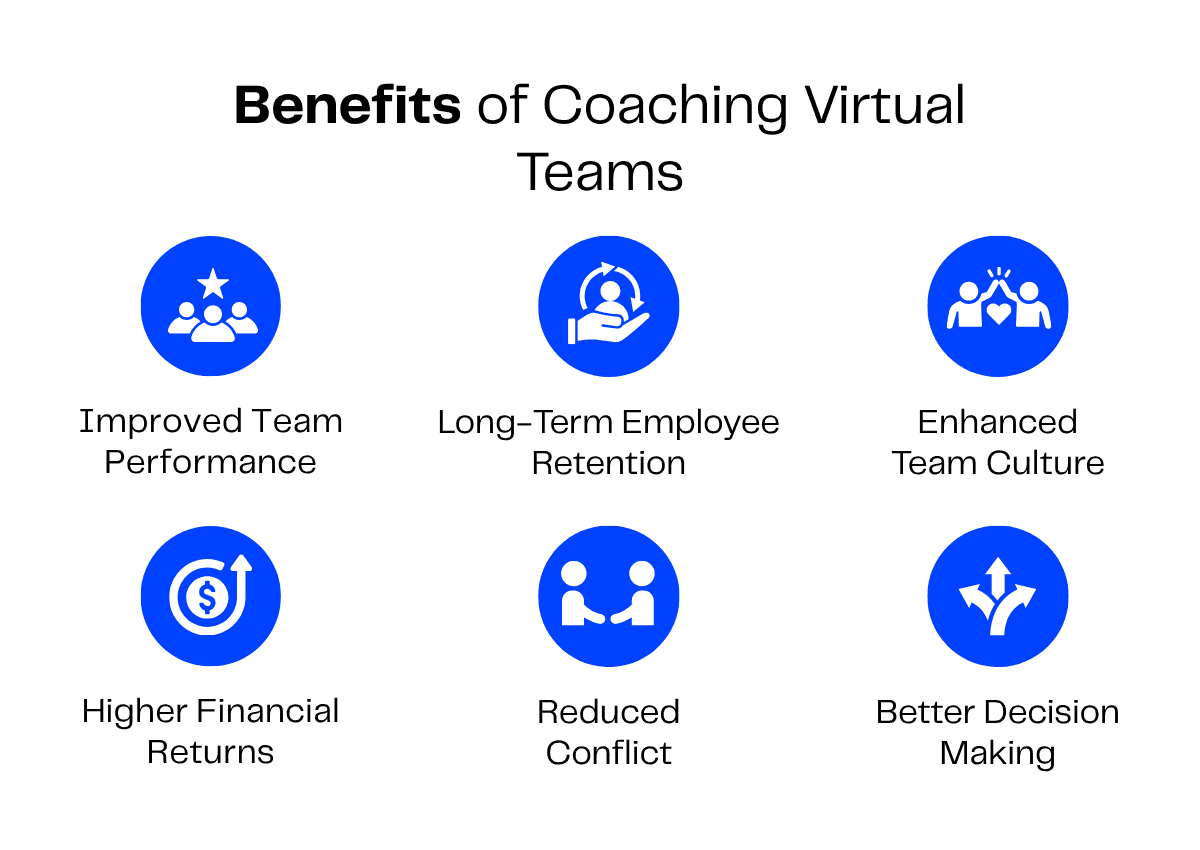
Benefits of Coaching Virtual Teams
Employees in remote teams face several challenges at work.
Working individually is manageable because they don’t have to depend on anyone else, but virtual teams are a whole different story.
In a team, each employee plays a specific role in fulfilling shared objectives, so there’s a need to communicate and collaborate.
However, communication is one of the biggest challenges in virtual teams.
Remote interactions are possible only through text messages and video calls. Messages lack the additional context provided by tone, gestures or facial expressions. While video calls are better, technical issues can still get in the way.
Additionally, a lack of team culture and connection can affect collaboration.
Coaching virtual teams can help with all these struggles! Let’s explore how.
Improved Team Performance
Virtual coaching helps streamline workflows and enhance productivity, leading to stronger team performance.
Regular coaching sessions give team members a chance to set clear expectations and KPIs, assign roles, define information flows and establish communication protocols.
This keeps teammates on the same page, enabling them to work more efficiently with fewer misunderstandings.
Coaches also guide team members in improving communication and collaboration, ensuring better coordination and higher-quality output.
Plus, they encourage self-improvement, which boosts overall team success.
Better Decision Making
Coaches encourage virtual teams to engage in open, structured group discussions.
Teammates can share different perspectives, identify areas of improvement and clarify goals to avoid confusion.
Such conversations help teams weigh pros and cons before making decisions, preventing rushed or ill-informed choices.
Coaches also guide virtual teams in navigating differences of opinion tactfully.
They ensure every voice is heard and everyone takes accountability for their actions, fostering an effective and collaborative decision-making process.
Enhanced Team Culture
Coaching virtual teams provides a positive and inclusive space for bonding outside of work.
Group meetings, virtual team-building activities and open discussions bring employees together.
Unlike one-on-one coaching sessions, team coaching is a collaborative effort.
It gives employees a chance to connect while acquiring knowledge and skills at the same time. Team members get to know each other, build trust and develop a sense of community.
It also provides a creative space where teams can brainstorm innovative ideas. Overall, this provides an opportunity similar to conversations during coffee breaks at office jobs.
Reduced Conflict
Virtual employees come from different parts of the world. They have unique cultures, communication styles and remote work schedules.
These differences can often lead to clashes.
Team members may struggle to adjust to each other’s time zones. Language barriers can also make communication challenging, creating divides in the team.
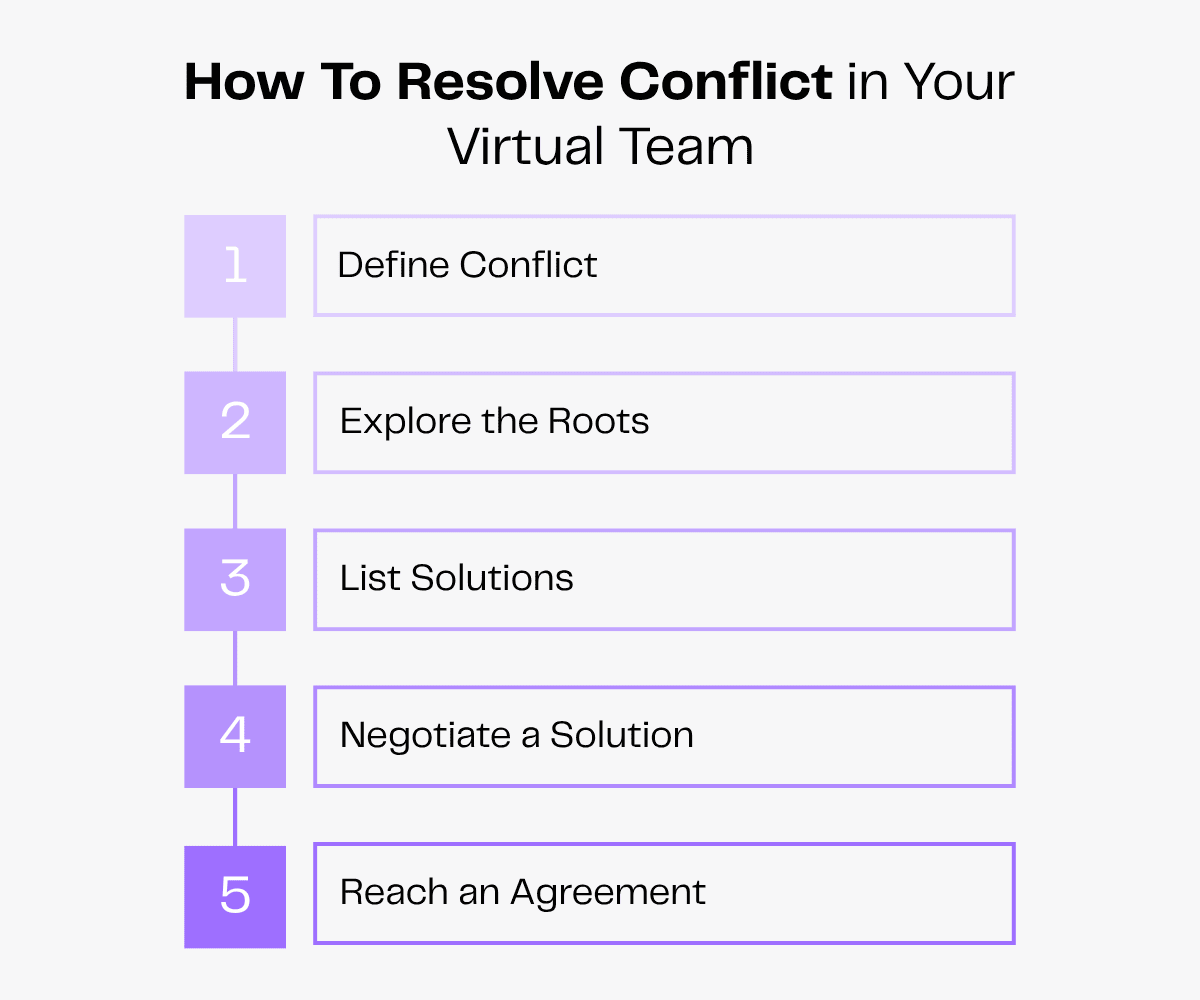
Coaching virtual teams helps you navigate such differences and resolve conflicts before they escalate.
Virtual coaches guide teams in understanding each other’s diverse communication styles and work patterns.
They can also provide cross-cultural sensitivity training to nurture empathy and mutual respect.
With effective coaching, you can minimize friction and maintain a harmonious virtual environment.
Long-Term Employee Retention
The lack of daily social interactions often makes remote workers feel isolated.
Virtual coaching can alleviate this feeling by bringing teams together and creating a supportive virtual environment. Participating in self-development and team-bonding activities makes employees feel more connected, fulfilled and valued.
Coaches also improve collaboration, helping teams work more effectively together and deliver better results.
These positive outcomes act as motivators that keep employees engaged.
What’s more, coaching encourages continuous learning, which keeps teams inspired.
When employees find ongoing support and opportunities for growth, they’re more likely to stay loyal to your company.
Higher Financial Returns
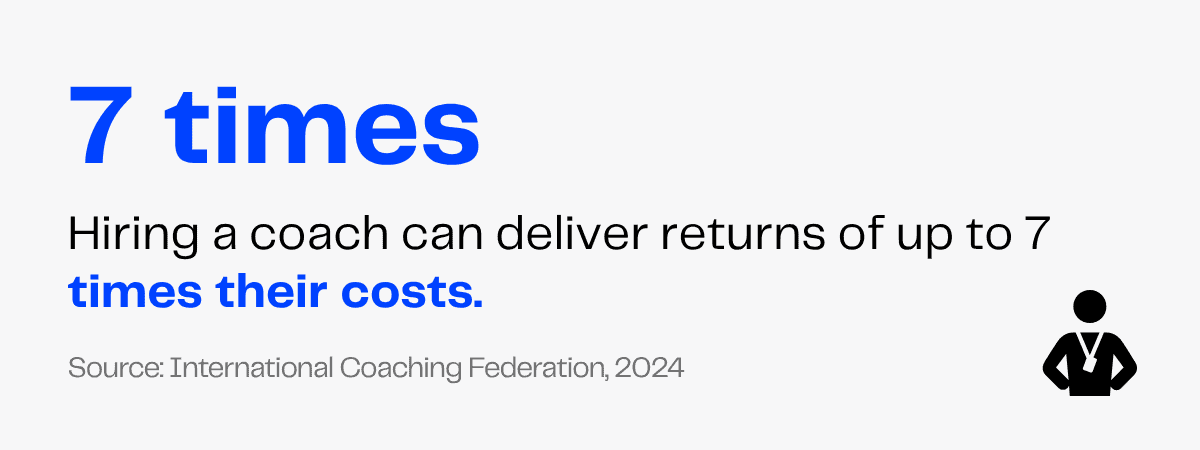
Virtual coaching is a smart investment that offers long-term value. Businesses can see an ROI of 7 times from hiring a coach.
Coaches work with your team to improve collaboration and communication, helping employees perform better.
With their support, your team can streamline workflows, avoid conflict and increase productivity—saving your business time and money.
Coaching is also proven to boost employee engagement. Since engaged employees tend to stick around longer, you can improve retention and reduce turnover costs.
All in all, it’s a sustainable way to keep your team satisfied and productive without denting your budget.
How Is Virtual Coaching Changing in 2026?
Mandatory lockdowns and social isolation during COVID-19 greatly affected employment. Organizations and employees were forced to operate remotely.
Now, even after the pandemic, remote work stands steady.
This shift also opened several new markets, from online collaboration tools and performance management platforms to virtual coaching.
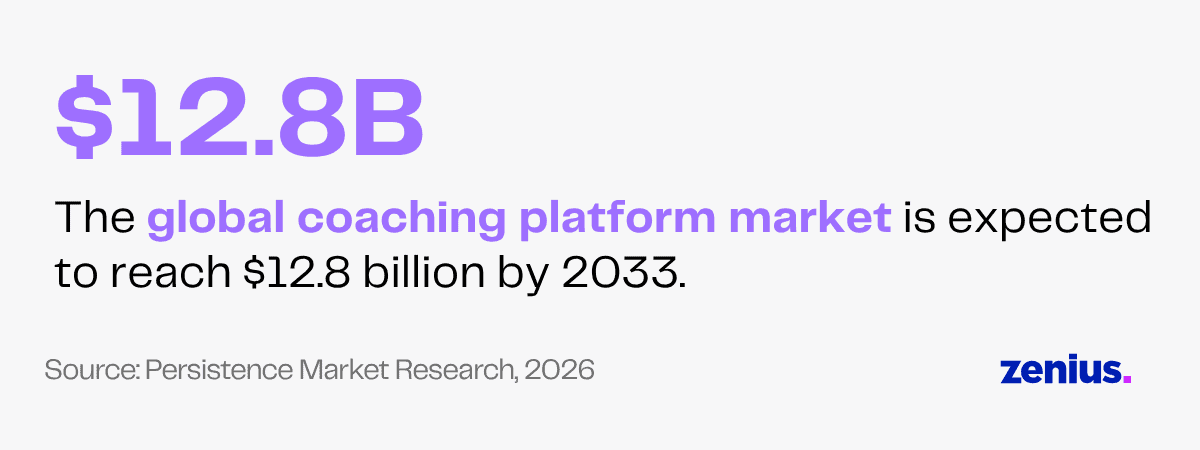
According to Persistence Market Research, the global coaching platform market is growing at a compound annual growth rate (CAGR) of 14.4% from 2026 to 2033.
It’s projected to grow from $5 billion in 2026 to $12.8 billion in 2033.
Companies Prioritize Leadership Coaching
Coaching has become increasingly popular in recent years.
72% of organizations provide coaching to develop leadership skills.
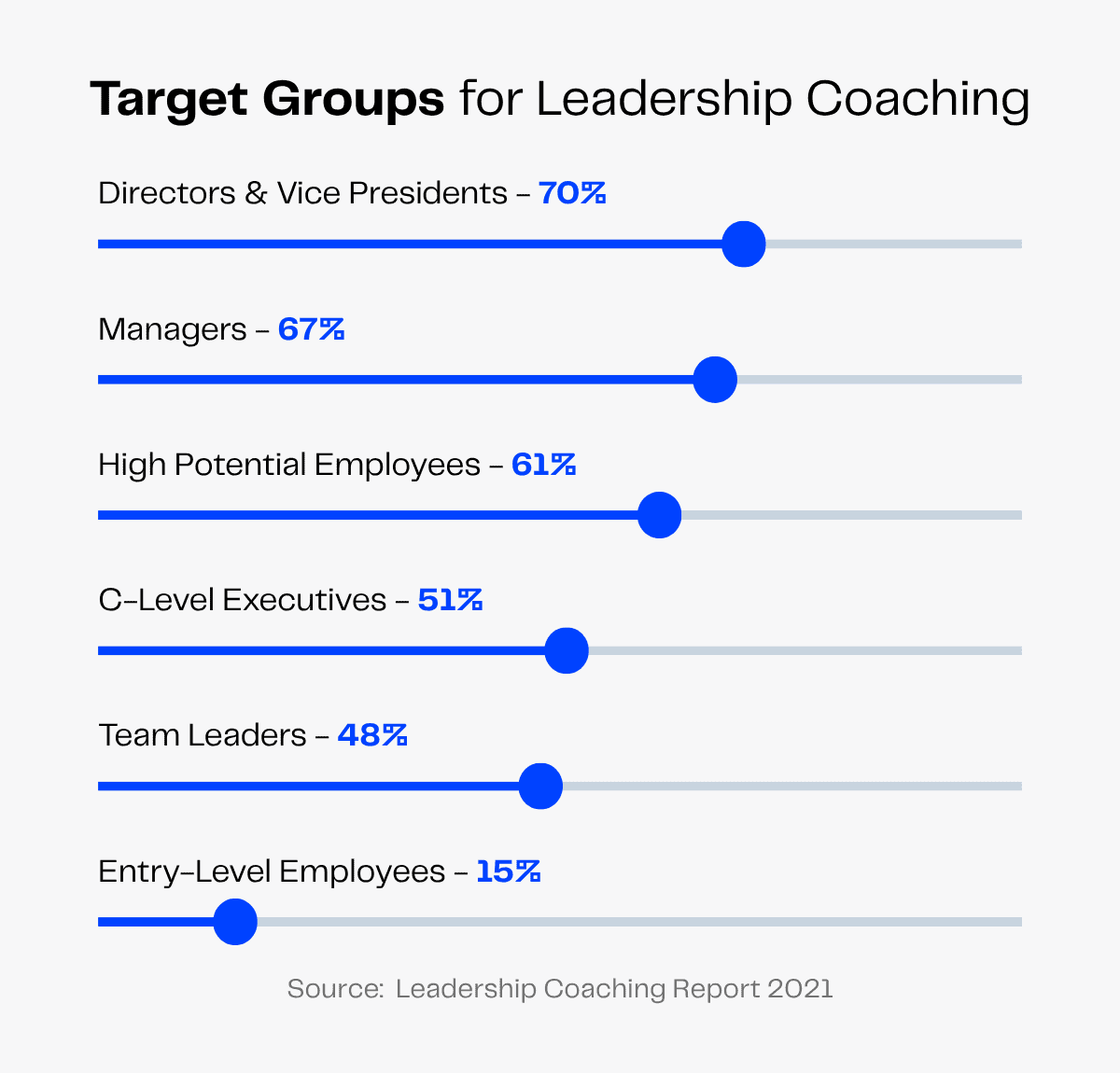
The most common groups for leadership coaching include directors (70%), managers (67%), high-potential employees (61%), C-level executives (51%) and team leaders (48%).
Few companies even coach their entry-level staff.
It’s no surprise that companies are prioritizing coaching! It offers notable benefits for both businesses and employees.
87% of firms say executive coaching has a high ROI.
Plus, when companies can measure the impact of coaching, they tend to invest more money in such programs.
Some metrics to measure the impact of coaching are:
- Employee engagement
- Manager assessments
- 360-degree peer assessments
- Employee retention
Diversity Coaching Becomes a Must for Global Teams
Whether it’s to enhance leadership skills or foster a sense of community among teammates, more and more companies are investing in coaching programs.
The rise of virtual coaching also makes it easier for remote teams to jump on board.
According to International Coaching Solutions, 75% of coaching sessions in 2024 were conducted online.
With common challenges like communication barriers and cultural differences, virtual teams can benefit significantly from coaching.
In fact, 50% of coaches now focus on diversity and inclusion practices to support modern global teams.
Tech giant TCS ran a coaching program for its employees from different backgrounds spread across 46 countries.
The goal was to improve team building and adaptability while fostering a culture that celebrates diverse thinking styles, personalities and behaviors.
To ensure this, TCS began with leadership coaching and added cross-cultural, team, peer and other types of coaching as well.
The results were:
- A 28% increase in demonstrated emotional intelligence
- 67% rise in innovation management
- 20% improvement in building a global inclusive mindset
The company’s Coaching and Cultural Diversity Lead also mentioned that supervisors began to show “greater empathy towards team members—small things like respecting time zones and listening with good intent”.
FAQs
How can I make virtual coaching sessions more engaging?
To make virtual coaching sessions engaging, use interactive tools like Miro and let your team ask questions or share their POV. Retaining attention is difficult online, so don’t let sessions run longer than an hour.
How can I measure the effectiveness of my coaching strategies?
Keep an eye out for behavioral changes like better listening, empathetic communication and increased personal initiative. You can also measure employee engagement and retention rates.
Why is cross-cultural coaching important for virtual teams?
In virtual teams, time zone gaps, cultural differences and mismatched communication styles often cause friction. Cross-cultural coaching helps bridge these divides and prevent unconscious bias, helping diverse teams collaborate effectively.
Wrapping Up
Virtual coaching has become a necessity for high-functioning virtual teams.
From setting goals to fostering inclusion and improving collaboration, coaching helps teams thrive.
With the right strategies, you can transform the limitations of remote work into strengths for your business.
However, building a productive and effective team starts with hiring the right people.
When your workers are motivated, reliable team players from the start, coaching them becomes easier.