
Key Takeaways:
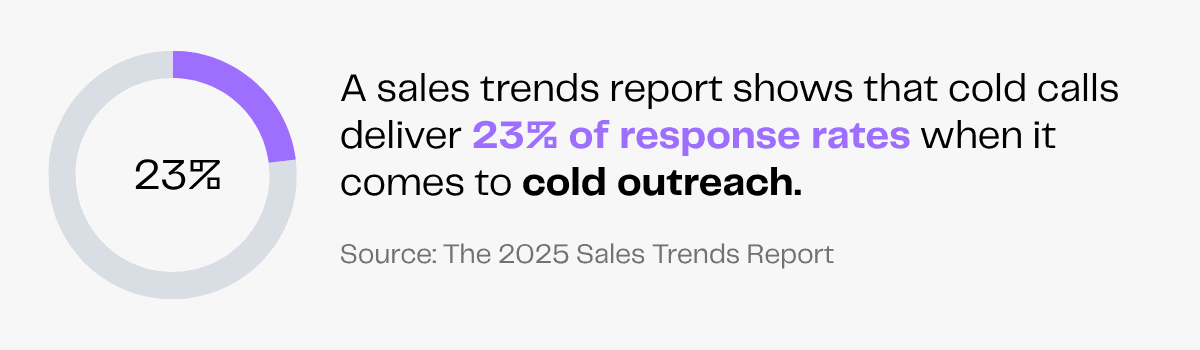
49% of buyers prefer being contacted via phone call and cold calls deliver 23% of response rates when it comes to cold outreach.
On average, real estate businesses need to make 45 calls to close a sale. If you struggle to keep up with daily calling while juggling showings, a VA can step in to handle outreach.
The competition in real estate is growing faster than you can blink. To build a successful business, you need a rock-solid strategy.
But long-term planning is impossible when you’re struggling with your daily to-do list.
While other agents are out there closing deals, you’re on your 25th cold call!
By the end of the day, your voice is a croak, your enthusiasm has hit rock bottom and you can barely manage a “hello,” let alone win a buyer over.
Why not take a pause and let a virtual assistant step in?
Cold calling virtual assistants can research prospects, draft persuasive scripts and make calls on your behalf, helping you convert leads into clients.
What Is a Real Estate Cold Calling Virtual Assistant?
A real estate cold calling virtual assistant is a remote professional who specializes in making cold calls to reach out to leads such as property buyers, sellers and investors.
They speak on your behalf to spark interest in your business and book opportunities.
They handle prospecting calls, follow scripts, qualify leads, update CRM records and schedule appointments, helping agents like you stay focused on closing deals while keeping the pipeline consistently active.
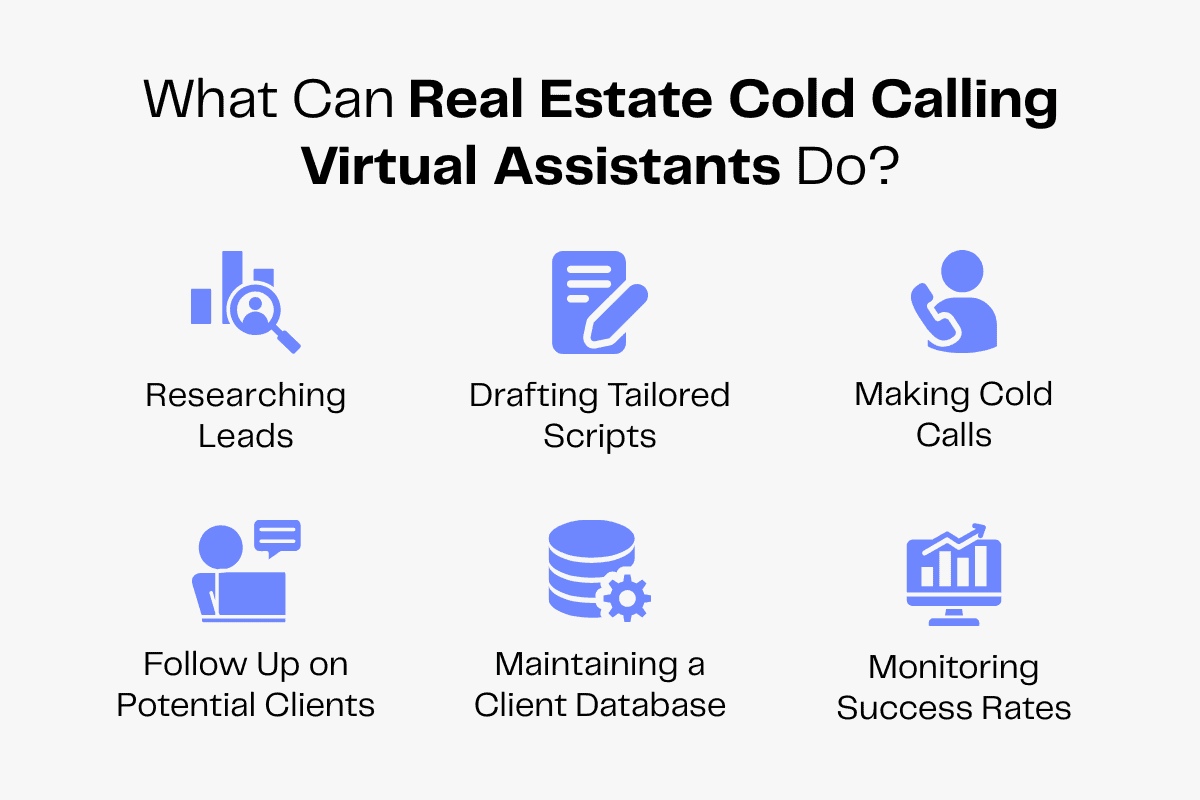
Tasks Real Estate Cold Calling Virtual Assistants Do
The real estate world is always bustling with never-ending calls and paperwork. Generating consistent leads on top of managing current clients quickly gets daunting for realtors.
But you still need to reach out to new clients to keep the lead pipeline flowing and your business growing.
Real estate cold calling VAs can streamline your client acquisition process by taking over routine tasks.
Here’s a breakdown of what they can do for your business.
Researching Leads
Lead qualification is the lifeline of real estate success. That’s how you keep your client pipeline flowing steadily, ensuring business success.
But it only works when you have the right data on your potential customers and the right people to handle data analytics, like virtual assistants.
A real estate cold calling VA’s lead research workflow will include:
- Identifying target market (location, property type, buyer/seller profile).
- Conducting deep research and scouring multiple databases such as CRM systems, listing platforms and social media to source potential buyers, sellers and investors.
- Collecting basic data such as names, phone numbers, email IDs and property details.
- Verifying contact details for accuracy.
- Segment leads and prospects into categories (buyers, sellers, investors, hot/cold leads).
- Curating a list of high-potential prospects for outreach.
This organized workflow helps you find qualified leads who can turn into clients in the future.
Focusing on these leads reduces the time spent on chasing uninterested prospects.
Drafting Tailored Scripts
Crafting the perfect pitch for a cold call is a skill. Relying on generic templates cannot make the impact that a tailored script can.
In fact, 96% of marketers say that personalization drives business growth.
But when you are already juggling several responsibilities, it becomes impossible for you to personalize scripts for each prospect.
Cold calling virtual assistants can take over this task. They tailor scripts based on the type of lead, ensuring conversations are relevant.
For instance, they can shift messaging and value propositions depending on the demographic (first-time buyer vs. investor) or address specific pain points (downsizing or pricing struggles) to guide questions.
Here’s some useful advice:
I find one of the best ways to start a conversation is to share an update.
James Nelson, investment sales broker and real estate investor
Perhaps you just finished a research report on where retail rents are headed in the area or have information related to zoning changes that could impact the owner.
It shows that you’re not just calling to make a quick sale.
Instead, you’re reaching out to inform them, and in doing so, you’re also establishing yourself as an expert.
A meaningful conversation with a well-crafted script helps you persuade leads and expand your real estate network quickly.
Making Cold Calls
On average, real estate agents can make 98 calls per day. Reaching out to potential clients requires a lot of patience and persistence.
Real estate agents often cannot handle the heavy lifting all by themselves.
Outsourcing this task to cold calling virtual assistants can save you time and effort. They dial through your lead list, introduce your services and initiate meaningful conversations with prospective clients.
Your VA will:
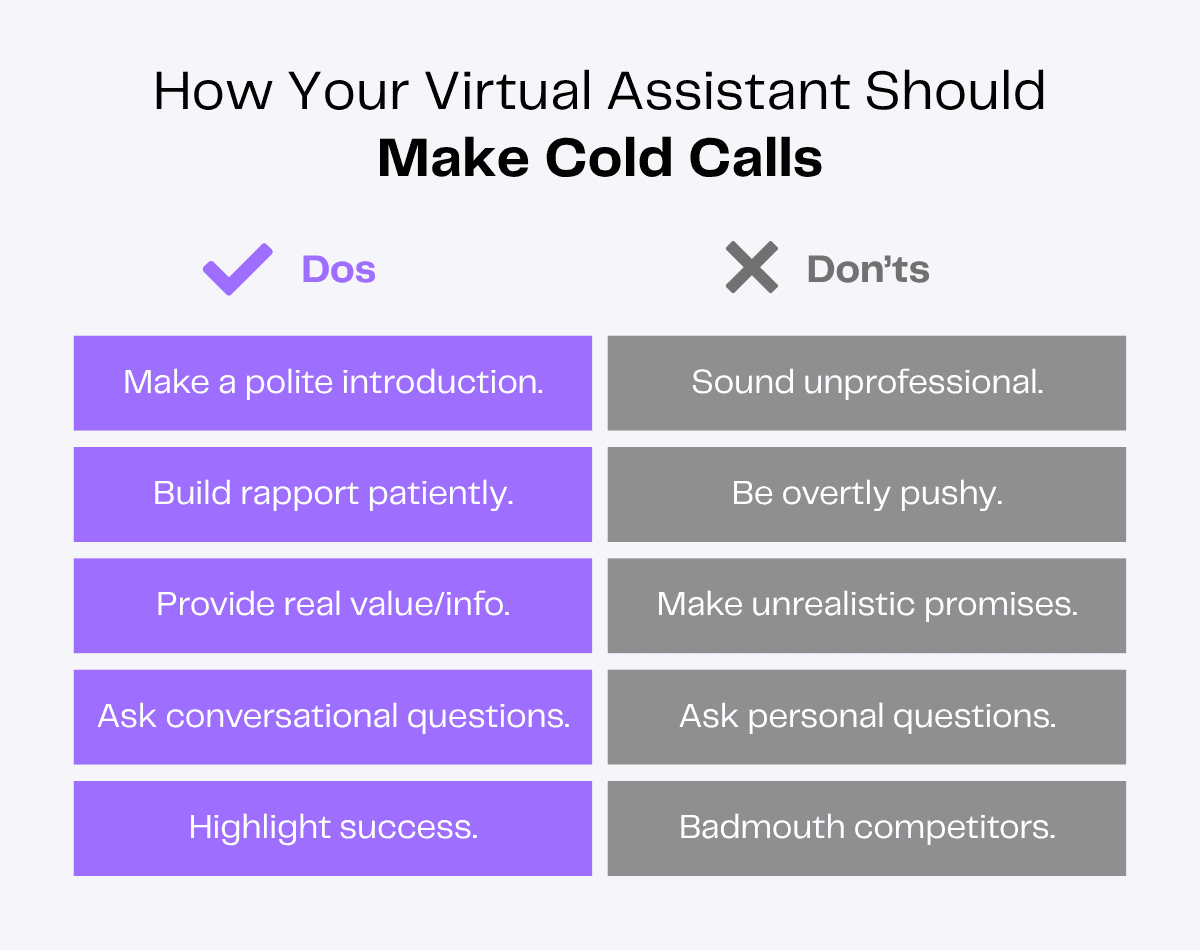
- Start with a courteous and professional introduction.
- Establish a genuine rapport.
- Share helpful, relevant information on your agency’s offers.
- Ask conversational questions to assess prospect needs.
- Highlight firm achievements without badmouthing competitors.
By using a professional tone and tactful language, VAs create a positive impression on your leads, resolve their doubts and persuade them to convert.
Following Up With Potential Clients
The real estate business can give you a fortune, but one has to know the “how.”
The secret is in consistently following up with leads who show curiosity after the initial conversation.
Maintaining momentum is essential to retain their interest and convert them into clients. So cold calling virtual assistants will make note of warm leads by:
- Reconnecting after the initial call.
- Sending multi-channel messages (calls, messages, email) based on interest level.
- Sharing value-driven updates.
- Scheduling appointments and sending reminders for confirmation.
- Handling objections patiently.
- Updating CRM after each interaction.
For instance, if a lead showed interest in selling their property, your VA could say, “Just following up on our last conversation about selling your estate. Have you had a chance to think about the timeline?”
Such value-driven gestures will help you turn initial interest into actual opportunities, keep your pipeline thriving and close more deals.
Maintaining a Client Database
A centralized repository of valuable information is not an option but a necessity for effective cold calling and outreach.
Your real estate virtual assistant can maintain a database of client contacts along with their property preferences and budgets.
They’ll use your preferred CRM platforms to maintain accurate and secure records.
Monitoring Conversion Rates
How can you know if your efforts are paying off? Consistently analyzing performance metrics is the right way.
Cold calling virtual assistants can track every call made and record call volume, response rates and conversion rates.
Based on the results, you’ll know where your scripts need fine-tuning and optimize your strategy for higher sales.
Benefits of Real Estate Cold Calling Virtual Assistants
Real estate professionals constantly juggle between client meetings, property showings and lead generation, which takes time away from networking and building a loyal client base.
Frequent calls, regular customer follow-up and rejection can also be overwhelming for agents.
In such cases, virtual assistants are a game-changing solution.
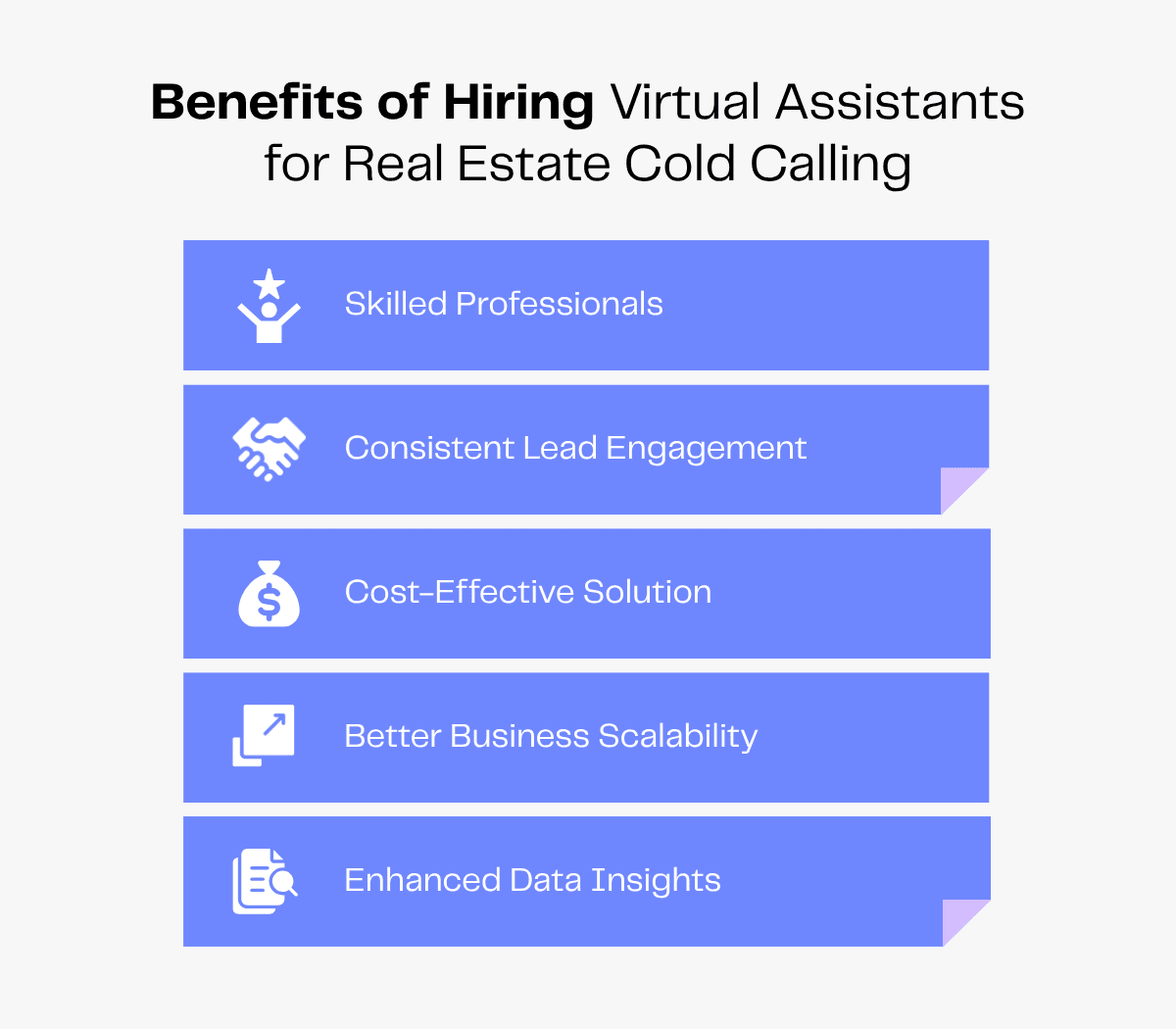
They are a cost-effective way to scale outreach efforts, prevent missed opportunities and ensure consistent growth for your business.
Skilled Professionals
Real estate cold calling virtual assistants are more than just your support staff. They are specialized professionals who help in lead generation to expand your client base.
They handle the nuances of cold calling by crafting the perfect pitch and following up with interested prospects.
These VAs tactfully tackle client concerns and use their persuasion skills to convert leads into customers. Instead of giving empty promises, they employ active listening to recognize customer pain points and use the right templates to create brand trust.
With their experience, they know how to be polite while being persistent. Their high-quality interactions can improve success rates for your business and elevate the image of your real estate brand.
Consistent Lead Engagement
In the real estate sector, just making a call is not enough. Consistent engagement is needed to convert cold leads into warm opportunities.
Cold calling virtual assistants ensure no lead is left unattended. Through emails, text messages and timely reminders, they maintain regular contact and nurture fruitful connections.
Your VA also keeps client conversations going by patiently answering all questions and doubts. They try to spark interest in potential leads by sharing market trends and asset insights.
This organized approach helps VAs evaluate your prospects better and tailor their approach to build long-term relationships.
Enhanced Data Insights
The real estate sector is a game of numbers. And the competition is crazy!
The key to cracking this market is leveraging data on property value, rental rates, housing trends and other key markers.
Real estate virtual assistants can collect and compile this information for you.
They can organize data into clear reports, giving you clear insights into the current landscape so you can analyze areas of improvement, refine your strategy and stay ahead of the competition.
Cost-Effective Solution
According to the National Association of Realtors’ Technology Survey, 27% of realtors spent $50 to $250 monthly on lead generation.
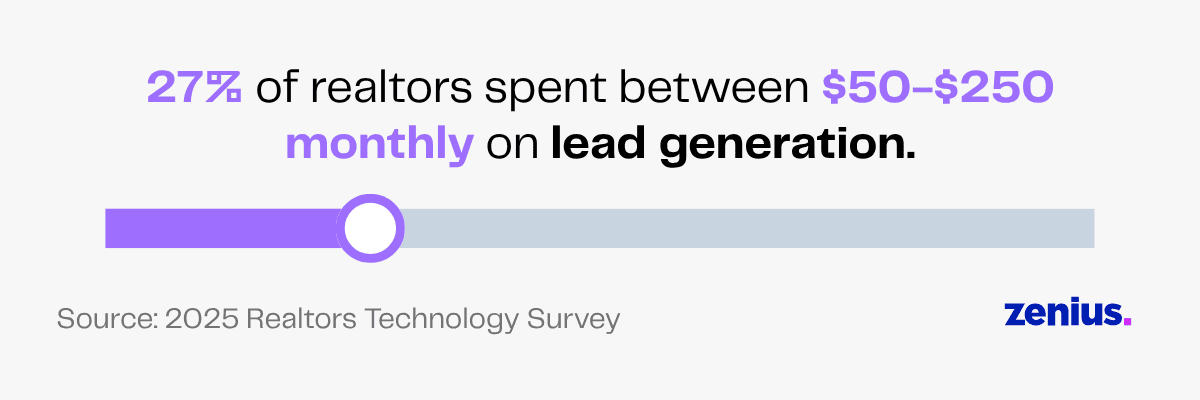
This cost can quickly double when you account for hiring, equipment and other additional costs for in-house cold callers.
Outsourcing to a virtual assistant for real estate cold calling is lucrative precisely because it cuts down on additional expenses. You don’t have to spend on office space, equipment or utilities.
VAs deliver the same level of professionalism as an in-house team while eliminating these overhead costs.
Better Business Scalability
Cold calling virtual assistants take the load off your shoulders.
They generate leads, follow up with prospects and help you build valuable client relationships for the long run.
They quickly adapt as per your business needs and handle high volumes of calls, generating substantial leads.
With VAs reducing your workload, it gets easier for you to scale your business to new heights without any operational bottlenecks.
Skills of Real Estate Cold Calling Virtual Assistants
Cold calling is a tricky game. It isn’t just about dialing numbers—it’s about making meaningful connections that convert curious leads into committed clients.
To win over leads and keep your pipeline kicking, virtual assistants come with essential skills that help them make your business operations seamless.
Here’s a look at the skills real estate cold calling VAs possess.
Clear & Professional Communication
Communication is key in real estate. A cold calling VA has strong verbal skills that help them deliver messages clearly.
With a confident approach, they engage with potential clients and establish trust. They are also active listeners who thoughtfully respond to client objections and nurture long-term connections.
Their genuine attempt to convert cold calls into warm leads helps you maintain a steady flow of clients.
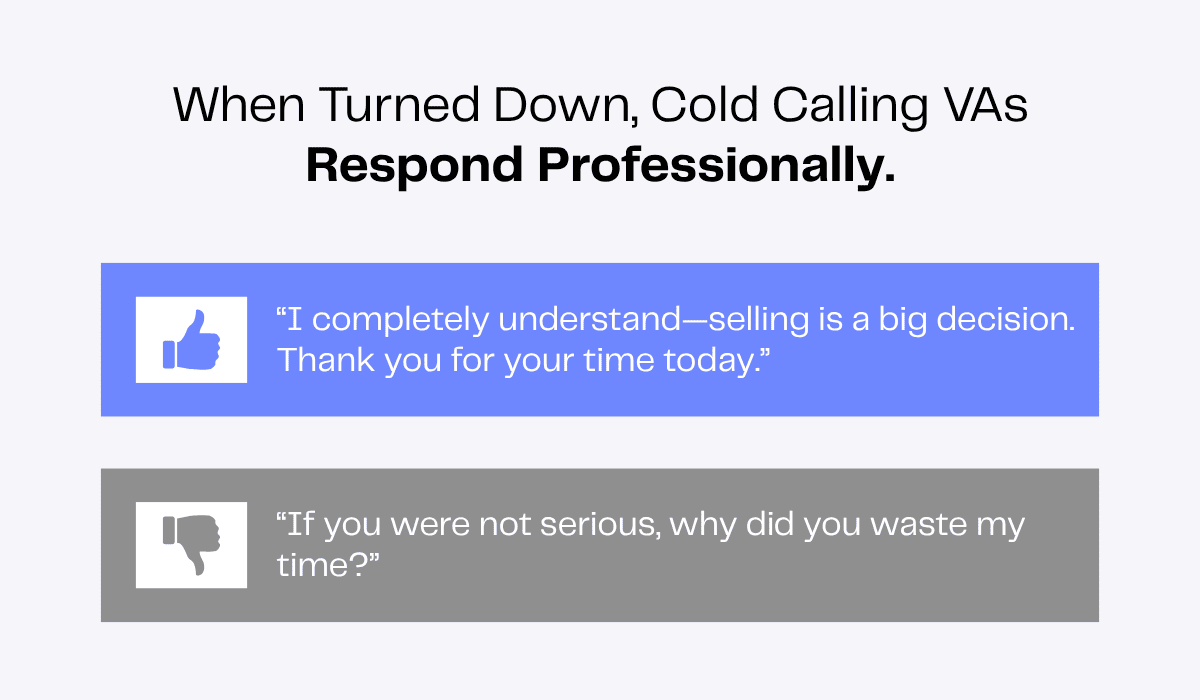
First impressions last long. When a real estate cold calling virtual assistant makes the first call, their professionalism dictates how long the conversation will last.
By listening actively, communicating politely and remaining calm under pressure, they reflect your business’s credibility and uphold your reputation.
Active Persuasion
The average cold call lasts around 82 seconds. So your VA should do more than just deliver information.
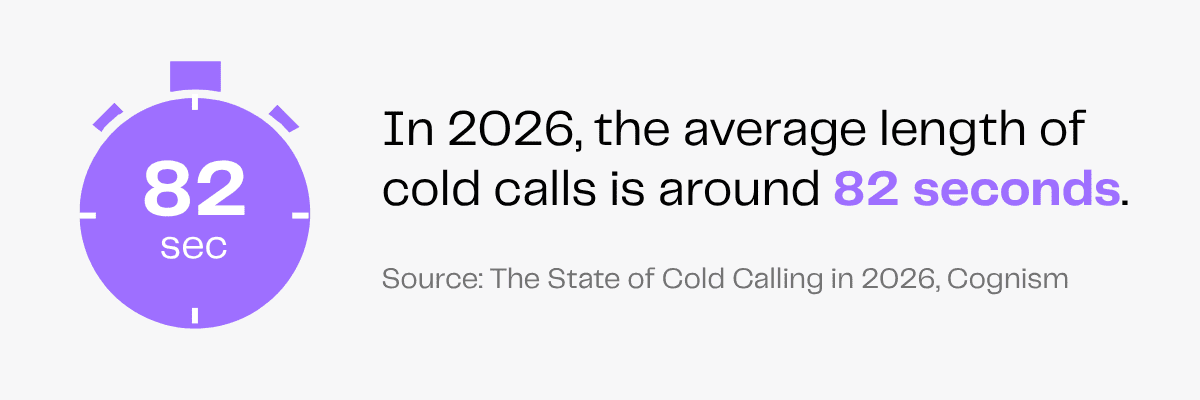
Skilled VAs know how to maintain the listener’s attention throughout this time. Their negotiation skills can be the difference between chit-chatting and closing sales.
They know the art of sparking interest in clients without being pushy. Cold calling VAs strategically ask questions, explain market trends and create a sense of urgency.
Through subtle yet impactful persuasion, they achieve stronger engagement and help you land successful deals.
Proficiency in Lead Generation
The primary goal for realtors is to keep the sales pipeline full. But the average cold calling success rate is merely 2.2%.
To survive such harsh market conditions, you need a good virtual assistant who can identify high-quality leads and pursue them to become buyers with a strategic approach.
They’ll research the right prospects, use tailored scripts to spark genuine interest, ask smart qualifying questions and consistently follow up to score actionable leads for your real estate business.
Comprehensive Market Knowledge
Cold calling virtual assistants are equipped with sufficient market knowledge, enabling them to have relevant conversations with clients.
From highlighting property benefits to explaining its investment potential, they engage with prospects confidently.
This knowledge also ensures they can address client questions accurately, build trust and nurture their interest.
Strong Organization
Cold calling real estate virtual assistants have to juggle tons of responsibilities. They have to research prospects, manage lead lists, stay updated with market insights, categorize leads and optimize outreach efforts.
Organizational skills act as the backbone of these tasks. An organized cold caller VA can bring order to the chaos of endless calls.
Solid Time Management
Real estate businesses can quickly buckle under the pressure of the constant cold calls they need to make.
To handle such high-volume calls and ensure every second is purposeful, cold calling virtual assistants need solid time management skills.
They adhere to the organization’s schedules and conduct outreach efforts during peak hours. By using time-tracking tools, your VA can also optimize their workflows, achieving maximum productivity.
Emotional Resilience
Real estate cold calling is a tough nut to crack. It’s dotted with infinite objections, rejections and failed prospects.
Emotional resilience becomes an essential skill in such cases.
It enables cold calling virtual assistants to stay positive and persistent in the face of setbacks. Their ability to dust off failed attempts and continue outreach with the same rigour makes them a suitable choice.
This emotional resilience translates into consistency and determination to qualify leads, helping your business achieve long-term success.
Tools Used by Real Estate Cold Calling Virtual Assistants
Having the right set of tools helps virtual assistants streamline each task in the cold calling process and optimize results.
From documentation software to organization tools, here’s a look at the best tools for your cold calling VA.
Communication Tools
Cold calling virtual assistants need top communication tools to connect with prospects.
Auto dialers, video conferencing platforms, call recording tools and VoIP technologies are just a few call software or tools they can use to reach out to potential clients.
With their knowledge of the latest tech, they leverage platforms and time brackets your leads love. This also allows them to manage multi-channel touchpoints, connecting cold calling to your larger outreach goals.
CRM Tools
In a survey, 23% of realtors said that CRM tools provided the highest number of quality leads.
These lead management tools can help cold calling virtual assistants organize, track and nurture leads effectively.
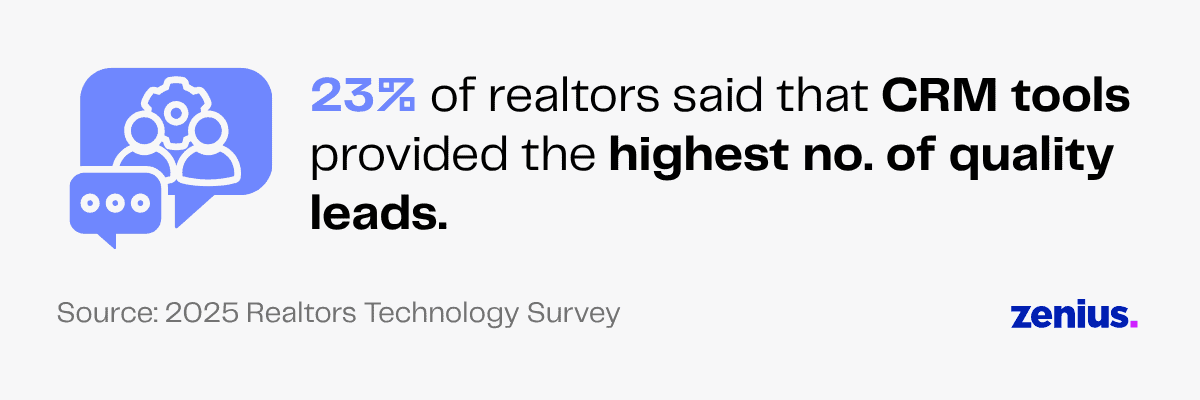
With a CRM, no lead is overlooked. VAs can log valuable property information and lead contact details to tailor their outreach efforts accordingly.
This can help your marketing and sales teams personalize interactions and ensure more consistent follow-ups.
Some common CRM tools include HubSpot, Salesforce and Zoho. Using these platforms, your VA can centralize client data and optimize outreach efforts.
Script Development Tools
A persuasive script is the most important element in the cold calling process.
Virtual assistants rely on various tools to create personalized call scripts, make every call worthwhile and convert potential leads into clients faster.
Google Workspace, Ludwig, Grammarly AI, ChatGPT and other common AI-powered tools can help them craft and optimize scripts.
Market Research Tools
Virtual assistants for cold calling gather data on real estate sector trends, property values in the neighbourhood and investment habits.
Providing your VA access to public records, government data, property platforms such as Zillow and Zumper and analytics tools like Google Trends will help them collect useful information.
Call Analytics Tools
Tools like CallRail, Twilio, Mojo Dialer and Invoca offer significant insights into the call logs, quality, response rates, duration and lead qualification.
These help your virtual assistant fine-tune their outreach strategy to ensure quicker and higher conversions.
Collaboration Tools
In the real estate sector, it takes an entire team to deliver the best results.
Collaboration among all members—real estate agents, clients, intermediaries and business professionals—is essential.
With collaboration tools like Slack, Trello or Asana, virtual assistants ensure all stakeholders are on the same page. These tools streamline workflows and improve your organization’s cold calling campaigns.
How Is Cold Calling Changing in 2026?
Cold calling is often considered obsolete nowadays. With just a 2.2% success rate, many also feel the juice isn’t worth the squeeze.
But this number reflects the ineffectiveness of strategies, not cold calling itself.
According to surveys, 49% of buyers prefer being contacted via phone call and cold calls deliver 23% of response rates when it comes to cold outreach.
On average, real estate businesses need to make 45 calls to close a sale. Giving up too early will undoubtedly mean missed opportunities.
Converting cold calls also takes extreme persistence. Personalization, timing and a multi-channel outreach strategy are other key factors.
Use the Right Script
With most sales calls lasting less than 2 minutes, you can’t underestimate the power of a good script.
Real estate agents get only a few seconds to make a positive impression, build rapport and get prospects interested, so there’s no time to waste. You need to throw your generic statements away and get personal.
According to Gong, opening the call with a greeting and “how are you?” goes a long way—yielding a 6.6 times higher success rate. In contrast to other opening lines, this adds a personal touch and makes prospects feel at ease from the get-go.
Beginning calls by mentioning a common LinkedIn group also increases conversion chances by 70%.
But even after successfully contacting a prospect, realtors face objections such as:
- Not interested – 29.79%
- I already have a solution for this issue – 10.06%
- Not a good time to talk – 9.41%
A cold calling virtual assistant is experienced in objection handling, utilizing tailored responses. Here’s what they can say in each scenario:
- For prospects who aren’t interested – “Totally understand! Would you be open to receiving market updates via email just to stay informed, in case something changes for you down the road?”
- For prospects who already have an agent – “That’s great! Is everything working out well for you so far or would you like a second opinion?”
- For prospects who are busy – “I understand and I’d hate to interrupt your day! Can I request just 20 seconds of your time to share why I called? If not, I’d be happy to call you back at a later time.”
Combine Cold Calling With Email
Just cold calling prospects isn’t enough. For best results, supplement it with other strategies like email, social media and CRM-driven follow-ups.
8.24% of prospects also ask cold callers to email them instead. And 73% of cold callers combine email with calls for a stronger multi-channel approach.
A cold calling virtual assistant can create initial interest in your business over the phone and then send additional details via email later.
Your VA can respond with:
“Sure, I’ll be happy to send an email! Would you like to schedule a time to discuss it once you’ve had a chance to review it?”
This keeps the line of communication open for future follow-ups.
By adopting a combined strategy, your VA can use calls for real-time conversations and emails for sharing property information, nurturing leads and converting them over time.
Steps To Hire the Best Real Estate Cold Calling Virtual Assistants
Now that you know the benefits you can reap by hiring a cold calling VA, take a look at the process of getting one for your business.
1. Define Your Expectations
Going to hire a VA blindly with no forethought about what you want will delay the process.
You need clarity over the tasks you want to delegate.
Start by making a job description, including your budget, tasks you want your cold calling VA to cover, skills they should possess and the years of experience they must have.
2. Find a Suitable VA Company
The next step is to look for the perfect virtual assistant staffing agency for your business.
Check each agency’s offerings, pricing packages and policies.
For affordable virtual assistants, Zenius can be your go-to.
3. Assess Relevant Skills
Once you have shortlisted a virtual assistant company, the next step is assessing their candidates.
Skim through every VA’s portfolio and experience history to check if they have the necessary skills. You can even opt to take assessments to evaluate them yourself.
Additionally, have a conversation with your VA to ensure you find the strongest cultural fit for your organization.
4. Start Onboarding
After you’ve found the right match, start onboarding your virtual assistant.
Share all the important guidelines with them, give them access to important tools and introduce them to your team. This helps them feel more connected despite working virtually.
Read More: Best Practices for Delegating to Your Virtual Assistant
Wrapping Up
The real estate business has its challenges. Low conversion rates and constant rejections can crack even the toughest of realtors.
A cold calling virtual assistant eases your stress by reaching out to prospects, nurturing them with timely follow-ups and attracting more leads to your business.
With them, you can expand your client base and scale your business faster.