Key Takeaways
Remote workers are 20% happier and 40% more productive. 68% of IT workers and 76% of financial professionals also believe remote work leads to better-quality output.
Companies with remote work models can save $700 billion in real estate costs.
The U.S. has seen a 244% rise in remote workers since 2014.
With many U.S. companies mandating a return to the office, a lot of employees have voiced their concerns.
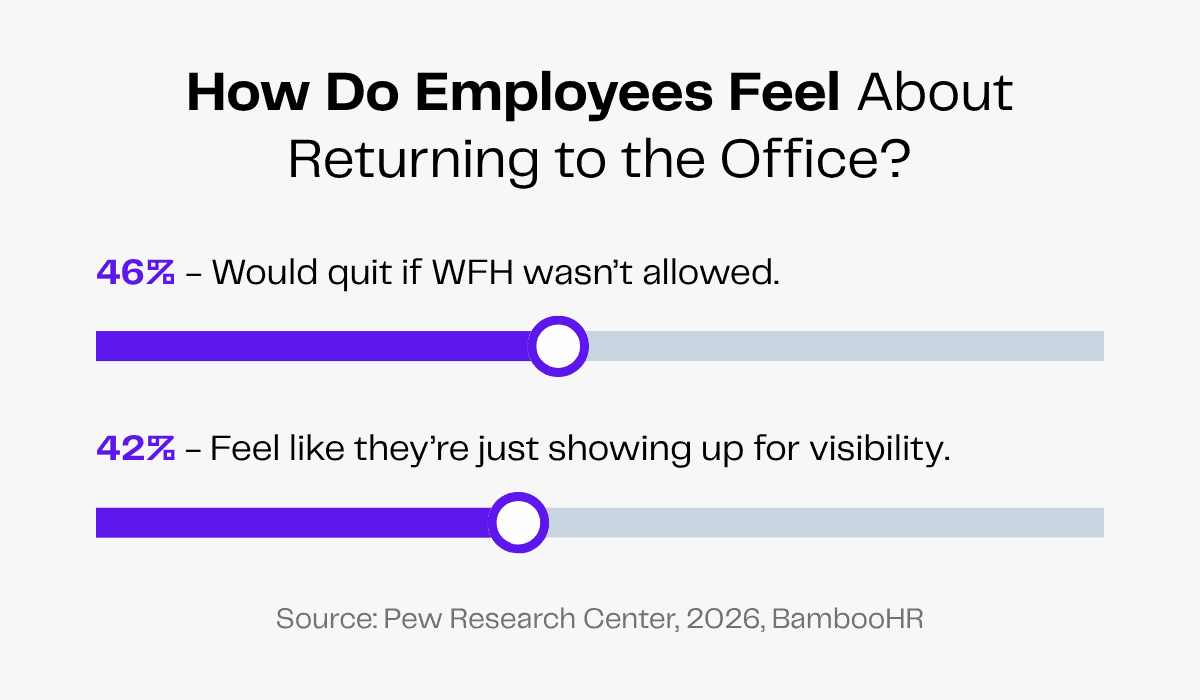
46% of workers expressed that they would leave their jobs if their employers didn’t allow them to work from home.
According to data from BambooHR, 42% of employees who returned to the office said they felt they were showing up just for visibility.
This calls for a serious discussion about whether employers should provide the flexibility of remote work.
This article explores key statistics on the state of virtual workplaces, highlighting industry trends, regional comparisons, benefits and challenges shaping the future of work.
Why Are Virtual Workplaces on the Rise?
Despite these current trends, there is also a noticeable inclination towards virtual workplaces due to technological advancements in the digital age, workforce expectations and cost-saving opportunities.
Employer Perspective
From a business standpoint, remote workplaces can reap multiple benefits.
- More cost savings on office space and utility bills.
- Higher productivity with fewer workplace distractions.
- Lower employee absenteeism.
- Greater employee satisfaction and retention.
- Better adherence to ESG and DEI goals.
Employee Perspective
Similarly, employees have their own benefits of working from home.
- Better work-life balance.
- Flexibility in working hours.
- Access to a personalized work environment.
- Cost savings on commuting.
- Increased job satisfaction.
Let’s dive into these benefits in more detail.
Virtual Teams Statistics: Benefits for Companies
The remote work model has been a game-changer for companies. Slashing overhead costs, tapping into top talent across the world, watching innovation at work—the fruits of this model have been worth it!
Lower Overhead Costs
With remote models, small and medium companies save on rent, utilities, relocation charges, cleaning services and unit office building costs. This lowers overall overhead expenses that may dent their fiscal health.
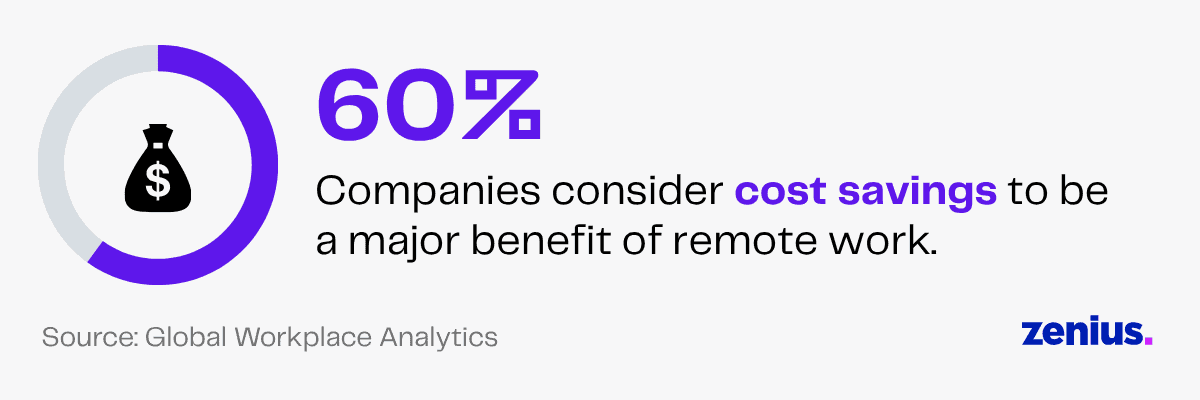
According to Global Workplace Analytics, nearly 60% of companies identify cost savings as a significant remote working benefit.
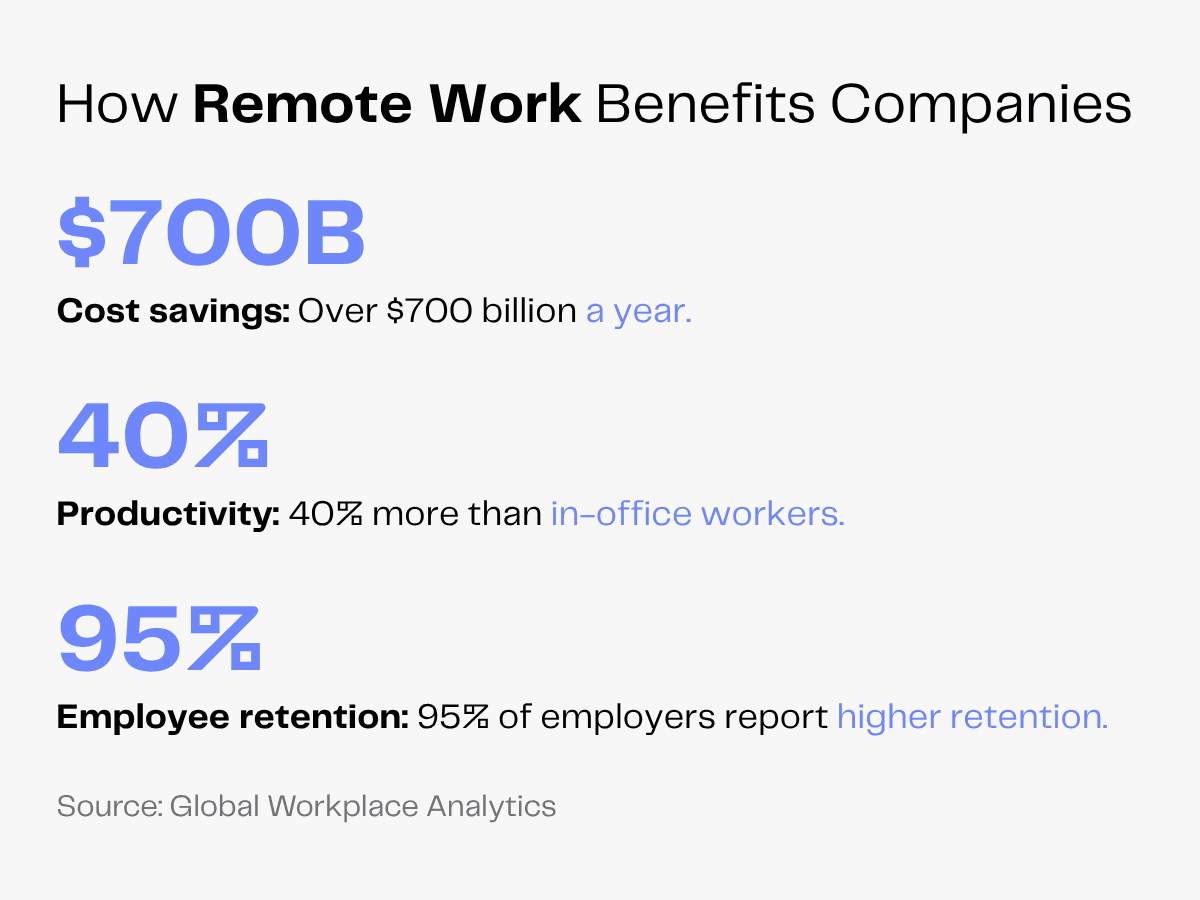
It is estimated that if everyone who wanted to work remotely did so just half the time, the total money saved would be over $700 billion annually.
This averages out to more than $11,000 per employee per year.
Speaking on the cost-saving effects of remote work, Jonathan Goldberg, CEO and founder of Kimberfire, said,
This frees up capital that can be reinvested into areas like technology and employee development, which ultimately drive growth.
IBM has also saved an estimated $50 million annually in real estate costs by reducing its office space and offering telework.
Increased Productivity
In the IMF Podcasts, Stanford University professor Nicholas Bloom talked about his research on how people who work remotely are more productive than their in-office counterparts.
According to data published by Global Workplace Analytics, Best Buy, British Telecom, Dow Chemical and many others show that teleworkers are 35–40% more productive.
Remote workers at AT&T are also reported to work 5 hours more than their in-office counterparts.
This is beneficial because it translates not only to better-quality output but also lower unit labor costs and higher industry-level TFP.
More Inclusive Workplace
From hiring people with disabilities to people of colour, businesses that integrated remote work found a valuable way to foster inclusion and attract diverse talent.
Remote work also offers more flexibility to women, especially those with childcare needs.
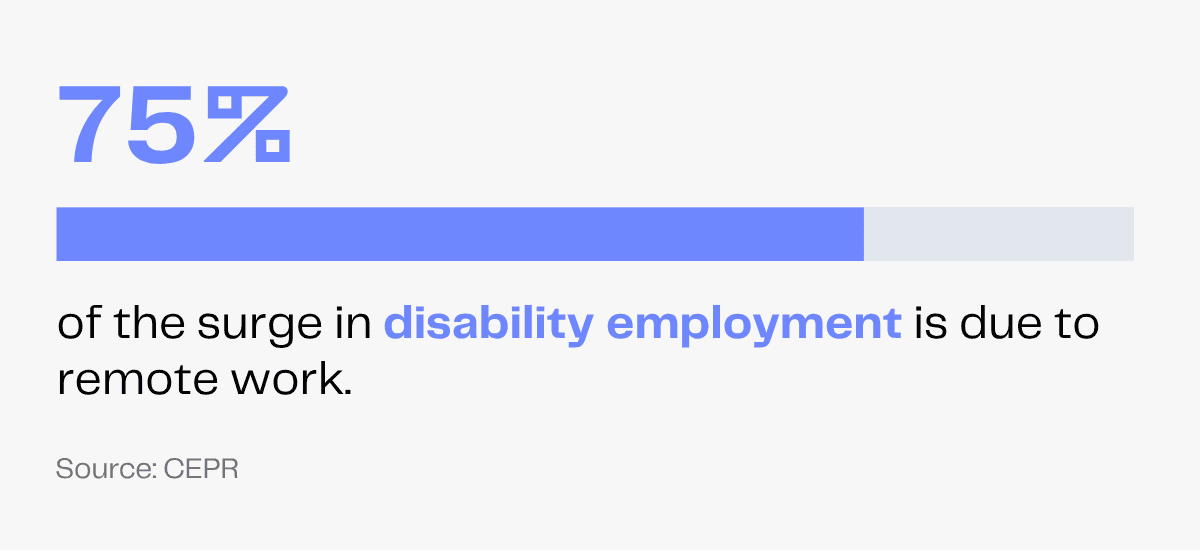
Since the COVID-19 pandemic, there has also been an upsurge in the full-time employment of disabled people. 75% of the increase is attributed to the rise of remote work.
Moreover, remote settings allow diverse employees to focus on their work with less of that added emotional tax associated with unconscious biases.
Remote work also eliminates geographic barriers, providing access to opportunities for individuals who may be unable to relocate due to personal commitments.
Additionally, this helps businesses, even small companies, tap into a wider talent pool. Companies can even outsource their business processes to third-party vendors located overseas.
Higher Employee Retention
According to data from FlexJobs, 85% of job seekers rate remote work as a critical factor when assessing job listings—even above salary.
76% also said they’ll quit their current job if remote options are removed.
In the Morning Consult survey commissioned by Zoom, 71% of leaders noticed a positive impact on employee happiness and satisfaction due to remote work options.
According to Global Workplace Analytics, 95% of the employers surveyed said that allowing remote work has increased employee retention rates.
Virtual Teams Statistics: Benefits for Employees
Needless to say, virtual work has redefined the modern job scenario. From reclaiming commuting time to striking a healthier work-life balance, the employees are winning in the remote work model.
Flexible schedules and fewer distractions enable them to perform efficiently while empowering themselves with opportunities worldwide.
Time Saved on Commute
“Time crunch” is very real. An essential antidote to a time crunch is to reduce time wasted. This study from China demonstrated that workers with longer commute times experience lower satisfaction at work as well as in life.
Cutting commute time is a great way for employees to maintain a healthy balance between their work and personal time!
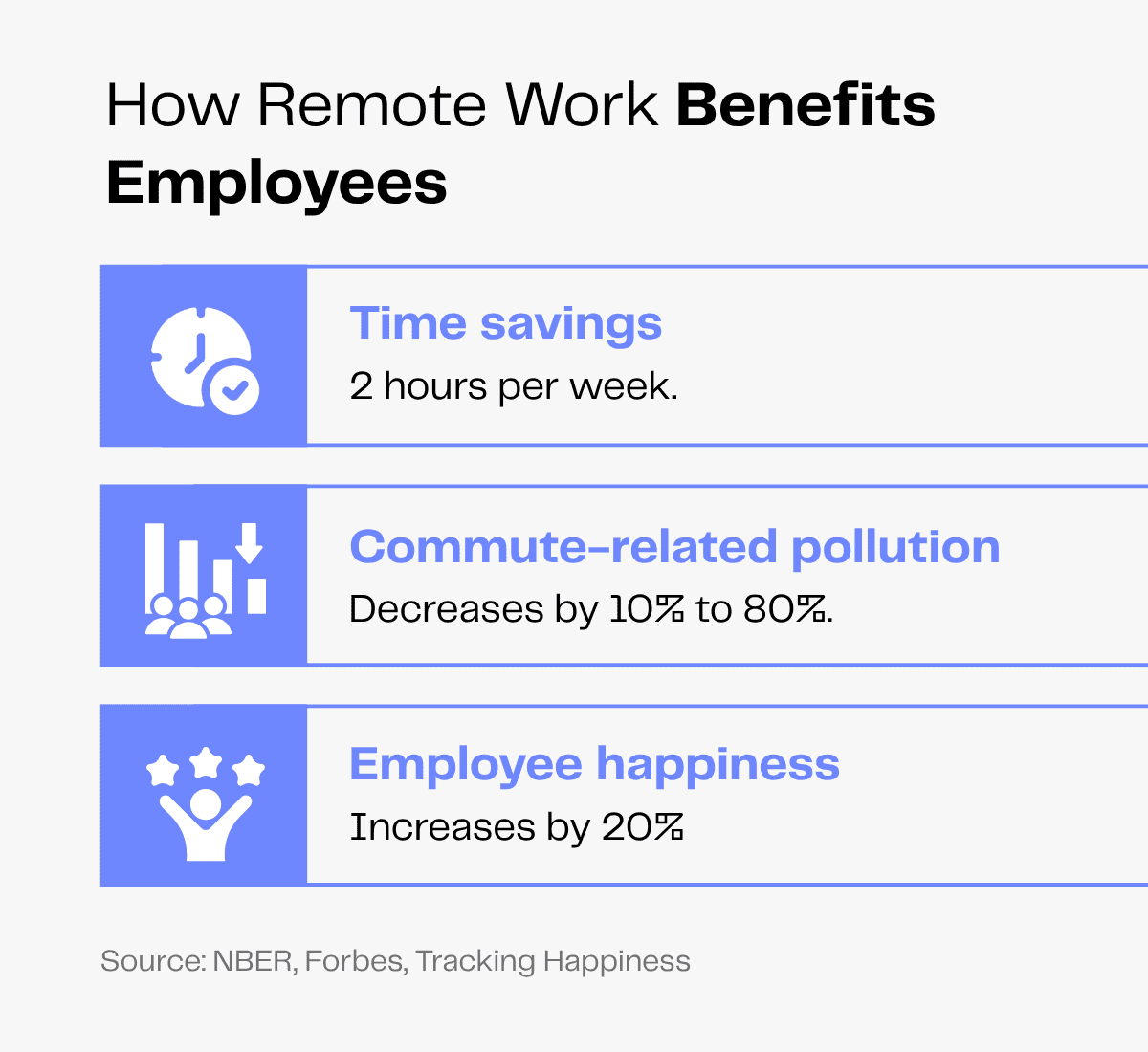
According to a study by the National Bureau of Economic Research, working from home saved about 2 hours per week per worker.
What’s more, eliminating commute times can increase labor input, which, in turn, boosts total factor productivity (TFP).
Not just that. In a research by Spain’s Institut de Ciència i Tecnologia Ambientals, switching to remote work 4 days a week also decreased overall nitrogen dioxide emissions by 10%.
In some cases, pollution can be decreased by up to 80% when working from home compared to commuting to and from an office.
Personalized Remote Workstations
Ergonomic furniture takes care of your posture and blue light filters reduce your eye strain. Only a personalized work environment can provide the comfort to focus better and minimize health issues.
The remote work trend is fueling demand for ergonomic furniture, driving its sales worldwide.
The numbers are expected to surpass a market valuation of $22.21 billion in 2025 and are expected to reach $45.8 billion by 2036, with a robust CAGR of 6.8%.
Following the pandemic, many remote workers placed online orders for furniture like height-adjustable desks and vertical mice to create a more comfortable workspace.
There was an increase in the online ordering of home furnishings, too.
On a similar note, growing at a CAGR of 10.7% from 2024, the blue light filter glasses market size is projected to reach $5.1 billion by 2030.
The comfort of the known increases the productivity of the workers manifold.
Better Health
Commuting exposes millions of people to carcinogens from traffic-related air pollution.
An analysis of 234,124 employed participants revealed that there were 493 lung cancer cases diagnosed over an average 7-year follow-up. According to the Centers for Disease Control and Prevention (CDC), lung cancer is the third most common type of cancer in the U.S.
Remote work cuts this risk by preventing the exposure of employees to outdoor pollution.
Flexible work schedules allow for physical activity during the day. A study published in the American Medical Association revealed that moderate physical activity had a 26% to 31% lower all-cause mortality and a 28% to 38% lower risk of cardiovascular disease mortality.
Apart from that, remote work keeps the mental health of employees in check.
According to Tracking Happiness, which conducted a survey of 12,455 respondents, fully remote work increased employees’ happiness by 20%.
Improved Work-Life Balance
In a survey by the American Psychological Association, 60% of people attributed work to be the source of their stress. It came second after money, which was heralded as the biggest source of stress for Americans.
Stress at work is also a major cause of employee burnout. This may radically alter the dynamics of a workplace and so companies are gradually adopting a remote or hybrid work environment.
According to the State of Remote Work Report 2019 by Owl Labs, 91% of people responded that they want better work-life balance when asked why they chose remote work.
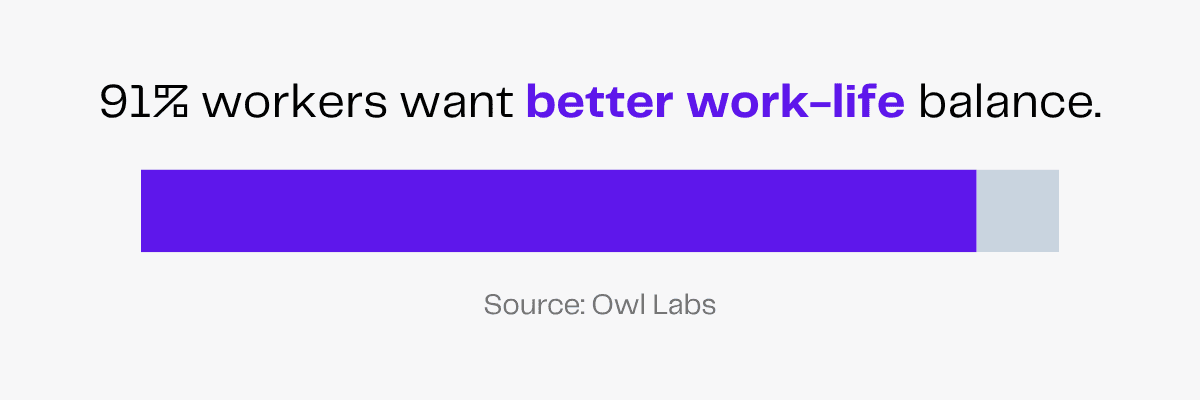
That year’s results represent a shift as people in the 2018 survey emphasized better productivity and less stress as their reasons to work remotely.
Virtual Workplace Statistics: Challenges for Companies
Companies face hurdles like communication gaps and productivity monitoring issues that pose significant challenges in their virtual workplace.
Managing an effective remote team requires strategic solutions to ensure efficiency, collaboration and data security.
Collaboration Barriers
Without the right tools and guidelines, collaborating with teammates can be a struggle for virtual employees.
42% of office workers consider scheduled in-person team meetings to be essential for collaboration. This is because face-to-face contact lets people read expressions, body language and tone of voice, which is better for communication.
A whopping 41% of enterprise employees have left or are considering leaving their jobs owing to collaboration challenges.
A study by Buffer also revealed that around 15% of workers in remote teams reported difficulties in collaboration and communication.
But at the same time, around 80% of employees believe remote work collaboration is either better than or just as good as in-person, according to a survey by Corel.
Communication Challenges
Seamless communication is the backbone of any successful virtual workplace. But challenges continue to lurk.
29% of workers reported that communication with clients and co-workers became more challenging in 2026. This could be due to time zone misalignment or technical glitches.
Juggling multiple tools for texting and calling also makes communication overwhelming.
Having one centralized platform for both texting and video conferencing with team members was important to nearly 65% of employees.
Only with regular addressing of such issues can scattered communication be streamlined in a virtual workplace.
Productivity Monitoring Challenges
Federal workers in the U.S. are being told to report their weekly accomplishments, or they may risk losing their jobs!
A study by the Massachusetts Institute of Technology found that 80% of companies use EMS to monitor their remote or hybrid workers.
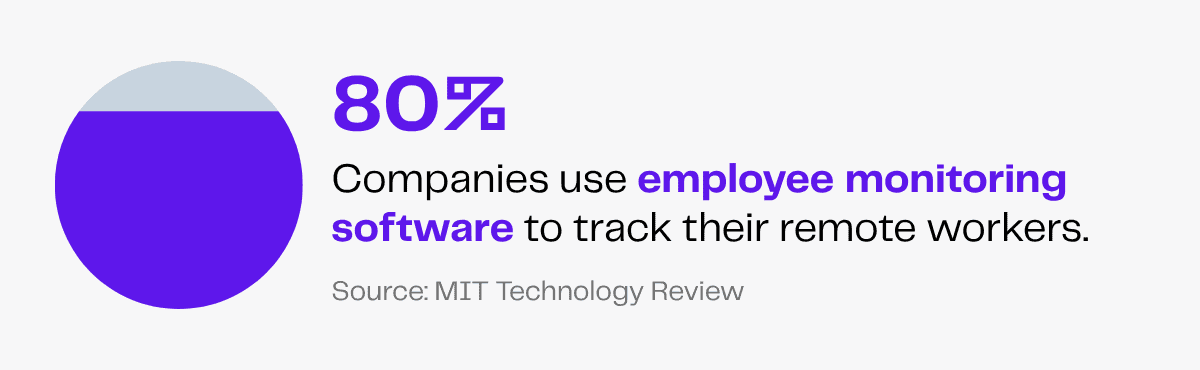
The online privacy and security provider, ExpressVPN, reported that around 74% of employers deployed online monitoring tools. And another 67% used biometric methods, including facial recognition and fingerprint scans, to ensure employees are doing their job diligently.
While monitoring employees can help track performance and keep records of productivity data, it’s also necessary to avoid micromanagement to build trust in virtual teams.
Time-Zone Management
Reduced synchronous interactions and coordination difficulties are notable obstacles for remote workers in a virtual workplace.
According to a research paper, a one-hour loss of overlap represented a 19% reduction in opportunities to communicate synchronously with co-workers during a typical workday.
In the State of Remote Work 2020, 10% workers reported that being in a different time zone than their teammates was the biggest challenge for them.
Application of effective strategies can help one navigate time zone challenges in remote work settings.
Virtual Workplace Statistics: Challenges for Employees
Remote work comes with its own set of struggles for any virtual employee. From isolation to tech dependency, the challenges are multifold.
Isolation
The State of Remote Work 2023 revealed that around 23% of remote workers struggled with loneliness. Without the regular social interactions in a physical office structure, employees’ motivation dipped.
According to a Ringover survey, remote workers reported feeling lonely 98% more often than their fully on-site counterparts and 179% more often than those in hybrid roles.
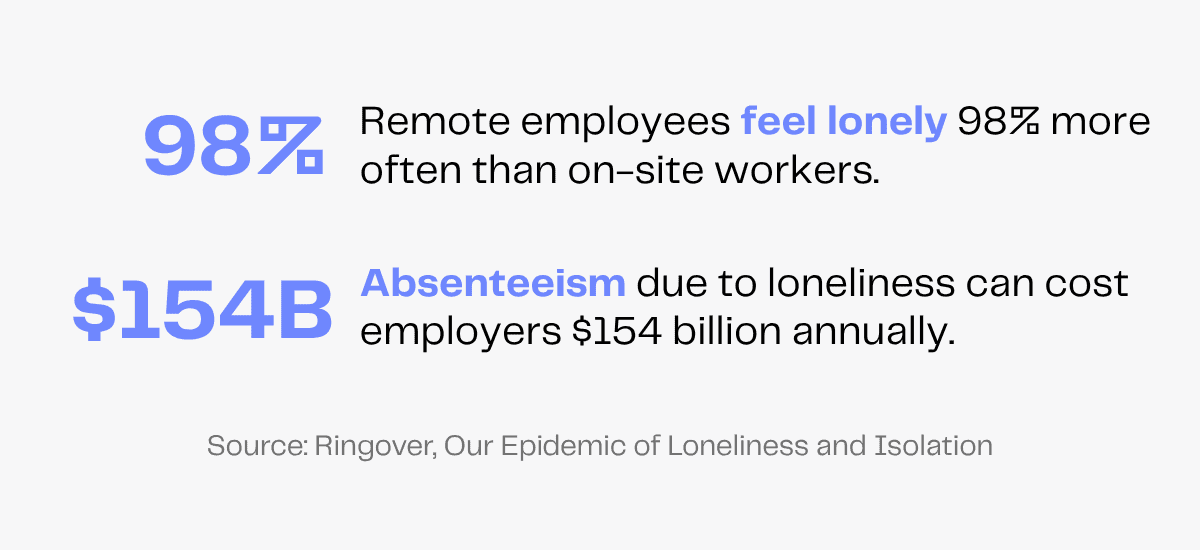
Stress-related absenteeism attributed to loneliness costs employers an estimated $154 billion annually, as per a 2023 report by the U.S. Surgeon General.
Keeping employees connected and focusing on team building are crucial to overcome the challenge of isolation. Otherwise, employees may fall into the spiral of mental health issues.
Technical Problems
Several challenges impact productivity and the overall functioning of the digital ecosystem. From cybersecurity challenges to technological glitches, a remote employee has to navigate many rough seas.
In a survey of 60,000 employees across 30 countries by Cisco, it was found that 75% of workers believed broadband services had to be improved to better support hybrid work.
According to the Barracuda Networks study, 46% of businesses had already had at least one cybersecurity incident since shifting to remote work.
These statistics underscore the critical need for organizations to invest in reliable technology infrastructure and mitigate challenges associated with telecommunications.
Virtual Work Statistics by Industry
Influenced by factors such as job demands, technological integration and regulatory requirements, multiple sectors have seamlessly transitioned into remote work.
By 2030, the number of global digital jobs that can be performed remotely is expected to rise to roughly 92 million. For example, jobs in customer service, social media management, data processing, website development, data science, broadcasting and more can be done easily remotely.
These sector-specific trends provide meaningful insights into how different industries are leveraging remote work to boost efficiency while cutting costs.
IT & Software
At the forefront of remote work adoption, many tech companies have fully embraced the virtual model.
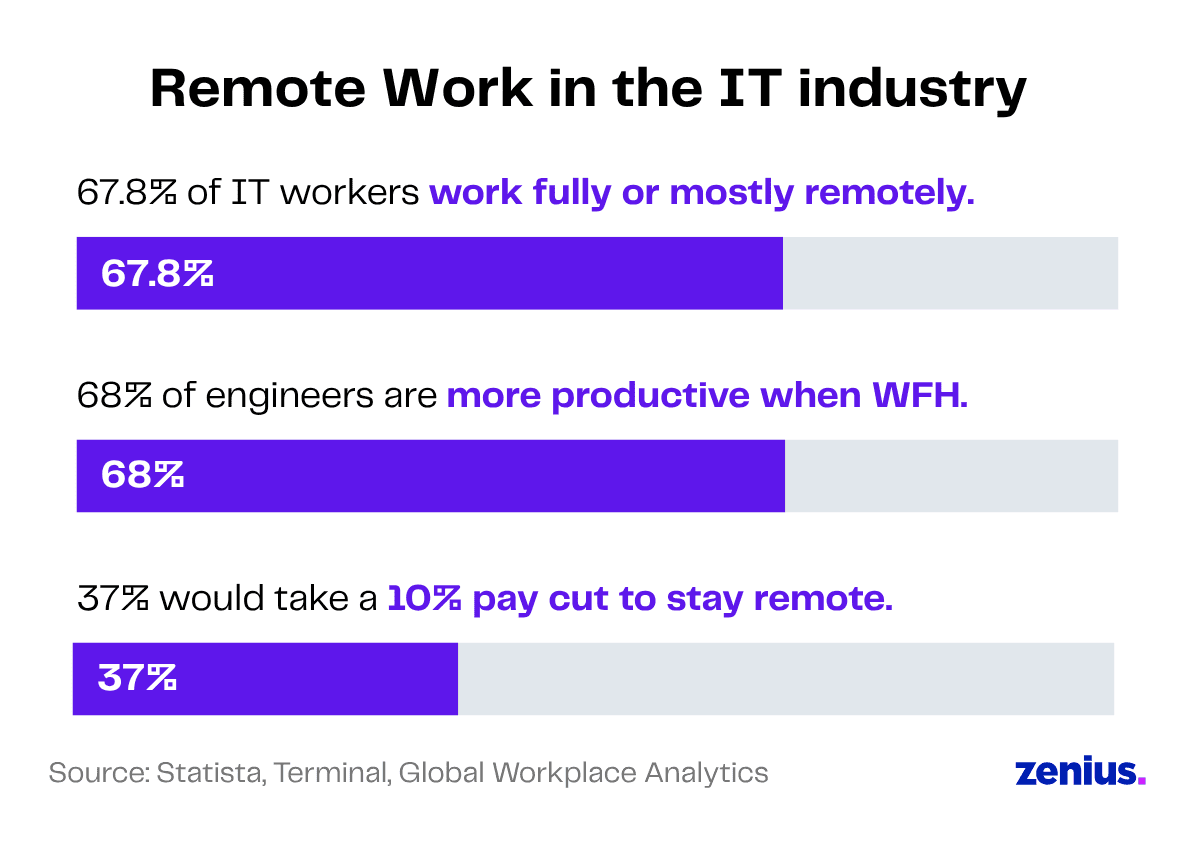
In 2023, the technology industry had the highest share of remote employees worldwide, with 67.8% globally working fully or mostly remotely.
68% of engineers also said they are more productive working remotely.
Additionally, a poll of 1,500 technology professionals revealed that 37% would take a pay cut of 10% if they could work from home.
Finance and Banking
Traditionally office-centric, the finance sector has now begun to shift online.
An overwhelming 86% in the financial services sector said they support the idea of working from home at least one day a week, with a whopping 35% wanting remote work as a full-time option.
Kyndryl surveyed 300 financial services managers and staffers at large companies around the world. This was to understand their perceptions of productivity, collaboration, culture and inclusivity in hybrid work settings.
76% of respondents said having a hybrid work schedule enables a higher quality of work.
Healthcare
45% of healthcare support employees work remotely, according to a survey by McKinsey.
31% do so full-time and 14% do part-time, averaging 2.8 remote work days per week.
According to the American Telemedicine Association, more than 50% of healthcare services will take place virtually by 2030.
They also report that half to three-quarters of patients are willing to have virtual healthcare interactions. This can include consultations through video chat, phone apps, email or telephone services.
Edtech
The EdTech sector has witnessed an upsurge in remote work since the pandemic forced classrooms to go virtual.
In a survey conducted by Education Week, it was found that 34% of education company officials say their staff is fully remote.
At Southern New Hampshire University, 88% of employees work fully or partially remotely, logging in from 36 states across the U.S.
This makes the education industry a lucrative sector for those who prefer to work in a remote environment.
Virtual Work Statistics by Region
The adoption of virtual workplaces has witnessed great disparity across different parts of the world.
While countries in North America and Europe have seamlessly integrated remote work models, countries in the global South have struggled big time!
This section provides a comparative analysis of AMER, EMEA and APAC regions, backed by relevant statistics.
AMER: North, Central and South America
The percentage of employees in Canada working most of the time from home has risen sharply since the mid-2010s, increasing from 7.1% in May 2016 to 20.1% in May 2023.
A similar pattern has been observed in the U.S. as well. A whopping 244% increase since 2014 has radically changed the workplace landscape in the United States.
In Mexico, 90% of IT workers don’t want to return to the office. 60% also considered being able to work from home as their top priority regarding job flexibility.
In South American countries, remote hiring skyrocketed, with Chile leading the surge at a 67% increase, as reported by Bloomberg Línea.
Colombia followed with 55%. Mexico and Argentina tied with 54% growth. Brazil wasn’t far behind at 53%.
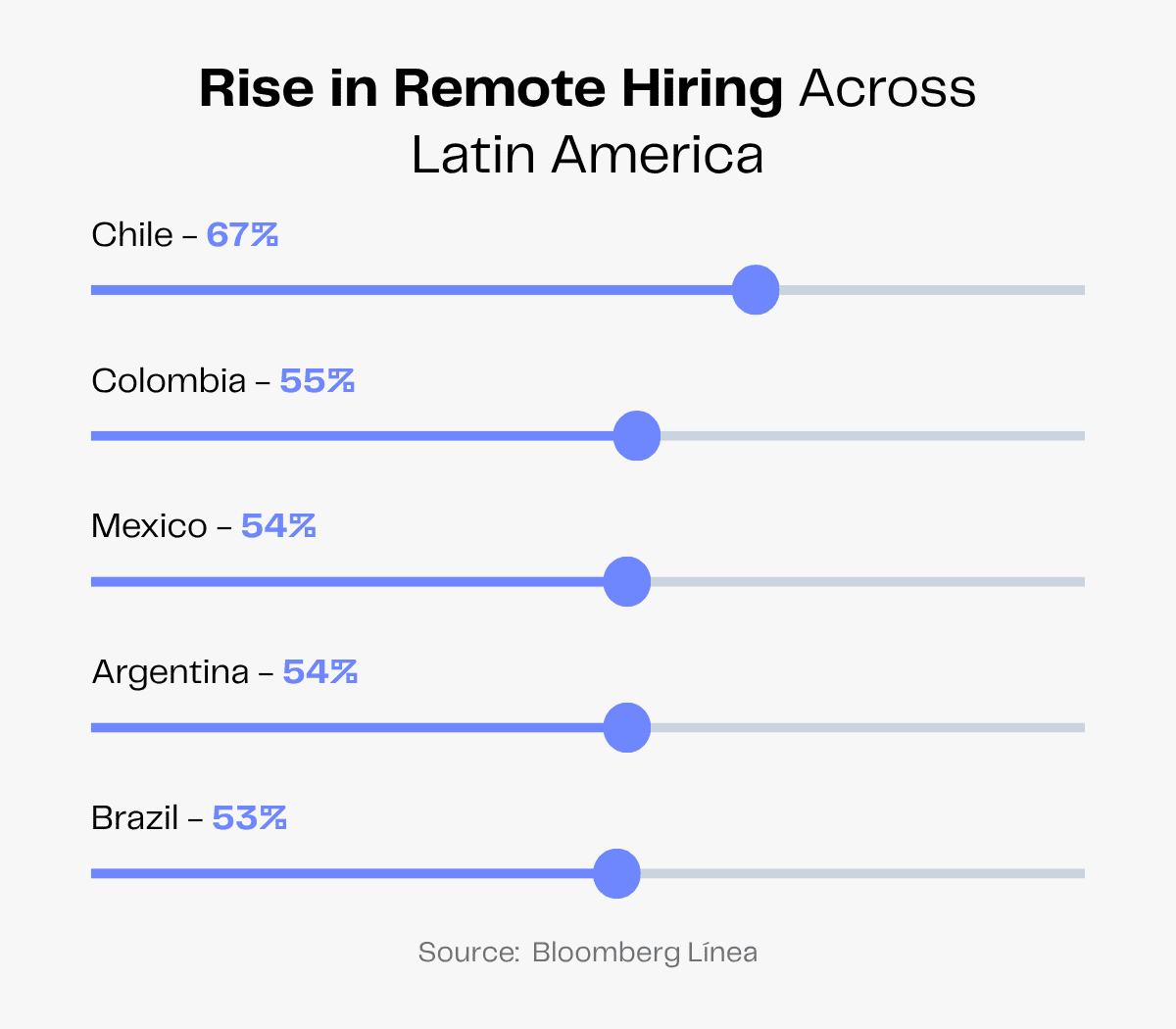
The Americas clearly demonstrate a significant upsurge in remote work across their diverse geographies.
APAC: Asia and Pacific
Zoom, in its latest survey—Navigating the Future of Work—observed that 84% organizations in the Asia Pacific (APAC) region are either adopting a hybrid (59%) or a remote (25%) work model.
Almost 70% of companies based in APAC employ more than 70% of full-time remote employees and 30% remote contractors, according to the 2024 Remote Asia Pacific Report.
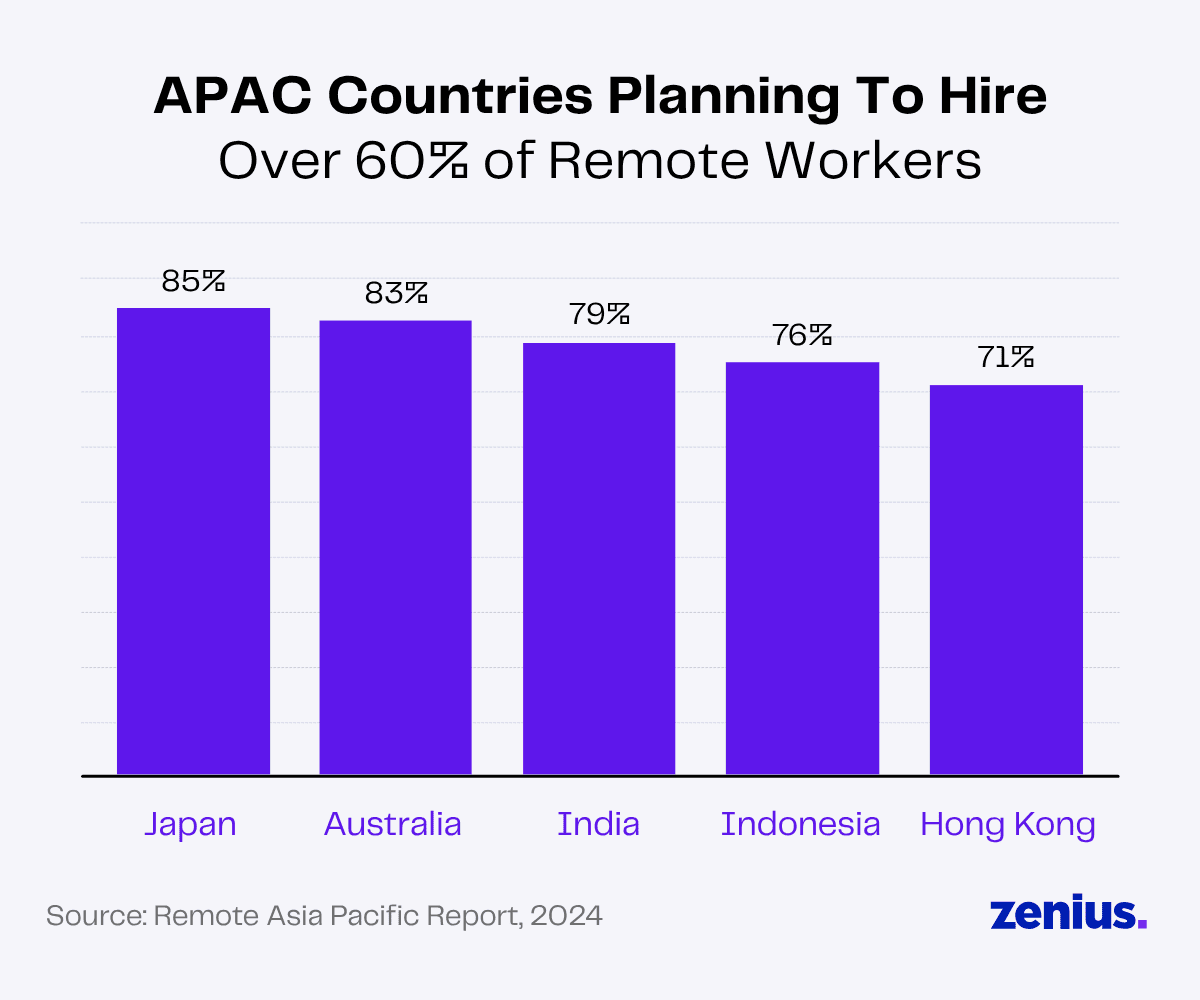
83% of companies surveyed in Australia plan to hire more than 60% of remote full-time employees.
The numbers are 85% of companies in Japan, 71% in Hong Kong, 79% in India and 76% in Indonesia, according to the same report.
120 client organisations across 17 industries in Asia were surveyed by M Moser Associates.
The findings indicated that 56% of companies may continue to adopt flexible arrangements in their future remote working policies.
EMEA: Europe, the Middle East and Africa
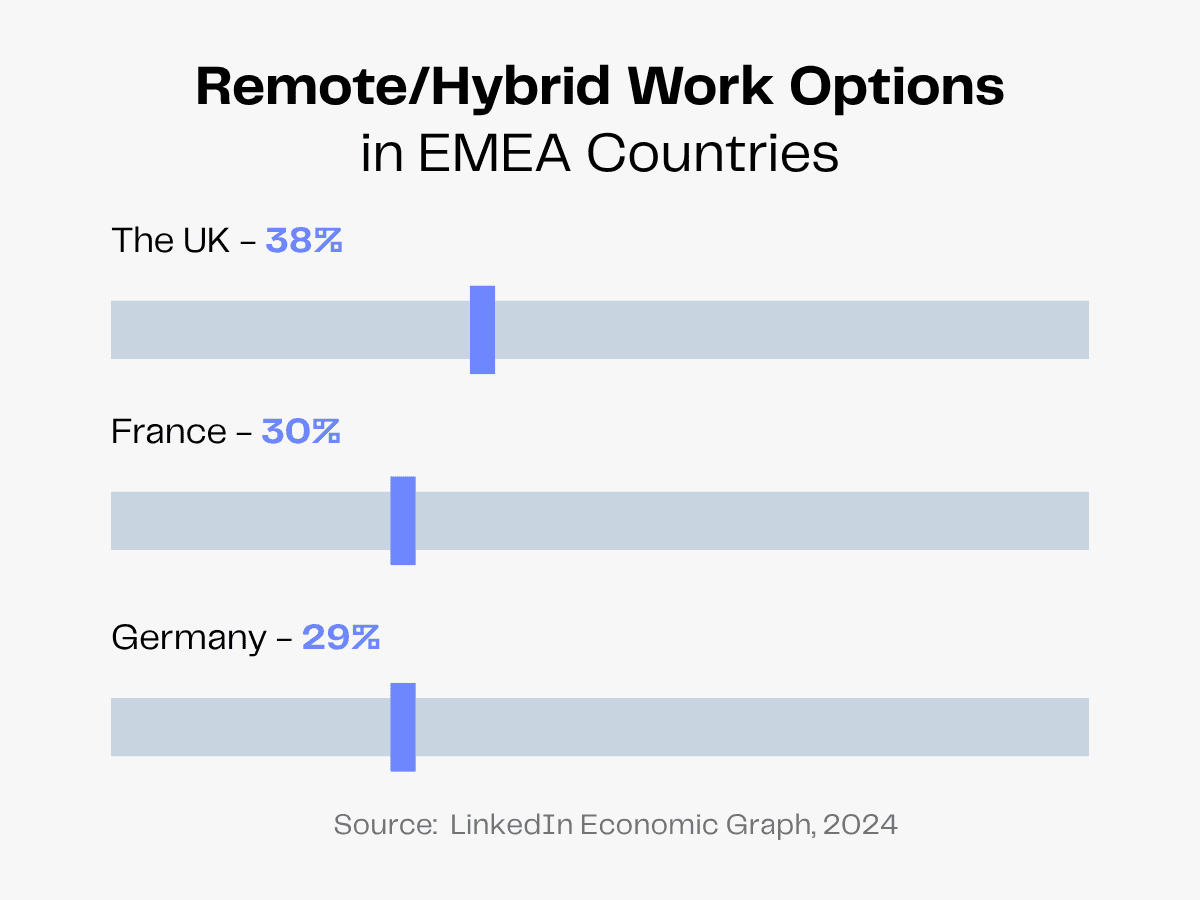
According to LinkedIn’s Global State of Remote & Hybrid Work report, 38.3% of positions in the UK had hybrid options.
In both France and Germany, the percentage of hybrid jobs posted was 29.7% and 28.8%.
Of the nearly 7,50,000 workers working for the more than 1,000 enterprises surveyed across Africa, nearly 36% said they worked remotely, according to a report by the International Labour Organization.
Financial investments in technology by governments in the Middle East have also marked a significant shift towards remote work. Saudi Arabia invested approximately $15 billion in Information & Communication Technology (ICT) for their Vision 2030 initiative.
This is done with the motive to transform the country’s workplace scenario.
According to a whitepaper published by the UAE government, in association with PwC and Remote, 84% of companies supported hybrid work practices, making the UAE a top destination for remote workers.
Tips To Navigate a Virtual Workplace
Remote work can be challenging, but its benefits far outweigh the drawbacks. To overcome its issues and get the best out of your virtual teams, here are a few things to remember.
- Implement a flexible work model to meet diverse needs.
- Invest in a robust digital infrastructure for smooth collaboration.
- Redefine performance metrics to focus on work quality over hours.
- Prioritize employee well-being and schedule regular check-ins.
- Address compliance and legal challenges for cross-border hires.
- Foster an inclusive culture to create psychological safety.
Read more: Best Practices for Onboarding Virtual Team Members
Wrapping Up
The rise of virtual workplaces has reshaped the way businesses function.
From offering flexibility to employees to accessing global talent, the perks of shifting to a virtual work mode are immense. By leveraging these statistics, you can make the right call for your business as well.